

“Those who demand accountability from others must also be prepared to answer for their own actions.”
“Power tends to corrupt, and absolute power corrupts absolutely.” -Lord Acton
“The welfare of the people shall be the supreme law.” –Marcus Tullius Cicero
“When laws cease to be respected, tyranny begins.” -John Locke, a principle reflected in his political philosophy
By: MA Slobodan Tomić

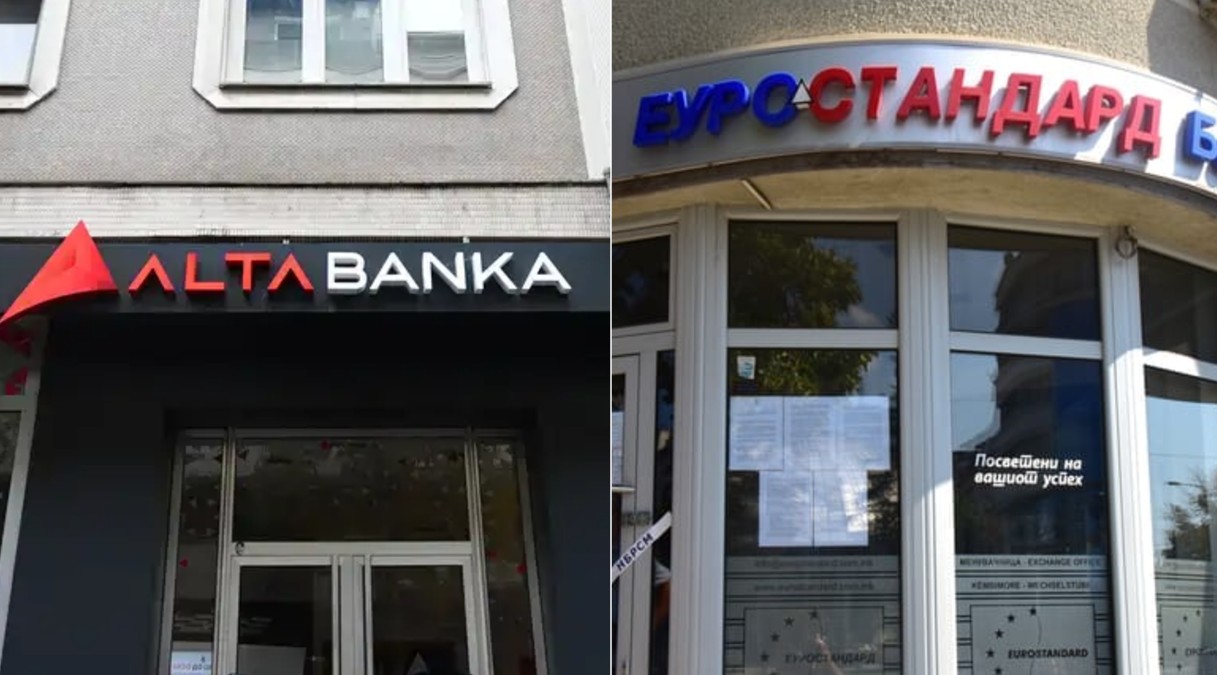
The motion of censure against the Governor of the National Bank, Trajko Slaveski, submitted by SDSM under the leadership of Venko Filipche in connection with the Alta Banka affair, has opened up a much broader debate than the opposition would like to present as the sole issue of the day.
This is not merely a story about one bank, one regulatory approval and one governor.
It is a story about political memory, the accountability of previous governments, banking collapses, the influence of political and business circles over the financial system and, above all, the right of citizens to know the truth.
Today, SDSM is demanding a motion of censure against Governor Trajko Slaveski.
It is demanding answers about how Alta Banka was able to enter the Macedonian market, how its owner, Davor Macura, was vetted, what the origin of the capital was, and what exactly the Governor and Prime Minister Hristijan Mickoski discussed.
These are legitimate questions that may be examined through parliamentary scrutiny.
However, when a political party raises such an issue, it cannot reasonably expect the public to forget that it, too, was once in government, had the opportunity to influence institutions and had ministers and officials involved in decisions concerning the financial and economic system.
Therefore, before a political judgement is passed on today’s decisions, the preceding chronology must also be brought into the open.
ALTA BANKA IS NOT A STORY THAT BEGAN WITH MICKOSKI
One of the most important facts that must be acknowledged is that the name Alta Banka also appears in government documents dating from 2023, when the country was governed by the SDSM-DUI coalition.
At the time, Fatmir Besimi was Minister of Finance. According to archived government minutes and publicly available media reports, a government session held on 24 October 2023 considered an item concerning the actions of the State Attorney’s Office in relation to state-owned shares in a Serbian bank that was the subject of a takeover by Alta Banka.
This circumstance is politically significant.
It demonstrates that Alta Banka and its owner were not unknown entities appearing for the first time in Macedonia’s institutional sphere under the present government.
However, precision is essential. The 2023 government procedure concerning state-owned shares in another bank was not the same legal transaction through which Alta Banka subsequently acquired an ownership stake in Stopanska Banka Bitola.
These are two distinct procedures and must not be conflated. Nevertheless, neither should the fact that the previous government had institutional dealings with a matter involving Alta Banka be overlooked.
Prime Minister Hristijan Mickoski publicly stated that Alta Banka entered the Macedonian banking sector by purchasing shares from private owners, rather than by acquiring state-owned shares from the Ministry of Finance.
He maintained that the procedure had been conducted in accordance with the applicable legal requirements.
This is the Prime Minister’s stated position and must form part of the public debate.
At the same time, precisely because this concerns the banking system and the public interest, all relevant documents should be made available to the competent institutions, and the entire chronology should be clearly explained.
The question SDSM must answer is straightforward: if it now considers Alta Banka a matter of serious concern, why has it failed to provide a full explanation of its own institutional involvement dating back to 2023?
Who proposed the government agenda item?
What exactly was the subject of the decision taken by the government at the time?
What did the then Minister of Finance, Fatmir Besimi, know?
And why is an impression now being created that this entire story began only with the current government?
This is not an allegation of criminal liability.
It is a demand for political consistency.
MICKOSKI, SLAVESKI AND THE NATIONAL BANK: INDEPENDENCE MUST NOT BECOME AN EXCUSE FOR PARTY POLITICAL CONFRONTATION
Hristijan Mickoski leads the Government and bears responsibility for economic policy, the country’s stability and the protection of citizens’ interests.
His position on this matter is that the procedure for Alta Banka’s entry into the market was conducted in accordance with the law and that political panic should not be manufactured on the basis of unsubstantiated allegations.
As Governor, Trajko Slaveski has legally defined powers and responsibilities concerning the operation of the National Bank. His academic, economic and institutional experience is well known.
This does not mean that the Governor is beyond parliamentary scrutiny. It means that his performance must be assessed on the basis of the law, documentary evidence and professional arguments.
I see no reason why this matter should be turned in advance into an attack on either the Prime Minister or the Governor.
On the contrary, the institutional independence of the National Bank must be protected and the statutory procedures respected.
A conversation between the Prime Minister and the Governor, if it concerned the financial situation and risks facing the country, does not in itself constitute evidence of improper influence.
The fundamental question is whether the regulatory decision was taken independently, on the basis of professional assessment and statutory criteria.
The Government, the Prime Minister and the Minister of Finance, Gordana Dimitrieska-Kochoska, bear responsibilities within their respective areas of authority.
However, the National Bank is not an extension of the Government, just as the Government is not the banking regulator.
Respect for this institutional division is precisely what safeguards stability.
Therefore, everything that can lawfully be made public should be disclosed and explained: which criteria were applied, which checks were carried out, what the ownership structure was, how the origin of the funds was verified and which risks were identified.
That is how both the National Bank and citizens can be protected, rather than allowing suspicions to grow through politically charged statements.
EUROSTANDARD: KOSTOVSKI, BEZHOSKA AND THE QUESTIONS THAT MUST NOT BE FORGOTTEN
The Alta Banka case cannot be examined without recalling Eurostandard Bank.
On 12 August 2020, during the tenure of Governor Anita Angelovska-Bezhoska, the National Bank revoked Eurostandard Bank’s operating licence. The official explanation was that the bank no longer met the statutory requirements for conducting banking operations and that it was insolvent.
Bankruptcy proceedings followed.
Yet, behind the official decision, questions remained which Trifun Kostovski, the bank’s owner at the time and one of its most prominent representatives, continued to raise publicly for years.
Kostovski repeatedly claimed that the bank could have been saved, that not all available options for keeping it operational had been explored and that his investments and assets had suffered serious consequences.
He challenged the National Bank’s procedure and publicly criticised the then Governor, Anita Angelovska-Bezhoska.
In his public appearances, Kostovski spoke about the bank’s recapitalisation, its assets, the bankruptcy estate and the settlement of creditors’ claims. His claim that creditors had been repaid to a considerable extent, as well as his assertion that the bank could have been rescued, must be examined against the reports of the bankruptcy administrator, the final financial statements and the relevant court documentation.
Nevertheless, the existence of these questions must not be ignored.
When Kostovski appeared on my programme, The Voice of the People, he was given the opportunity to present his views and speak about what he considered to be an injustice.
I did not invite him in order to declare him innocent, nor to substitute my judgement for that of a court.
I invited him because journalism must provide a platform for those who raise serious questions about the conduct of public institutions.
My position remains the same today.
Who made the decision to close Eurostandard Bank?
What analyses were conducted?
Were all possibilities for recapitalisation and restructuring considered?
How was the bankruptcy estate administered?
How were creditors’ claims settled?
Were there shortcomings in the supervisory process?
And were all decisions taken in a timely manner and in accordance with the law?
These are questions that deserve answers.
It is impossible to demand a thorough examination of Trajko Slaveski’s performance today while treating questions concerning the work of Anita Angelovska-Bezhoska as a closed chapter simply because the decision concerning Eurostandard Bank was taken six years ago.
Kostovski has the right to present his allegations.
The National Bank has the right to explain its decision.
The bankruptcy administrator has an obligation to disclose the relevant information.
The Public Prosecutor’s Office and the courts must act on the basis of evidence.
That is precisely why every side must be heard.
At the same time, it must be acknowledged that information concerning an indictment against Trifun Kostovski, his son Kosta Kostovski and former Eurostandard Bank executives in connection with the bank’s collapse was published in 2026.
An indictment represents a serious stage in criminal proceedings, but it is not a final conviction. The presumption of innocence applies to them as well.
Justice must not be selective. Kostovski must not be declared guilty in advance, just as the institutions that closed the bank must not automatically be regarded as infallible.
WHY TRIFUN KOSTOVSKI? WHY DID LEVICA NOMINATE HIM, WHILE SDSM DID NOT PLACE HIM AT THE CENTRE OF ITS DEBATE?
One of the most interesting aspects of this parliamentary debate is the proposal to invite Trifun Kostovski to appear before the oversight hearing.
According to publicly reported information, Kostovski was proposed by Levica, while VMRO-DPMNE supported his invitation.
VMRO-DPMNE also proposed inviting former Minister of Finance Nina Angelovska, arguing that she possesses information that could help shed light on the case.
This raises a legitimate question: why did SDSM, which is now initiating the motion of censure and demanding accountability for banking procedures, not place Trifun Kostovski among the key witnesses it wished to hear from at the very beginning of the debate?
Why was a man who has publicly challenged the National Bank’s decisions in the Eurostandard case for years not among the first people the opposition sought to hear?
If SDSM genuinely wants a comprehensive examination of banking matters, Kostovski should not be treated as an inconvenient interlocutor, but as one of the individuals who may provide important information about the previous banking system and the conduct of the regulator.
It is not enough to invite only those whose answers fit a predetermined political narrative.
An oversight hearing must listen to those who have criticised the institution in the past, those who defend it and those who possess relevant documentation.
For this reason, Levica’s proposal to invite Kostovski is significant, while VMRO-DPMNE’s support and its proposal to invite Nina Angelovska broaden the possibility of a more comprehensive examination of the case.
Given that Kostovski was previously given an opportunity to speak on my programme, I can say that, for me, this is not a question of party affiliation.
It is a matter of journalistic principle: everyone with relevant knowledge should be heard, and every claim must be examined.
FATMIR BESIMI, DUI AND THE POLITICAL CHRONOLOGY
DUI must not be excluded from this debate either.
Fatmir Besimi, as the Minister of Finance in the SDSM-DUI government at the time, is mentioned in connection with the government agenda item of October 2023 concerning state-owned shares in a Serbian bank that was the subject of a takeover by Alta Banka.
This is a politically relevant fact that requires an explanation from those who held office at the time.
It is not enough for SDSM to single out the current Governor today while refusing to explain what the previous Government did when the same name had already appeared in government documents.
Furthermore, VMRO-DPMNE has made allegations concerning a five-million-euro loan from Alta Banka Belgrade to a company allegedly linked to the in-law of Ali Ahmeti, as well as business connections with a company associated with Drin Ahmeti.
These allegations form part of the political claims made by VMRO-DPMNE and must be verified through banking, ownership and lending documentation. They must not be presented as legally established wrongdoing merely on the basis of a party statement.
Nevertheless, the questions are legitimate: did such lending arrangements exist, who was the borrower, what guarantees were provided, who approved the credit exposure and was there any connection that should have triggered additional scrutiny?
If political actors are now demanding a comprehensive examination of the ownership and financial connections of Davor Macura, the same standard must apply to all other business entities and politically connected individuals.
No one must be beyond scrutiny.
THE POLITICS OF “SMUGGLING AND BACKROOM DEALS” AND SDSM’S SELECTIVE MEMORY
“Those who trade away the people’s trust cannot present themselves as its protectors.”
One of the most serious political controversies during Zoran Zaev’s time in office was the public allegation that discussions with the then Bulgarian Prime Minister, Boyko Borisov, had included opportunities for five business deals involving Macedonian companies and strategically important infrastructure and economic assets.
On 14 December 2020, Aleksandar Nikoloski publicly alleged that Zaev had offered Borisov five potential business opportunities: Bulgarian capital entering the Ilovica mine, a national television broadcaster, shares in a mobile telecommunications operator, a bank and the use of a state-owned company’s optical cable infrastructure.
These allegations were reported by the media, including MKD.mk.
A clear distinction must be made: these were publicly articulated political allegations, not a legally established agreement or proven unlawful conduct.
Nevertheless, precisely for that reason, the matter deserves institutional clarification.
A bank, a national television broadcaster, a telecommunications operator, a mine and optical infrastructure are not ordinary commercial commodities.
They are sectors and assets with implications for a country’s economic, communications and infrastructural independence.
If those allegations were unfounded, why were they not conclusively addressed through full documentation, clear institutional explanations and an unequivocal establishment of the facts?
If, on the other hand, discussions and concrete initiatives did take place, citizens have the right to know who conducted them, under what authority and in whose interests.
This is not a matter of party-political curiosity.
It is a matter of national sovereignty.
During the same political period, the “Racket” affair also emerged.
In February 2020, Antonio Miloshoski released an audio recording during a parliamentary session, claiming that it contained Zoran Zaev discussing financial assistance for the television station associated with Bojan Jovanovski, known as Boki 13.
Here, too, a distinction must be drawn between publicly released material, political interpretations and facts established through legal proceedings.
Not every public allegation can be turned into a conviction, but neither can every serious question be dismissed simply because it is politically inconvenient.
This is precisely why SDSM’s current political debate concerning Alta Banka and its motion of censure against Governor Trajko Slaveski raise a broader question about political consistency.
When a party demands complete transparency, it must be prepared to apply precisely the same standard to its own political past.
When we speak about a bank, we are not speaking merely about shareholders and capital.
We are speaking about depositors, the security of people’s money, confidence in institutions and the country’s economic independence.
Therefore, if SDSM demands a full investigation into Alta Banka, the public is equally entitled to demand that all relevant questions from the period when the party governed the country be brought into the open.
“Smuggling and backroom deals” is not evidence in itself, nor can it replace an investigation.
However, as a political metaphor for non-transparent arrangements, behind-the-scenes dealings and the trading away of the public interest, the expression raises the fundamental dilemma:
Was the state governed as the common home of its citizens, or treated as an object of political and business bargaining?
And this brings us back to the central question of this analysis: if accountability is being demanded from the institutions in office today, who will answer for all the unresolved questions from the period of the previous government?
Accountability cannot be selective. Transparency cannot have a party colour, and the national interest must never become an object of political bargaining.
CONSTITUTIONAL AMENDMENTS AND FILIPCHE’S POLITICAL CONSISTENCY
The Alta Banka case is unfolding at a time when SDSM and its leader, Venko Filipche, are once again intensifying their political campaign for constitutional amendments and calling on Prime Minister Mickoski to accept the demands of the European Union.
Filipche has publicly stated that SDSM is prepared to support constitutional amendments and that delaying the process means losing time and jeopardising the country’s European prospects.
In his public appearances, he has also called for support from European representatives to exert pressure on the current Government.
This is a politically legitimate position. However, the public has every right to compare it with the experience of 2017, when SDSM, under the leadership of Zoran Zaev, assumed power with the support of DUI and a period of major political and identity-related concessions began.
The Prespa Agreement and the constitutional change of the country’s name left profound consequences for Macedonian society.
In my assessment as an author, this represents one of the most consequential political concessions in modern Macedonian history and a serious blow to national dignity and the sense of identity among citizens.
That is my political assessment, not a legal determination.
Today, when Filipche is once again advocating constitutional amendments, the public has the right to ask:
Is SDSM once again prepared to accept concessions that a large proportion of citizens regard as unacceptable?
Will it once again place party strategy above the need for national consensus?
And is its readiness to amend the Constitution genuinely the result of broad social agreement, or is it driven by the desire to regain power through a new political positioning?
Mickoski and the current Government have an obligation to defend the country’s position, demand fair conditions and refuse to accept automatically every demand coming from abroad.
The European perspective matters, but it must not become an excuse for endless concessions without clear guarantees.
And this is precisely where the fundamental distinction lies between European integration and political self-abandonment.
SDSM is entitled to advocate its position.
But it cannot expect citizens to forget the political cost of the decisions it made in the past.
“ONE EURO FOR ME, ONE FOR THE CHURCH, ONE FOR THE PARTY” — A REMINDER, NOT A VERDICT
When discussing political culture and corruption, the “Bribery” case, associated with former Prime Minister Zoran Zaev, inevitably comes to mind.
The phrase “one euro for me, one for the Church, one for the party” remains widely remembered. It featured in the testimony of businessman Ivan Nikolov Sachevaliev during the court proceedings.
This was a serious political and media controversy. However, the legal outcome must also be acknowledged: Zaev was acquitted, and the acquittal was upheld on appeal.
I therefore refer to this not as evidence of legally established guilt, but as a reminder of a political scandal that left a significant mark on public debate.
Political accountability and criminal liability, however, are not identical concepts.
Politicians must also answer for the public trust placed in them, the manner in which they exercised their office and the consequences of their decisions.
This is precisely why, when SDSM demands a motion of censure against another public official today, it must accept that its own former office-holders will be subject to the same public scrutiny.
MY JOURNALISTIC PRINCIPLE: I AM NOT AN OCCASIONAL COMMENTATOR, BUT AN ANALYST WITH A LONG-STANDING RECORD
I would like to clarify one more point.
I am not someone who occasionally appears in the public arena merely to promote his own image.
I am not an occasional commentator who writes a column whenever a political issue becomes topical, only to disappear from public view afterwards.
I am a systematic analyst.
For more than 35 years, I have followed politics on a daily basis and without interruption. I follow domestic politics closely and international affairs with even greater intensity.
For me, politics is not an occasional activity, but a continuous process of analytical work.
I am prepared to engage in conversation with anyone, from an ordinary citizen to the highest-ranking political representatives on the world stage.
This is not a claim to superiority. It is part of my professional journalistic experience.
My conversations and contacts with five United States Secretaries of State, Secretaries-General of the United Nations and NATO, as well as numerous other figures in international politics, form part of my professional journey.
I mention this not to glorify myself, but to explain that my right to speak about politics stems from decades of observation, research, dialogue and analytical work.
My public voice is not commissioned.
My column is not a party political poster.
My analysis is not an obligation to please anyone.
I can support Mickoski’s policies when I believe they serve the interests of the country. I can support Governor Slaveski’s work when I believe he is acting within the scope of his responsibilities.
Equally, I have every right to question any institution and any decision.
But I will never confuse political criticism with a verdict delivered in advance.
CONCLUSION
LET ALL THE FILES BE OPENED — NOT JUST THOSE THAT SUIT THE OPPOSITION
The motion of censure against Trajko Slaveski is a legitimate parliamentary right of the opposition. However, it must not become a means of politically concealing its own past.
If SDSM is demanding answers about Alta Banka, it must also answer questions concerning the government procedure of 2023, when Fatmir Besimi was Minister of Finance.
If it is demanding a comprehensive examination of the owner, Davor Macura, then all business and political connections that have emerged in the public domain must also be examined.
If it is demanding accountability from the current Governor, it must also accept that questions concerning Eurostandard and the decisions taken by the then Governor, Anita Angelovska-Bezhoska, should be revisited.
If it is calling for an oversight hearing, it should invite all relevant participants, including Trifun Kostovski.
If it is demanding institutional transparency, it must not apply that principle selectively.
If it is demanding political accountability, it must be prepared to assume responsibility for its own record.
On the other hand, the current Government has every right to defend its policies and protect financial stability.
Prime Minister Mickoski should not automatically be placed in the position of an accused party simply because SDSM is seeking a political confrontation. Governor Slaveski must carry out his duties independently and professionally, while the National Bank must remain an institution dedicated to safeguarding the stability of the financial system.
Ultimately, the most important issue is not who wins a parliamentary debate or a political press conference.
What matters most is that citizens receive answers, creditors obtain justice, the banking system remains stable and public institutions do not become the property of any political party.
I am not calling for condemnation without a trial.
I am not calling for a political witch-hunt.
I am not demanding privileges for anyone.
I am demanding one standard for all.
Because a country is not defended through political amnesia, but through truth, institutions, and accountability.
MA Slobodan TOMIĆ
Political Analyst and Publicist
Author and Host of “The Voice of the People”
ST/
