

The Escape That Exposed the Fault Lines of Political Hypocrisy: Mickoski and the Challenge of Sovereignty, Sofia and the Test of European Values, and the Opposition Confronting Its Own Responsibility“Justice is not defended by the volume of an accusation, but by the strength of the evidence. And a state is not measured by how loudly it speaks about its borders, but by whether its institutions can protect the rule of law.”— An original reflection by the author
By M.Sc. Slobodan Tomić Political Analyst and Publicist

WHEN A SINGLE CASE BECOMES A TEST FOR AN ENTIRE STATE
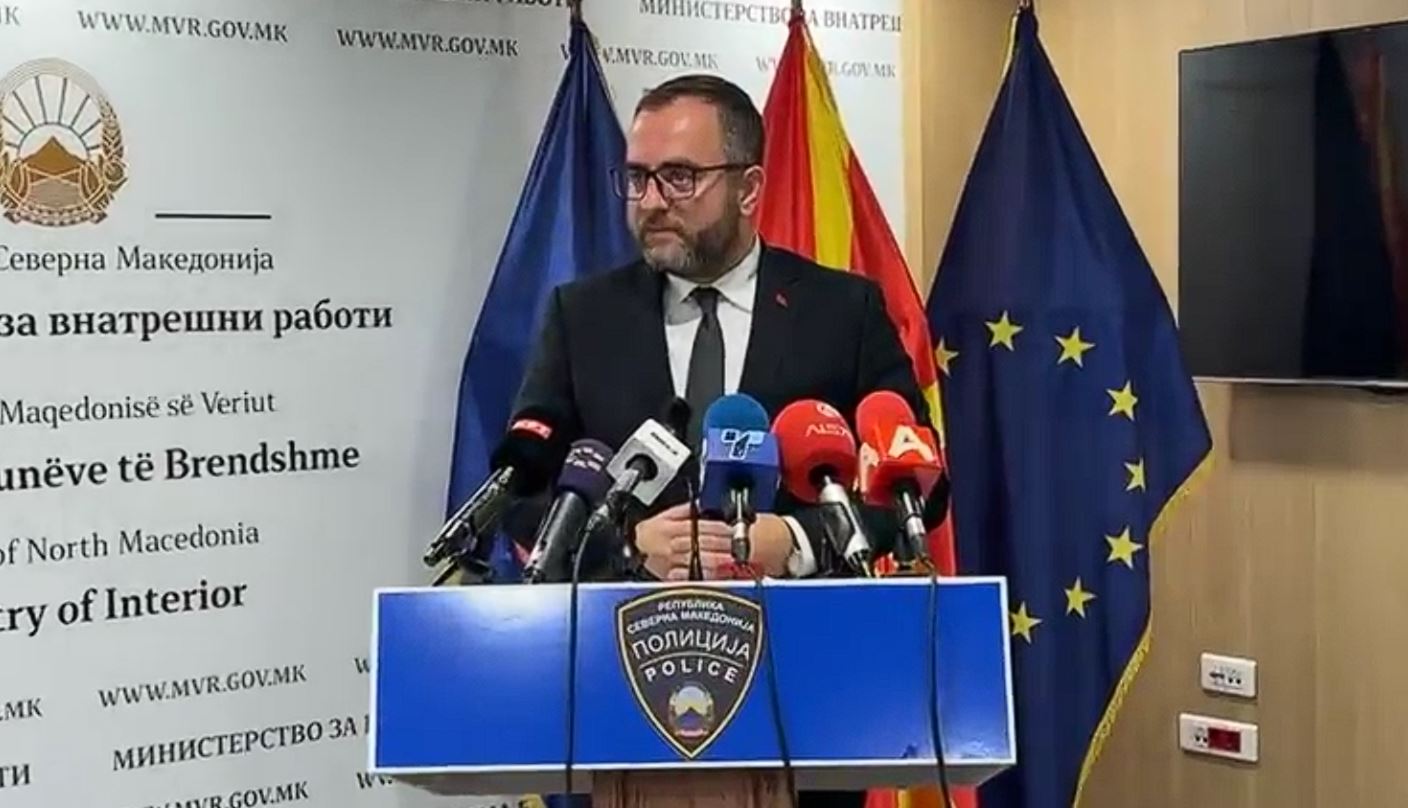
There are moments when an individual case transcends the boundaries of a judicial proceeding and becomes a test of a state’s institutional capacity, the authority of its public institutions, and the ability of its political leadership to uphold the rule of law without yielding to pressure.The case involving Iva Mihailova is precisely such a moment.At its centre lies not merely the fate of an individual, nor simply the question of whether a state border was crossed lawfully. Rather, it raises a series of questions that demand evidence-based answers, not political conjecture.How did a person reportedly subject to a central and international arrest warrant, according to the materials provided, find herself in Bulgaria?Why, according to statements made thus far, have the Macedonian and Bulgarian authorities apparently been unable to produce a verified record of her border crossing?Was there an unlawful crossing, a failure of record-keeping, or another mechanism that has yet to be established?Was assistance provided by individuals?And, ultimately, will the case be resolved through the competent judicial institutions, or will it remain captive to political propaganda?These are not questions that can be settled by a single television appearance, a party press conference, or the diplomatic summoning of an ambassador.They require an investigation, documentary evidence, interinstitutional cooperation, and accountability.Yet the case raises a broader dilemma: what happens when a state requires its citizens to obey the law, only to confront a situation in which it cannot immediately explain how a person involved in judicial proceedings came to be outside its territory?That is the moment when the true institutional test begins.Not a test of television rhetoric.Not a test of party loyalty.But a test of the state’s capacity to act.At the centre of that test stands the Minister of Interior, Panche Toshkovski.
PANCHE TOSHKOVSKI: POLITICAL ACCOUNTABILITY IS NOT THE SAME AS A POLITICAL LYNCHING
Politics has a dangerous tendency, particularly when an opposition party confronts an institutional crisis: if it cannot immediately establish a minister’s personal culpability, it attempts to portray the very existence of a problem as proof of ministerial incompetence.Such an approach may produce short-term political gains, but it does not resolve the underlying issue.Panche Toshkovski is the Minister of Interior. Responsibility for the functioning of the police, border controls, and the lawful conduct of the relevant services forms part of his institutional mandate.That responsibility cannot be denied, nor can it be evaded by invoking the political achievements of the Government.Equally, however, it cannot automatically be concluded that the minister personally enabled an escape simply because the incident occurred while he was in charge of the institution.A distinction of fundamental importance to every state governed by the rule of law must be maintained.Political accountability concerns the exercise of public office. Criminal liability concerns guilt established through evidence and due process.If an investigation establishes that officials failed to perform their duties, abused their authority, or provided organised assistance, responsibility must be determined in accordance with the evidence and the applicable law.If, on the other hand, the investigation identifies a systemic failure, the minister must explain how it will be remedied, what measures will be taken, and how similar incidents will be prevented in the future.That is the standard the public should demand of Panche Toshkovski.The same standard, however, must apply to his political opponents.A demand for resignation is not proof. An accusation is not a judicial verdict. Political rhetoric cannot substitute for an investigation.For this reason, support for Toshkovski should not rest on a blind denial that a problem exists. It should rest on the principle that no minister should be declared guilty before the facts have been established.Toshkovski deserves the opportunity to demonstrate his commitment to law enforcement, but that opportunity must be justified by institutional results.His strongest defence will not be a party statement, nor a shouting match with the opposition.It will be an investigation that provides answers, a system that corrects its weaknesses, and tangible results demonstrating that the state is capable of acting even when a case becomes politically sensitive.That is the true measure of a minister.
HRISTIJAN MICKOSKI: WHY THIS CASE MUST NOT BECOME A POLITICAL TRAP FOR THE GOVERNMENT
For Prime Minister Hristijan Mickoski, the case presents a twofold challenge.On the one hand, the Government must demonstrate that institutions are functioning, that no one enjoys immunity from the law, and that neither political influence nor diplomatic pressure can obstruct lawful proceedings.On the other hand, the Prime Minister must resist attempts to turn every problem automatically into evidence of governmental incompetence and every institutional uncertainty into an opportunity for premature political confrontation.This is where the distinction between statesmanship and partisan reaction becomes essential.Mickoski should not defend Toshkovski at any cost.He should defend the principle that accountability must be established on the basis of facts, that investigations must not be subjected to political direction, and that no one has the right to exploit institutional uncertainty to deliver verdicts in advance.That is a considerably stronger position than a routine partisan defence.The Prime Minister is entitled to demand that the case be thoroughly investigated. He is entitled to expect results from the Ministry of Interior, the Ministry of Justice, and the diplomatic services. He is also entitled to insist that political attacks must not paralyse the work of the state.At the same time, however, the Government must demonstrate that its response does not amount merely to counteraccusations against the previous administration.The past may help explain certain systemic weaknesses. It cannot serve as a permanent justification for present failures.The strongest support for Mickoski, therefore, is support for his ability to transform a political crisis into an institutional resolution.He does not need to win a television argument.He needs to establish the principle that the state is not the private property of any political party.If the Government demonstrates that the investigation is conducted professionally, that all plausible scenarios are being examined, and that those found responsible will face the consequences, political attacks will lose much of their force.If answers fail to materialise, however, the opposition will have ample opportunity to portray institutional uncertainty as evidence of political impotence.The strongest response a government can offer is not the loudest defence of its minister, but the tangible result that validates its commitment to responsible governance.SOFIA AND THE PARADOX OF EUROPEAN VALUESThe most sensitive dimension of this case concerns the conduct of, and public statements emanating from, Bulgaria.According to the materials provided, the Bulgarian ambassador in Skopje stated that Bulgaria did not support Mihailova’s escape but understood it as an act of desperation.Meanwhile, Bulgarian MEP Andrey Kovatchev reportedly announced that he had informed the leadership of the European Commission about the case and that the matter was being treated in Bulgaria as a humanitarian issue.Bulgarian political and public figures have emphasised the right to medical treatment and the need for healthcare.Let us be precise: medical assistance is not in dispute.Every human being is entitled to dignity, healthcare, and the protection of life. If an individual requires treatment that cannot adequately be provided in their own country, this is a serious matter that should be addressed through lawful and appropriate medical mechanisms.But an unavoidable question arises.Can humanitarian concern replace legal procedure?The answer must be no.Medical necessity and judicial proceedings are two distinct matters. One concerns health and human dignity. The other concerns legality, judicial obligations, and potential liability.They can, and must, be addressed simultaneously.Medical treatment can be provided without nullifying judicial proceedings.A person’s health can be protected without creating the impression that citizenship confers a special legal status.Humanity can be demonstrated without suggesting that the judicial institutions of another state are irrelevant.That is why it becomes problematic when political statements begin to create the impression that a case should be assessed exclusively through a humanitarian lens.Not because humanitarian concern is misplaced, but because it must not be used as a substitute for answering how the individual left the country and what her legal status is.Furthermore, according to the materials provided, Bulgarian representatives have yet to offer a clear public explanation of how Mihailova entered Bulgaria.If no border-crossing record exists, that circumstance requires an institutional explanation.The absence of a record, however, does not in itself prove that the crossing was unlawful.Several scenarios may be possible, and determining which one is correct requires an investigation.Diplomatic exchanges of accusations are therefore no substitute for concrete answers.When was her presence in Bulgaria first established?Which institutions examined the circumstances of her entry?What information has been exchanged between the competent authorities?Which legal mechanisms apply to this particular case?These are the questions that can resolve the uncertainty.Everything else risks remaining within the realm of political messaging.
THE EUROPEAN UNION MUST NOT BECOME A CLUB OF DOUBLE STANDARDS
The case also raises a broader European question.If European institutions consistently emphasise the rule of law, judicial independence, and respect for public institutions, those principles must apply equally when sensitive disputes arise between neighbouring states.European values cannot be treated as a selective catalogue from which each government chooses what to uphold and what to disregard according to its political interests.Equally, European institutions must not be used as instruments of diplomatic pressure in the absence of concrete evidence and established facts.Macedonia’s position should be clear.Skopje has the right to demand institutional cooperation, seek clarification of the circumstances surrounding the border crossing, and activate the mechanisms provided for under applicable law.It also has the right to ask European institutions to examine all relevant circumstances where legitimate grounds exist.But arguments must be documented.The European Commission cannot act as a judge on the basis of media statements, just as the Macedonian Government cannot expect a legal resolution to emerge from diplomatic protest alone.The objective is not to construct a European front against Bulgaria.It is to demand consistent application of the principles that the European Union itself establishes as conditions for membership.Here lies one of the most important political messages for Mickoski.Macedonia should not seek privileged treatment. It should demand equal standards.If European values are to retain their meaning, judicial proceedings must not become instruments of national solidarity, and humanitarian considerations must not be used to undermine the institutions of a neighbouring state.At the same time, Macedonia must demonstrate that its own judicial system is capable of operating lawfully, professionally, and transparently.The European perspective is not defended by declaring every critic an adversary.It is defended by building institutions capable of withstanding the most demanding scrutiny.
THE AGREEMENT WITH BULGARIA: WHEN DIPLOMATIC IDEALISM MEETS THE TEST OF REALITY
This case inevitably reopens the broader debate about relations between Skopje and Sofia, the 2017 Treaty of Friendship, Good-Neighbourliness and Cooperation, and the protocols associated with its implementation.It is time to move beyond a political illusion that has burdened Macedonian public life for years: the assumption that signing an agreement automatically resolves disputes, guarantees friendship, and enables diplomatic formulas to overcome fundamental differences.Interstate agreements are not magical documents.They establish frameworks within which the parties undertake obligations. Their value depends on how those obligations are implemented.In the case of Bulgaria, the question of good-neighbourly relations has for years been intertwined with profound disagreements concerning history, identity, language, and Macedonia’s European integration.It is therefore legitimate to ask whether the approach pursued thus far has provided sufficient predictability, mutual trust, and guarantees for the Macedonian side.But criticism must remain precise.It is not enough to declare the agreement responsible for every new crisis.Nor is it reasonable to claim that a single incident proves the existence of a secret political arrangement.Such conclusions require documentary evidence and verifiable facts.What can, and should, be examined seriously is the gap between diplomatic rhetoric and the practical conduct of bilateral relations.If the two states have committed themselves to good-neighbourly relations, that commitment should also be reflected in respect for judicial proceedings, institutional cooperation, and restraint in public statements that may undermine mutual trust.If unresolved issues remain, they should be addressed through the agreed mechanisms, with clearly articulated positions and without the unilateral expectation that Macedonia must accept every political demand in exchange for progress towards the European Union.Mickoski’s policy must therefore be assessed against one fundamental criterion: whether Macedonia can preserve its negotiating position while remaining committed to its European future.Blind concessions are not statesmanship.Neither is permanent confrontation a strategy.Statesmanship means negotiating without humiliation, cooperating without surrendering one’s interests, and seeking compromise without accepting that one side has the right to determine the identity or political boundaries of the other.That is the essential test facing every Macedonian government.THE FRENCH PROPOSAL AND THE PROTOCOLS: THE PRICE OF UNCLEAR EXPECTATIONSThe Macedonian public has every right to demand a thorough examination of the political consequences of the French proposal, the negotiating framework, and the protocols associated with the European integration process.But the documents themselves, their legal status, and the political interpretations surrounding them must be distinguished carefully.The French proposal is not identical to the bilateral treaty signed in 2017.The negotiating framework is not identical to every individual protocol.And political interpretations of particular provisions do not automatically correspond to their precise legal meaning.For this reason, it is essential to examine exactly what commitments have been undertaken, which obligations arise from the relevant documents, and what consequences they may have for the future European integration process.The question is not whether Macedonia should become a member of the European Union.The question is under what conditions, with what guarantees, and with what safeguards for its fundamental national interests.A state may make compromises in foreign policy. But a compromise must have a clearly defined purpose, measurable results, and reasonably foreseeable consequences.If agreed mechanisms fail to produce the anticipated improvement in relations, a political and legal reassessment is entirely legitimate.If expectations are asymmetrical, that imbalance should be identified openly and addressed through negotiations.And if a new dispute emerges, such as the Mihailova case, it should not automatically be treated as proof that the entire European policy process has been orchestrated in advance.What is required is political maturity.Macedonia should continue its European integration, but not as a state that relinquishes its right to scrutinise and defend its own interests.It must act as a partner that understands what it accepts, what it expects, and which principles cannot be reduced to the subject of daily political bargaining.The European path is a strategic objective.But a strategic objective does not eliminate the obligation to weigh every step carefully.SDSM, DUI AND LEVICA: OPPOSITION CRITICISM IS NOT AUTOMATIC PROOF OF GUILTThe opposition has every right to demand accountability from the Government. That is an essential constitutional and political function.But when the resignation of a Minister of Interior is demanded, particularly in a case with international and diplomatic implications, the public is entitled to know the evidence upon which that demand rests.The materials provided indicate that opposition political actors are demanding resignations and raising the possibility that the escape may have been arranged in advance. Questions have also been raised about alleged political arrangements connected to relations with Bulgaria and the European integration process.These are serious allegations.But the more serious an allegation, the greater the burden of proof.If SDSM claims that the escape was deliberately facilitated through an organised effort, it should present its evidence or submit it to the competent authorities.If DUI or other political actors possess concrete information, they should act accordingly.If Levica maintains that the case is connected to a broader political arrangement, it must explain the factual basis for that assertion.Political criticism is legitimate.Presenting unproven assumptions as established truth is not.SDSM cannot turn every crisis into conclusive proof of the current Government’s incompetence.DUI cannot avoid scrutiny of its own political legacy simply because it now sits in opposition.Levica cannot expect the public to accept serious geopolitical claims without verifiable evidence.The same principle, however, applies to VMRO-DPMNE.No political party holds a monopoly on patriotism, and no party has the right to elevate its suspicions into unquestionable state doctrine.The strongest response to opposition attacks is therefore not insult, but transparency.Rather than simply telling the public to ask the competent institutions for answers, those institutions must provide concrete information within the limits permitted by law.Rather than conducting a political contest over who is guilty, the authorities must establish what actually happened.If the opposition has evidence, it should produce it.If the Government has answers, it should provide them.If anyone is manipulating the facts, that manipulation should be exposed through evidence.Democracy is not defended by prohibiting criticism, but by ensuring that criticism can be tested against the truth.A MEDICAL REPORT IS NOT A POLITICAL VERDICTParticular care is required when examining the medical report that, according to the materials provided, recommends treatment in Bulgaria.Political debate has included claims concerning the physician who prepared the report and alleged connections with previous controversies.A clear distinction must be drawn here.A physician’s professional history, where relevant and documented, may legitimately be subject to public scrutiny. Nevertheless, that history alone does not prove that the medical findings are inaccurate, that the treatment recommendation is unjustified, or that the report was prepared with the intention of facilitating an escape.Such conclusions require professional medical and legal examination.At the same time, the existence of a medical condition does not automatically extinguish a person’s judicial obligations.These are two separate questions that must be assessed without political prejudice.If the medical report is accurate, the patient’s healthcare needs must be respected.If doubts exist about its reliability, they must be investigated through an appropriate professional procedure.If there is reason to suspect that a medical document was abused for an unlawful purpose, that suspicion must be substantiated by evidence.A physician must not be condemned in advance because of the surrounding political climate.Nor should a medical report be treated as an automatic justification for disregarding judicial proceedings.That is the only principled approach.It is also what distinguishes serious political analysis from partisan campaigning.THE QUESTION OF THE FATHER: IS THERE A BROADER INSTITUTIONAL PROBLEM?The materials provided state that Mihailova’s father is also in Bulgaria and that he has a final prison sentence in Macedonia for serious criminal offences.If this information is confirmed by official judicial documents, it raises additional questions concerning interstate legal cooperation and the handling of cases involving individuals sought by Macedonian authorities who are located in another country.One point, however, must be made clear: two separate cases cannot automatically be treated as proof of a common organisation or political plan.The legitimate question is whether recurring weaknesses exist in the exchange of information, border records, or mechanisms for legal cooperation.If such weaknesses exist, they must be identified and corrected.If concrete evidence points to assistance by individuals, that evidence must be investigated.If it is established that someone deliberately obstructed judicial proceedings, the law must take its course.But no individual should be declared part of an organised scheme merely because of a family relationship with another person.The rule of law does not operate on the basis of presumed collective guilt.It operates on the basis of individual responsibility, evidence, and facts established through lawful procedures.WHAT MUST MINISTER TOSHKOVSKI DO?Support for Panche Toshkovski must be accompanied by clear expectations.First, the authorities must establish a complete chronology: when the individual was last registered in Macedonia, when her presence in Bulgaria was established, and what information exists concerning the circumstances of any border crossing.Second, the functioning of border-control systems, official records, communication between services, and every relevant piece of information that could help reconstruct her movements must be examined.Third, the authorities must determine whether unlawful assistance was provided. This requires the examination of all relevant information, without prematurely excluding any possibility or declaring anyone guilty in advance.Fourth, effective cooperation with Bulgarian institutions must be pursued through the applicable legal mechanisms. Diplomatic protest may form part of the response, but it cannot replace institutional action.Fifth, if failures within the services are established, appropriate disciplinary, organisational, or criminal proceedings must follow, depending on the nature of the responsibility identified.Sixth, the public should receive regular, verifiable information to the extent that disclosure is consistent with protecting the investigation and the legal rights of those concerned.Seventh, the Ministry must demonstrate what changes will be introduced to reduce the risk of similar incidents occurring again.This is not a list intended to condemn the minister in advance.On the contrary, it provides him with an opportunity to demonstrate the strength of his professional leadership through results.If Toshkovski delivers the necessary answers and demonstrates that the institutions are acting professionally, this will constitute the strongest argument against attempts to turn the case into a campaign for his removal.If failures are uncovered, they must be corrected. If personal or official responsibility is established, no one should be shielded from the law.Such an approach does not weaken the Government.It strengthens it.POLITICAL POWER IS NOT MEASURED BY THE ABILITY TO SHOUT DOWN AN OPPONENTPolitics frequently confuses strength with volume.The assumption is that the stronger side is the one that delivers the harshest accusation, demands a resignation most quickly, or attacks its opponent most aggressively.But this is merely the appearance of power.True political power is demonstrated by the ability to resolve the very problem that others seek to exploit for political advantage.For Panche Toshkovski, that means demonstrating that the Ministry of Interior is not trapped in a defensive posture, but is actively examining every relevant circumstance.For Hristijan Mickoski, it means preserving the Government’s stability without ignoring legitimate institutional questions.For VMRO-DPMNE, it means demonstrating that loyalty to its own officials is not more important than the principle of accountability.For the opposition, it means showing that its criticism rests on evidence rather than political convenience.And for Macedonia, it means ensuring that every serious problem is resolved in the interests of the state, not in the interests of party ratings.This is the essential distinction between a politician who seeks to win power and a statesman who understands the responsibility of governing a country.MICKOSKI AND TOSHKOVSKI: DEFENDING THE STATE MATTERS MORE THAN DEFENDING AN OFFICEThe most important political conclusion to be drawn from this case is that the Government must not allow the debate to be reduced to a simplistic question: will Toshkovski resign or remain in office?That question may legitimately arise in the context of political accountability, but it is not the essence of the problem.The real question is whether the state can establish what happened, identify any institutional failures, and secure a lawful resolution.If the political debate revolves exclusively around resignation, there is a danger that even a resignation, should one occur, will become a substitute for a genuine investigation.A minister may leave office while the problem remains unresolved.Conversely, a minister may remain in office while the underlying institutional weaknesses persist, allowing the same failures to recur.Mickoski should therefore elevate the debate.Not the protection of an office at any cost, but the protection of institutional integrity.Not political retaliation, but a lawful resolution.Not a propaganda victory, but a concrete result.Such a policy is stronger than any day-to-day political provocation.For this reason, support for Toshkovski must be clear on one essential point: he must be given the opportunity to complete his work without political interference in the investigation, but he must not be exempted from the obligation to explain the performance of the institution he leads.That is the proper standard.THE STATE CANNOT BE DEFENDED THROUGH PARTISAN BLINDNESSOne of the persistent weaknesses of Macedonian politics is the tendency of every political camp to interpret an institutional crisis according to its own interests.When in government, one party speaks of stability and institutional independence.When in opposition, it demands immediate accountability.Then the roles are reversed, and the arguments often remain the same, with only the names changed.The result is a political cycle in which the state is constantly invoked as something to be defended, yet rarely treated as an institution requiring systematic improvement.The Mihailova case must therefore become an opportunity for something more than partisan confrontation.Border-control procedures must be examined.The exchange of information with neighbouring states must be assessed.Any legal loopholes susceptible to abuse must be identified.Interinstitutional coordination must be improved.If legislative amendments are necessary, they should be considered carefully, through legal analysis and with full respect for fundamental rights.For example, proposals for additional measures concerning individuals with dual citizenship must be assessed according to the applicable legal conditions, the objective of the measure, and its proportionality.It cannot simply be assumed that confiscating a passport or identity card would resolve every risk of flight.Every measure must be lawful, enforceable, and appropriate to the specific risk.A state must close weaknesses in its system rather than create new injustices in an attempt to demonstrate its strength.That is the difference between a state governed by the rule of law and one that reacts impulsively.
TRUE SOVEREIGNTY EXTENDS BEYOND THE BORDER
Sovereignty is not merely a line on a geographical map.It is the ability of a state to enforce its laws, protect the rights of its citizens, fulfil its international obligations, and cooperate with other countries without surrendering its own legal order.That is why the Mihailova case is about more than border control.It is a test of Macedonian institutions, of relations with Bulgaria, and of the ability of political leaders to distinguish the national interest from the advantages of day-to-day political manoeuvring.Macedonia must insist that its judicial proceedings be respected.At the same time, it must demonstrate that those proceedings are lawful, professional, and evidence-based.It must demand cooperation from Bulgaria without allowing legal cooperation to be replaced by political confrontation.It must defend its European perspective without accepting double standards as the price of membership.It must defend Toshkovski against unsubstantiated accusations without relieving him of the responsibility to deliver results.And it must support Mickoski in his pursuit of an independent national policy while insisting that this policy be validated through tangible institutional achievements.That is the essence of sovereignty.Not a declaration, but a capability.Not anger, but results.Not a political pose, but responsibility.
THE FINAL VERDICT: A PORTRAIT OF POWER EMERGES WHEN THE TIME FOR ACCOUNTABILITY ARRIVES
Panche Toshkovski now faces a serious political and institutional test.His performance cannot be assessed merely by how forcefully he responds to the opposition, nor by how much support he receives from his party’s leadership.It must be judged by whether the Ministry of Interior establishes all relevant circumstances, examines the conduct of its services, and provides answers capable of withstanding public scrutiny and examination by the competent institutions.Hristijan Mickoski, for his part, has an opportunity to demonstrate that the strength of his leadership does not lie in automatically defending every officeholder, but in establishing a standard of accountability that applies to everyone.That is the political distinction a government can make.In relations with Bulgaria, Macedonia must remain firm while maintaining legal precision. It must not accept that humanitarian considerations automatically nullify judicial obligations. But neither must it allow suspicions to become unsubstantiated accusations.In its relations with the European Union, Macedonia must demand equal standards, consistency, and respect for commitments undertaken. Yet European integration must be pursued through strategy, not improvisation.As for the opposition, the Government must demonstrate that it does not fear criticism, but expects criticism to be grounded in evidence. The opposition, in turn, must understand that demanding resignations is a legitimate political instrument, but not a substitute for judicial proceedings.Most importantly, the state must demonstrate to its citizens that the law applies equally, regardless of party affiliation, nationality, dual citizenship, or political connections.This is where propaganda ends.This is where statesmanship begins.True power is not demonstrated when an institution is spared criticism. It is demonstrated when that institution operates lawfully under pressure.Not when a minister has no opponents, but when his performance can withstand scrutiny.Not when a prime minister faces no political difficulties, but when he resolves them without sacrificing principle.And not when a state speaks loudly about sovereignty, but when its institutions prove that sovereignty has real substance.Panche Toshkovski must be given the opportunity to establish the truth through results.Hristijan Mickoski needs an institutional resolution that validates his commitment to responsible state leadership.And Macedonia needs a victory more important than that of any political party: a victory of the rule of law over political score-settling.That is the only outcome capable of strengthening the state.And the only outcome truly worth defending.
THE FINAL WISDOM
“Justice is the foundation of the state, and its strength is measured by whether the law applies equally to the powerful and the powerless.”— A reflection inspired by the political philosophy of Aristotle
THE FINAL WORD
Panche Toshkovski must not become a casualty of political score-settling. Yet no public office can place its holder beyond the reach of accountability.Hristijan Mickoski has an opportunity to demonstrate that his Government does not fear the truth, that Macedonia knows how to defend its interests, and that the European path does not require surrendering its own legal order.A state does not defeat the opposition by silencing it.A state prevails when it resolves legitimate doubts, establishes the facts, and demonstrates that justice recognises neither party membership nor diplomatic privilege.That is Panche Toshkovski’s test.That is Hristijan Mickoski’s challenge.And that is the standard by which Macedonia must assess its own political maturity.
