

Written by: M.Sc. Slobodan TOMIC
(Political Analyst and Publicist, Author of the Political TV Magazine The Voice of the People)

Slobodan TOMIC
BRVENICA – THE DEFEAT OF POLICY AND THE VICTORY OF ETHNIC MOBILISATION: WHEN THE PARTY MACHINE PROVES STRONGER THAN THE VISION OF DEVELOPMENT
Homo homini lupus est – Man is a wolf to man.
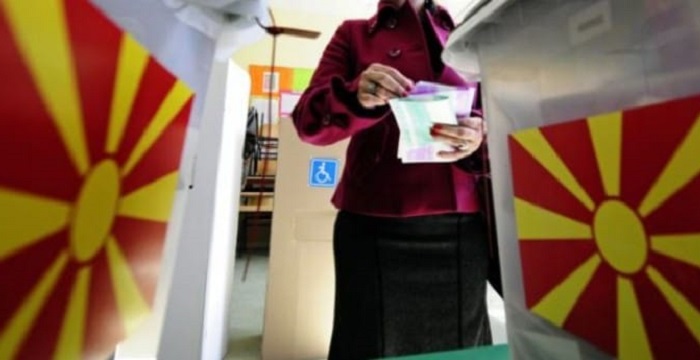
In the political reality of Macedonia, this ancient maxim acquires an especially painful meaning:A Macedonian is a wolf to another Macedonian!Brvenica is not merely a municipality where the second round of extraordinary local elections took place on 1 November 2026.It is a political test of the maturity of Macedonian society, of the ability of political parties to rise above their own vanity, and of whether this country still possesses the political awareness that the development of a municipality must take precedence over ethnic and party affiliation.The extraordinary elections were called following the death of the previous mayor, Jovica Ilievski, who passed away on 23 June 2026.This should have been an opportunity to continue the work already set in motion, not an excuse for another political war.The VMRO-DPMNE candidate, Stojancho Radichevski – Coki, entered the race with a development programme and a clear message: Brvenica must continue to be built as a municipality for everyone.Yet the outcome proved devastating for those who believed that programmes, projects and a vision for development would determine the result.Arkin Jahiji, the candidate of the National Alliance for Integration, led by DUI, secured 4,442 votes. Radichevski received 4,177. The difference was a mere 265 votes.And this is where the real political analysis begins.
TWO PROGRAMMES, TWO POLITICAL LOGICS – BUT DID THE CITIZENS VOTE FOR DEVELOPMENT?
Let us examine what Radichevski offered.His programme envisaged the completion of sewerage networks in Sedlarce, Brvenica, Chelopek, Blace and Mile tino; improvements to the water supply in Chelopek; the development of the Brvenica industrial zone; the attraction of investment and creation of new jobs; the construction and expansion of kindergartens; a residential care home for the elderly; and support for young people and rural development.These are concrete local priorities.They are not grand national slogans. They are the very issues that determine the everyday quality of life of ordinary residents.And now let us ask a fundamental question: what matters more to a resident of Brvenica? Whether the mayor belongs to one ethnic community or another, or whether their village will finally have sewerage, clean drinking water, proper roads, employment opportunities and an economic future?In the twenty-first century, parts of the municipality are still struggling with inadequate or unfinished communal infrastructure.During the public pre-election debate, attention was drawn to the fact that the problem of sewage disposal in Volkoviја remains unresolved.The election programmes themselves demonstrate the scale of the unfinished work.Let us be absolutely clear: I am not claiming that the entire municipality of Brvenica lacks a sewerage system. The problem is that several settlements still require the completion of their networks or appropriate solutions for wastewater collection and treatment.But if people are still living with septic tanks, inadequate sewerage and water supply problems, these must be the foremost issues in every election campaign.Should voters choose a mayor on the basis of who that person is, or on the basis of what that person intends to accomplish?
THE DUI CANDIDATE AND THE UNANSWERED QUESTIONS SURROUNDING HIS PROGRAMME
The attitude towards the public presentation of Arkin Jahiji’s programme deserves particular attention.Macedonian Radio and Television reported that Jahiji declined an invitation to appear before the cameras and present his programme, despite an initial agreement. Radichevski, by contrast, presented his plans and priorities.This is no insignificant detail.When you seek the trust of 16,256 registered voters, when you ask to govern a municipality facing serious infrastructural and economic challenges, you have an obligation to explain publicly what you intend to do, how you intend to finance it and within what timeframe you will deliver it.It is not enough to promise a more developed, more functional and better-organised municipality.Citizens have the right to know: where will sewerage systems be built? How will water supply problems be resolved? What will be done to stimulate the local economy? How will investors be attracted? How many new jobs will be created?That is precisely why the winner must now provide answers to these questions.Winning an election does not mean that the work is finished. It means that the obligation has only just begun.
THE SECOND ROUND: HOW WERE THE VOTES MOBILISED?
This is perhaps the most revealing aspect of the electoral arithmetic.In the first round, Radichevski received 2,943 votes, while Arkin Jahiji secured 2,152. VLEN candidate Jakup Huseini received 1,528 votes, while SDSM candidate Jovica Radeski obtained 706.In the second round, Radichevski reached 4,177 votes, while Jahiji secured 4,442.This means:Radichevski gained 1,234 additional votes compared with the first round.Jahiji gained 2,290 additional votes.Overall turnout increased from approximately 7,565 to 8,820 voters.These calculations are based on the published results from both rounds.This is the essence of the political analysis: Jahiji succeeded in attracting a substantially larger number of additional votes.Without a detailed analysis of individual polling stations, it is impossible to establish precisely where every additional vote came from.Nevertheless, the figures clearly demonstrate that second-round mobilisation was considerably more successful on the winner’s side.And this raises a fundamental question: was the Macedonian political electorate sufficiently consolidated?Did the parties with predominantly Macedonian electorates manage to deliver a common message that local development, infrastructure and the continuation of existing projects mattered more than party rivalries?Evidently, they failed to do so.This does not mean that all Macedonian voters were obliged to support the same candidate. Democracy does not require ethnic or party allegiance.The problem is that political leaders failed to establish a convincing common message around the municipality’s shared developmental interests.
VENKO FILIPCHE – POLITICAL NEUTRALITY OR AN ESCAPE FROM RESPONSIBILITY?
Here, the political responsibility of Venko Filipche must be addressed.He personally became involved in SDSM’s campaign in Brvenica and supported his party’s candidate, Jovica Radeski.But when Radeski failed to reach the second round, Filipche announced on 22 October that SDSM would endorse neither candidate, leaving the decision to the citizens.Mr Filipche, political leadership is not merely the privilege of asking people to vote for your candidate.It is also an obligation to assume responsibility when your candidate is eliminated.If we are genuinely discussing the interests of Brvenica, why did you not send a clear message that, in the second round, voters should support the candidate offering a concrete development programme?Why did you not attempt to establish a broader understanding with VMRO-DPMNE concerning the continuation of the work initiated by the late mayor?Why did you fail to demonstrate that something matters more than party ratings – the interests of the citizens?You may invoke the argument that political alliances must be principled and that every voter makes an independent decision. But that does not absolve you of political responsibility.When you are the president of a political party, you cannot claim leadership only when votes are there to be won and suddenly retreat into neutrality when responsibility must be assumed.SDSM had an opportunity to demonstrate that it was prepared to rise above its own partisan calculations.It failed to seize that opportunity.And that is precisely why Filipche must answer a fundamental question: was it more important to him to avoid helping VMRO-DPMNE, or to help ensure the continuation of a development-oriented policy in Brvenica?
LEVICA, VLEN AND DUI – WHEN POLITICAL CONTRADICTIONS DISAPPEAR IN THE FACE OF ELECTORAL INTEREST
Levica, too, must answer questions about its political strategy in the second round.It is not enough to be outspoken against certain political forces and then remain silent about the consequences of one’s own political positioning.We should not invent a formal agreement between SDSM, Levica and DUI. No such agreement has been established.However, we must examine whether their separate political positions and actions, in practice, contributed to the final outcome.The role of VLEN is particularly interesting.In the first round, its candidate, Jakup Huseini, received 1,528 votes.On 22 October, VLEN announced that responsibility for mobilisation in the second round rested with Arkin Jahiji and his coalition.Yet on 28 October, Bilall Kasami publicly confirmed that VLEN had politically decided to support DUI’s candidate, while adding that he could not guarantee that all its voters would follow that recommendation.There lies the political contradiction!VLEN entered the first round with its own candidate, only to endorse DUI’s candidate in the second.So where exactly is the difference in their political platforms? Where does electoral competition end, and where does common political calculation begin?Kasami has every right to decide whom his party will support.But citizens also have every right to ask whether VLEN genuinely represents an alternative political vision to DUI or whether, when the decisive moment arrives, it simply returns to the same ethno-political framework.
ALI AHMETI, BILALL KASAMI AND THE TIRANA PLATFORM – HOW LONG WILL POLITICS CONTINUE TO BE DRIVEN BY ETHNIC CALCULATIONS?
This brings us to the broader political question concerning Ali Ahmeti and Bilall Kasami.One cannot speak for years about a European future, modernisation and integration while allowing political mobilisation at the local level to be reduced to ethnic head-counting.Local politics must not become a competition over which side can demonstrate greater ethnic political power.Ali Ahmeti has been one of the most influential political figures within the Albanian political bloc for many years. Bilall Kasami is the mayor of Tetovo and one of VLEN’s leaders.Both bear political responsibility for answering a fundamental question: does their political approach create functional municipalities and effective institutions, or does it deepen ethnic competition?And here we return to the Tirana Platform of 2017.It must not be treated merely as a historical episode while the political questions it raised about the relationship between ethnic demands, state institutions and a common national strategy are conveniently ignored.The legitimate rights of Albanians in Macedonia are not in question.On the contrary, they are an integral part of the democratic and constitutional order.However, legitimate rights must never be transformed into instruments of partisan manoeuvring, nor used as substitutes for economic and development policies.Loyalty to the state is not demonstrated through ethnic slogans, but through responsibility towards its institutions, laws and citizens.And this principle applies to all political leaders, regardless of their ethnic background.One cannot demand votes in the name of a community while evading responsibility for that community’s real problems.One cannot seek the office of mayor without providing clear answers about sewerage, water supply, the local economy, employment and the future of young people.No ethnic political narrative can justify such failures.
ALI AHMETI AND LOCAL DEVELOPMENT – THE QUESTIONS THAT MUST NOT BE AVOIDED
If political authority is built over decades, it must also be measured by results.Ali Ahmeti is no newcomer to politics. He has led DUI for years and has exerted influence over policies at both local and central government levels.It is therefore entirely legitimate to ask: how much of the political energy invested in ethnic and partisan battles has actually been channelled into local economic development?How many industrial facilities have been established? How many jobs have been created? How many settlements have gained complete sewerage networks, reliable water supplies and modern infrastructure?And if we refer to Zajas, Ahmeti’s birthplace, then concrete communal achievements there must also be discussed, rather than merely his political legacy.To claim that a particular settlement still lacks sewerage requires verified information about the actual state of its infrastructure. It would be irresponsible to present such a statement as established fact without supporting documentation.But the principle is straightforward: no political leader is above scrutiny when it comes to local development.It must also be remembered that the victory in Brvenica belongs to DUI’s candidate. It is not automatically proof of a superior development programme.The new mayor must now deliver the results that citizens are entirely justified in expecting.
THE DIASPORA AND ELECTORAL MOBILISATION – WHAT IS THE REAL MESSAGE?
Following his victory, Jahiji thanked the diaspora for its support.That is a legitimate political expression of gratitude.Nevertheless, the public debate has also raised questions about people living outside the municipality, their mobilisation and their arrival for election day.Two matters must be clearly distinguished: support from the diaspora and the legal right to vote at a particular polling station.Local elections do not provide for voting abroad as a separate electoral category.However, the public has every right to expect the competent institutions to investigate any specific reports of possible irregularities.Illegality must not be declared without evidence, but neither should an investigation be avoided when concrete grounds for suspicion exist.Democracy is not merely the final number announced on election night.It is also the public’s confidence in the process that produced that number.
BRVENICA MUST NOT BECOME A SYMBOL OF ETHNIC VICTORY, BUT OF SHARED RESPONSIBILITY
The greatest danger arises when politicians begin celebrating an electoral result as the victory of one ethnic community over another.Brvenica is a multi-ethnic municipality. Macedonians, Albanians, Turks and other citizens live there. They may hold different political views, but they share the same fundamental needs.Sewerage does not ask about ethnicity.Water does not ask for a party membership card.A road does not ask whether you voted for DUI, VMRO-DPMNE, SDSM or VLEN.A septic tank is not a political programme.Wastewater cannot be dealt with through national slogans.Unemployment cannot be defeated through ethnic head-counting.That is why the new mayor, Arkin Jahiji, must demonstrate that he will serve as mayor of all residents, not merely those who supported him.He must explain what he intends to do about sewerage, water supply, local roads, the industrial zone, investment and employment.And he must prove that his electoral victory is not a licence for partisan control of the municipality, but an obligation to exercise public accountability.
FINAL MESSAGE: WHEN WILL WE UNITE AROUND MACEDONIA, IF WE CANNOT EVEN UNITE AROUND ONE MUNICIPALITY?
Brvenica is a warning to Macedonia’s political parties.VMRO-DPMNE must learn that even a strong programme is insufficient without effective political organisation and communication with every citizen.SDSM and Venko Filipche must explain why they failed to demonstrate greater political responsibility in the second round.Levica must clarify its political strategy and whether its conduct contributed to the further fragmentation of the Macedonian political space.VLEN and Bilall Kasami must explain how they justify their political endorsement of DUI, the very party against which they competed in the first round.Ali Ahmeti must demonstrate that the political course he represents is not confined to ethnic mobilisation, but possesses genuine developmental substance.And all of them must understand that municipalities are neither spoils of war nor the private property of political parties.We cannot build a country in which every electoral victory by one side is perceived as a national defeat for the other.We cannot demand respect from Europe if, at home, we are incapable of establishing a political culture based on mutual respect.We cannot speak of Macedonian unity if, at the first serious electoral confrontation, we disintegrate into partisan camps, personal interests and mutual hostility.This is our wild flesh – a deep, painful and stubbornly persistent wound in the political organism of the state.And that is why, after Brvenica, we must ask ourselves:Are we truly so politically blinded that the defeat of a fellow Macedonian matters more to us than the victory of our own people?Are we prepared to sacrifice the development of a municipality simply because we cannot bear to see a political opponent win the mayoral office?Are we prepared to watch our settlements struggle with inadequate sewerage, septic tanks, poor roads and a lack of investment simply because we cannot agree on a common interest?If the answer is yes, then the problem is not confined to Brvenica.The problem lies within us.Macedonia cannot lose its future because it lacks political parties.It can lose its future because it lacks political maturity, national responsibility and a sense of shared purpose.“Seeing what is right and failing to act upon it is a want of courage.”— Confucius (551–479 BC)This wisdom captures the very essence of political responsibility: recognising the truth is not enough. One must also possess the courage to act upon it.Homo homini lupus est.
A MACEDONIAN IS A WOLF TO ANOTHER MACEDONIAN!
Acta non verba – Deeds, not words.
