

By Slobodan TOMIĆ

“United States are created by agreement; empires are created when the agreement becomes an obstacle.” — Leonardo Weiss

A Quiet Revolution at the Heart of the Union
The European Union is not experiencing an explosive crisis. It is undergoing a quiet transformation.Beneath the debate over accelerated Ukrainian accession lies something deeper: a reevaluation of the fundamental principle upon which the European construction rested — unanimity.
Ukraine as a Geopolitical Frontline
For Kyiv, EU membership is not merely an economic perspective.It is a strategic guarantee, a symbol of a permanent geopolitical anchor in the Western world.For Brussels, Ukraine is a test of whether the Union can function as a geopolitical actor in an era of war and systemic competition with Russia and China.For Budapest, however, the question is different: if rules are changed out of urgency, do they remain rules or become instruments?
Accelerated Enlargement or Redefining the Union?
The idea of partial membership, before full implementation of all reforms, represents a precedent.Until now, European integration functioned as a process of gradual alignment.Now, integration is proposed as a political signal.This is not just an institutional innovation. This is a conceptual shift.If membership can be granted in a geopolitical context, enlargement is no longer a technical process.It becomes a strategic choice.
The End of Taboo: Europe Without Full Consensus
When Ursula von der Leyen publicly stated that Europe must move “one way or another,” she opened the most sensitive debate in the Union’s history.Unanimity was a guarantee of balance. Small states had a voice. Large ones had to persuade.Now, the mechanism of “enhanced cooperation” becomes an alternative to blockage. It has already been used for joint loans for Ukraine without consent from all 27 members.The question is simple, yet historic: is this an exception or a new paradigm?
Europe at Multiple Speeds: Integration or Stratification?
Germany’s support for a “two-speed” model is not merely tactical.It reflects strategic thinking that Europe must become more efficient in an era of global competition.But efficiency has a cost.If a group of states can make key economic and security decisions without the others, a core emerges, and every core creates a periphery.European history shows that institutional asymmetries rarely remain temporary.
The Capital Market as a New Axis of Power
At the same time, von der Leyen pushes the agenda for capital market integration. Her argument is economically indisputable: 27 financial systems fragment European competitiveness.But capital is not neutral.Harmonizing financial rules means centralized regulatory control, and regulatory control is political power.In the shadow of the geopolitical debate over Ukraine, a new economic architecture is being built that deepens centralizatio
Orban as a Symptom, Not an Exception
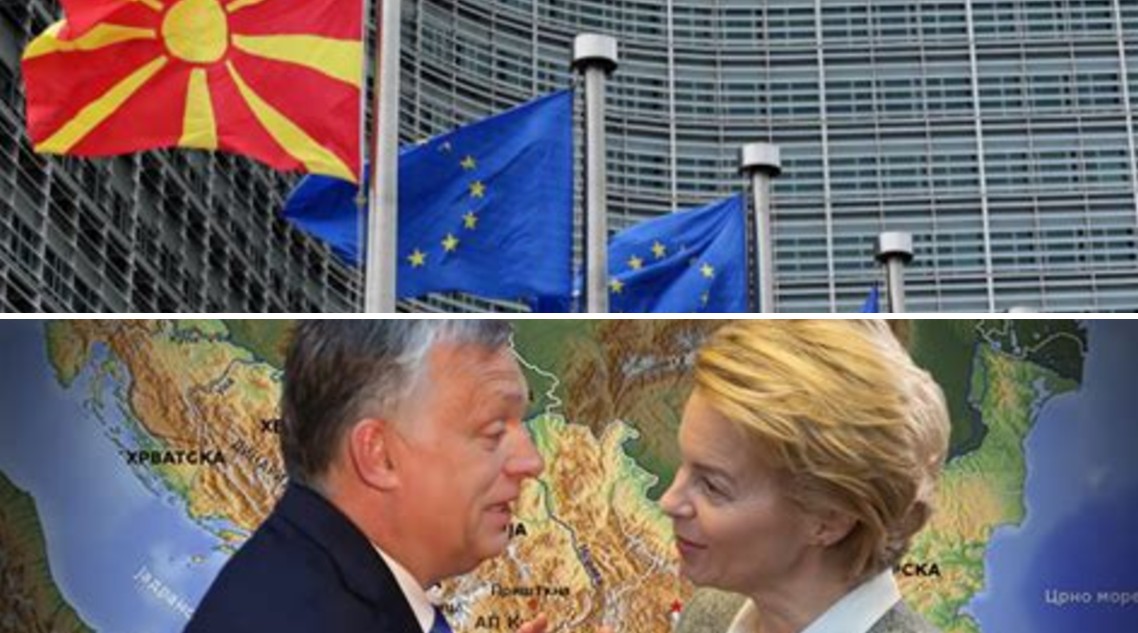
Viktor Orban is often treated as an isolated case in European politics. But his position reflects a broader trend of sovereigntist reactions in Central Europe.Ahead of the April elections, his rhetoric serves as a mobilization tool.Even without the electoral context, the clash between Budapest and Brussels is institutional.For Orban, the veto is a protective mechanism.For Brussels, the veto is paralysis.Both positions are legitimate from their own perspective. The clash is inevitable.
The Geopolitical Pressure Chamber
Europe faces multi-layered pressure:– War in the East– Competition with the US and China– Energy insecurity– Demographic challenges– Industrial stagnationIn such a context, slow consensus appears a luxury. But history warns that institutions accelerated without legitimacy become fragile.
The Balkan Perspective: Small States in a Shifting Europe
While the European Union debates accelerated accession and geopolitical urgency, the Balkans watch closely.For countries like Macedonia, Albania, Bosnia and Herzegovina, and Serbia, Europe’s potential departure from full unanimity carries both opportunities and risks.On one hand, a more agile EU could allow faster integration for those meeting political and economic benchmarks.On the other hand, if decisions are made by a core of large powers without broad consent, smaller states risk marginalization.Budapest’s assertiveness is a warning: even medium-sized states can leverage veto power to influence outcomes. But what happens when Brussels bypasses unanimity?The Balkan countries must navigate carefully, balancing reform, sovereignty, and alignment with a Union in flux.In short, the EU’s evolving decision-making process may redefine the stakes for the Balkans, forcing them to adapt to a Europe that is simultaneously faster, more centralized, and potentially less predictable.
What Really Changes?
This is not just a debate about Ukraine.This is not just a clash between Orban and von der Leyen.This is a moment when the European Union must decide whether it remains an agreement among sovereign states or becomes a political system capable of functioning without full consent.If the new model becomes dominant, Europe will be:– Faster in decision-making– More centralized in power– More ambitious geopoliticallyBut possibly also:– More divided in trust– Less secure in legitimacy– More complex in internal cohesion
Historical Parallel
The European Coal and Steel Community was created as a project of trust among former enemies.The Maastricht Treaty deepened the integrative impulse, but always through formal consensus.Now, the Union enters a phase where pragmatism may override formalism.It may be a historical necessity.But it may also be a historical risk.
Europe After 2026
The results of the Hungarian elections, the outcome of the Brussels summit, and the dynamics of the Ukrainian war will determine the pace of the process.But one thing is already clear: the taboo against making decisions without full consensus has been broken.And once broken, it rarely restores itself.
The Continent’s Final Dilemma
The European Union has always been a project of balance between idealism and pragmatism.Today, pragmatism gains precedence.But the Union is not just an economic machine. It is a political agreement among peoples, and every agreement has two fundamental values: consent and trust.If Europe chooses speed over consent, it will become stronger on the global stage.The question remains — will it remain equally stable internally?
