

By Slobodan Tomic

“The state that does not protect itself from foreign influence loses its freedom before it gains true strength.”
John Locke
EUROPE AT A NEW GEOPOLITICAL TURNING POINT
The European Union today stands at a historic moment.At a time when the world is once again dividing into geopolitical blocs, when the war in Ukraine has shaken the European security architecture, and when Russia is attempting to extend its shadow over political processes across Europe, Brussels is sending a clear and unmistakable message:
Europe will no longer accept “Trojan horses” within its own ranks.The new strategy for the enlargement of the European Union is not merely an administrative document.It is a geopolitical declaration.It is a clear signal that Europe has learned from its own mistakes ,from periods when the internal weaknesses of certain states allowed external influences to infiltrate the very heart of European institutions.That is why the new approach is straightforward:Only stable democracies, resilient institutions, and states capable of resisting geopolitical pressure can become part of the European family.
A CLEAR MESSAGE FROM BRUSSELS: NO TROJAN HORSES IN THE UNION
The European Commissioner for Enlargement, Marta Kos, formulated this position in a sentence that is already circulating widely in European diplomatic circles:“There are no Trojan horses.Countries that would undermine us from within cannot become members of the European Union.Those joining must be strong and resilient democracies capable of resisting the toxic influence of Russia and others.”This statement is not merely a warning.It is a new European principle.In the new geopolitical reality, enlargement is no longer just a technical process.It is a matter of security.Europe must know who is entering its institutions.It must know who shares its vision of freedom, democracy, and the rule of law.
MACEDONIA AS AN EXAMPLE OF DEMOCRATIC MATURITY AND RESILIENCE
Within this new European framework, North Macedonia is gradually positioning itself as a state that understands the historical weight of the moment.Under the leadership of Prime Minister Hristijan Mickoski, the country has begun a process of institutional recovery and the restoration of the rule of law — a process that for years had been blocked by political influence and clientelist networks.For a long time, the judiciary and prosecution system were burdened by political pressure and partisan control.That is precisely why the reforms currently underway represent an attempt to restore public trust in institutions and to lay the foundations for a genuine rule-of-law state.The fight against corruption is once again becoming a national priority.The system is opening itself to European standards.Institutions are beginning to operate with greater transparency and accountability.This is not merely a political process.It is an effort to restore the dignity of the state.
WHEN REFORMS BECOME A GEOPOLITICAL MESSAGE
The reforms in Macedonia are not only a domestic necessity.They are also a geopolitical message.A message that the country is ready to resist all attempts at external manipulation and political pressure.A message that European values are not merely a declaration, but a principle that must be lived in every segment of the institutional system.That is why tпhe author of the European enlargement strategy, Lithuanian MEP Petras Auštrevičius, emphasizes:“With every new member, Europe’s political and economic power grows, bringing prosperity and security to its citizens.”But this applies only to states that share the same vision of Europe.
BULGARIA: A GEOPOLITICAL DILEMMA AT THE HEART OF THE UNION
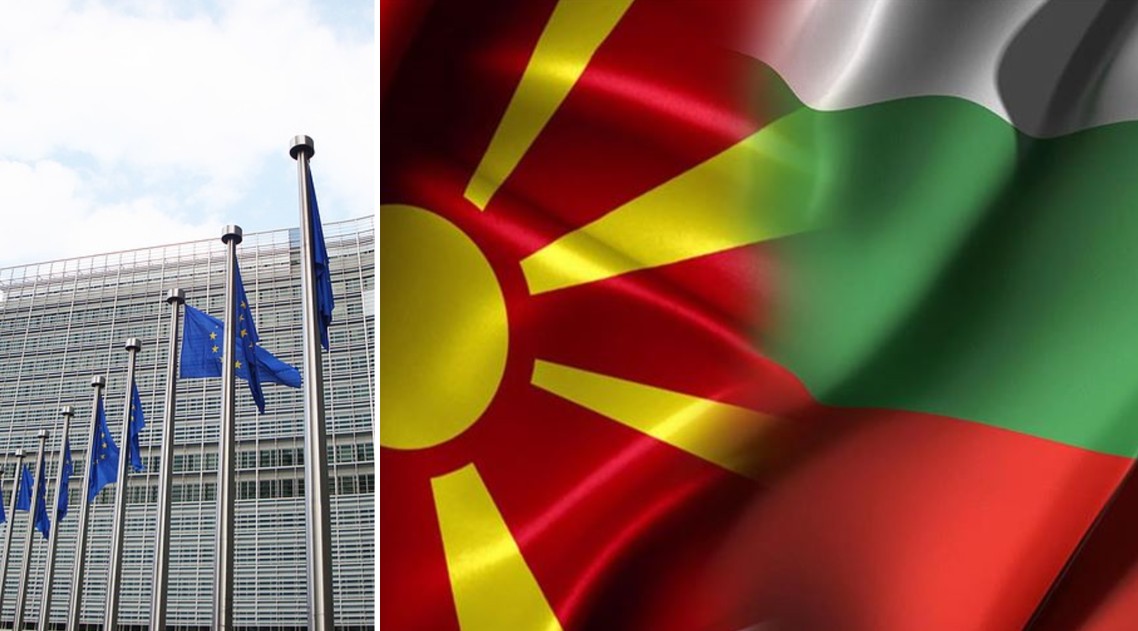
At the same time, on the other side of the political spectrum lies a serious European dilemma.Bulgaria.Although formally a member of the European Union, parts of its political elite maintain a complex relationship with Russian geopolitical influence.Particularly President Rumen Radev, whose positions have on several occasions been interpreted as sympathetic to Russian interests.At a time when Europe demands clear strategic orientation, such positions raise serious questions.Can a country with internal political structures sympathetic to the Kremlin play the role of a blocker of the European integration of a neighboring democratic state?Or does such a policy itself represent an example of the dangerous “Trojan horse” about which Brussels is warning?
THE CASE OF THE MACEDONIAN MINORITY – A MIRROR OF EUROPEAN VALUES
An additional test of Sofia’s European credibility concerns the issue of human rights.In particular, the rights of the Macedonian minority in Bulgaria.Lawyer Toni Menkinoski, who represents the organization OMO Ilinden–Pirin, points to serious legal paradoxes within the Bulgarian system.As he stresses:“Placing a black mark on a lawyer did not happen even during the Nuremberg trials, when the greatest Nazis were prosecuted, let alone when you represent an organization that has won seventeen judgments in Strasbourg against Bulgaria for violations of human rights.”This statement opens a fundamental question:How is it possible for a state that systematically ignores judgments of the European Court of Human Rights to present itself as an arbiter of European values?
PANIC IN SOFIA AND FEAR OF EUROPEAN OVERSIGHT
According to Menkinoski, the reactions of Bulgarian institutions are the result of growing pressure from European bodies.The Committee of Ministers of the Council of Europe will soon once again discuss Bulgaria’s failure to implement the Strasbourg rulings.That is why, as he says:“This black mark is an attempt to silence criticism and protect political structures that fear European oversight.”This is not merely a legal dispute.It is a test of the European credibility of an EU member state.
THE GEOPOLITICAL LINE OF DIVISION
Within this complex political landscape, a clear line of division is emerging.On one side stands Macedonia — a state attempting to strengthen its institutions, fight corruption, and align itself with European policies.On the other stands Bulgaria — a country in which part of the political elite pursues an ambiguous policy between Brussels and Moscow.This contradiction turns the entire region into part of a larger geopolitical chessboard.
ENLARGEMENT AS A SECURITY STRATEGY
The European Union increasingly views enlargement as an instrument of stability.The inclusion of the Western Balkans, Ukraine, and Moldova is not merely a political decision.It is a strategy to prevent the creation of “grey zones” in Europe — spaces where external powers can influence political processes.Non-enlargement creates a vacuum.And in geopolitics, a vacuum never remains empty.
A PROCESS WITHOUT SHORTCUTS
But Brussels is clear:There will be no shortcuts.The rule of law, media freedom, protection of human rights, and the independence of the judiciary remain non-negotiable criteria.Every country will be evaluated on its own merits.The process is reversible — meaning every step backward in democracy can also mean a step backward in integration.
MACEDONIA’S HISTORIC MOMENT
For Macedonia, this is a historic moment.A moment when the country must prove that its European orientation is not merely a diplomatic formula.But a genuine political strategy.Only strong institutions can protect the state.Only a true rule-of-law system can guarantee the European future.
CONCLUSION: EUROPE DEFENDS ITSELF FROM WITHIN
History teaches us that empires rarely collapse because of external blows.More often, they fall apart from within.That is precisely why Europe today is cautious.It does not want new Trojan horses within its ranks.In this new reality, Macedonia has the opportunity to demonstrate that it is a state that understands the European idea — and is ready to defend it.Even when that means standing up to the political games of its neighbors.For as John Locke once wrote:“Strong democracies do not retreat before threats — they create the future.”And the future of Europe will be built precisely by those states that ц0сџ at home and in international politics.
