

(Henry Kissinger)
“Injustice is not when the law is strict. Injustice is when the same law is applied differently to different people.”
( Aristotle)
By: Slobodan Tomic
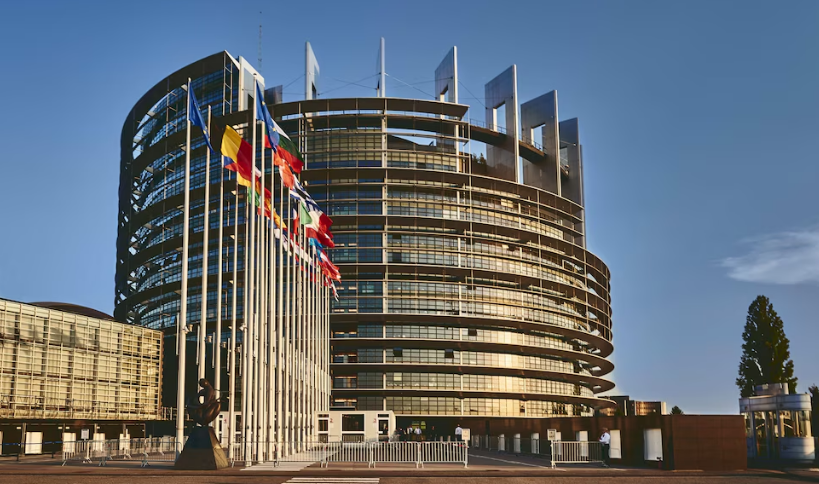
The day that European Commissioner Marta Kos described as a “Mega Monday” for the enlargement of the European Union is not a day of celebration for Macedonia. It is a day of profound and painful confrontation with reality. A reality in which, at least in Macedonia’s case, the criteria of European enlargement often appear changeable and the rules themselves seem vulnerable to geopolitical interests and political calculations.
Ukraine and Moldova received candidate status in 2023 and are already opening their first negotiating clusters. Montenegro is rapidly closing negotiating chapters and is being mentioned as a possible next member of the European Union. Macedonia, however, which received candidate status back in 2005 and which in the meantime made painful compromises, changed its constitutional name and opened sensitive national issues, still remains in Europe’s waiting room.
Let it be clear: this is not criticism of Ukraine, Moldova or Montenegro. Every nation has the right to its European perspective. But Macedonia has an equal right to ask a simple question: by which rules is European progress measured, and do those rules genuinely apply equally to everyone?
Aristotle’s words encapsulate Macedonia’s entire dilemma with the European Union. Macedonia is not asking for privileges. It is not asking for any criterion to be bypassed. It is not asking for special treatment because of its size or geographic position. Macedonia asks for only one thing – that the rules apply equally to everyone.
This is not criticism of Europe as an idea. On the contrary, Macedonia has spent decades building its European orientation and embracing the values of democracy, the rule of law and human dignity. Precisely because of that commitment, Macedonia has every right to criticize inconsistency in European policy when it creates the impression that conditions are flexible for some states and endlessly changeable for others.
The history of European enlargement demonstrates that geopolitics has often carried equal, and sometimes even greater, weight than the strict application of accession criteria. Bulgaria and Romania became members of the European Union in 2007 despite serious concerns at the time regarding corruption, organized crime and judicial reforms. It was precisely for those reasons that a special monitoring and verification mechanism had to be established.
This does not mean that those countries should not have joined the European Union. It means that enlargement has never been a purely technical process. It has always been a political decision as well.
That is why millions of Macedonians today ask a simple question: if the rules are the same for everyone, why does Macedonia always face one more condition, one more veto and one more postponement?
Macedonia was first blocked over its flag. Then over its name. Then came the Greek veto. Then the Bulgarian veto. Today it once again faces a new condition – the inclusion of Bulgarians in the Constitution as a prerequisite for opening negotiating clusters.
In this way, Macedonia’s European process long ago ceased to be merely a matter of reforms. It became a process of constantly moving the goalposts.
When a nation spends years fulfilling demands only to receive new conditions instead of progress, it is not merely that country’s European perspective that comes into question. The credibility of the European project itself is also placed under scrutiny.
This is where the strongest criticism of the European Union emerges. Not because it demands reforms. Not because it establishes criteria. But because, in Macedonia’s case, it has created the perception that criteria are not applied equally and that bilateral disputes can become instruments of endless conditionality.
No union can remain strong if it asks one country to resolve historical, identity and linguistic questions as a precondition for advancement in a process that is supposed to be based on the rule of law, democracy and European standards.
Prime Minister Hristijan Mickoski’s statement that Ukraine and Moldova do not have an opposition that reports against its own country to international partners is part of Macedonia’s internal political debate. However, his message that these circumstances should not become a reason for despair but rather additional motivation for reforms and economic development raises a far deeper question.
What should a country do when the enlargement process becomes hostage to bilateral disputes and shifting political criteria?
The answer is not to abandon Europe. But neither is the answer self-humiliation and the acceptance of endless conditions with no clear end in sight.
Macedonia has every right to continue its reforms, modernize its economy and strengthen its institutions. But it also has the right to demand a fair, predictable and dignified European process.
The European Union has every right to set conditions. But it has no right to create the impression that for some countries the rules are flexible, while for others they are endlessly strict and constantly changing.
Because the moment enlargement begins to resemble a political reward for some and an endless examination for others, it is not only Macedonia’s European perspective that is endangered. The credibility of the European Union itself is also at stake.
Macedonia may not be opening negotiating clusters today. But it is opening a much larger and more difficult question before Europe: does the Union truly want an enlargement policy based on principles and equal rules, or one based on geopolitical needs and different standards?
The answer to that question will determine not only Macedonia’s future. It will also determine the future credibility of the European Union as a community that claims to be founded upon law, equality and dignity for all nations.
