

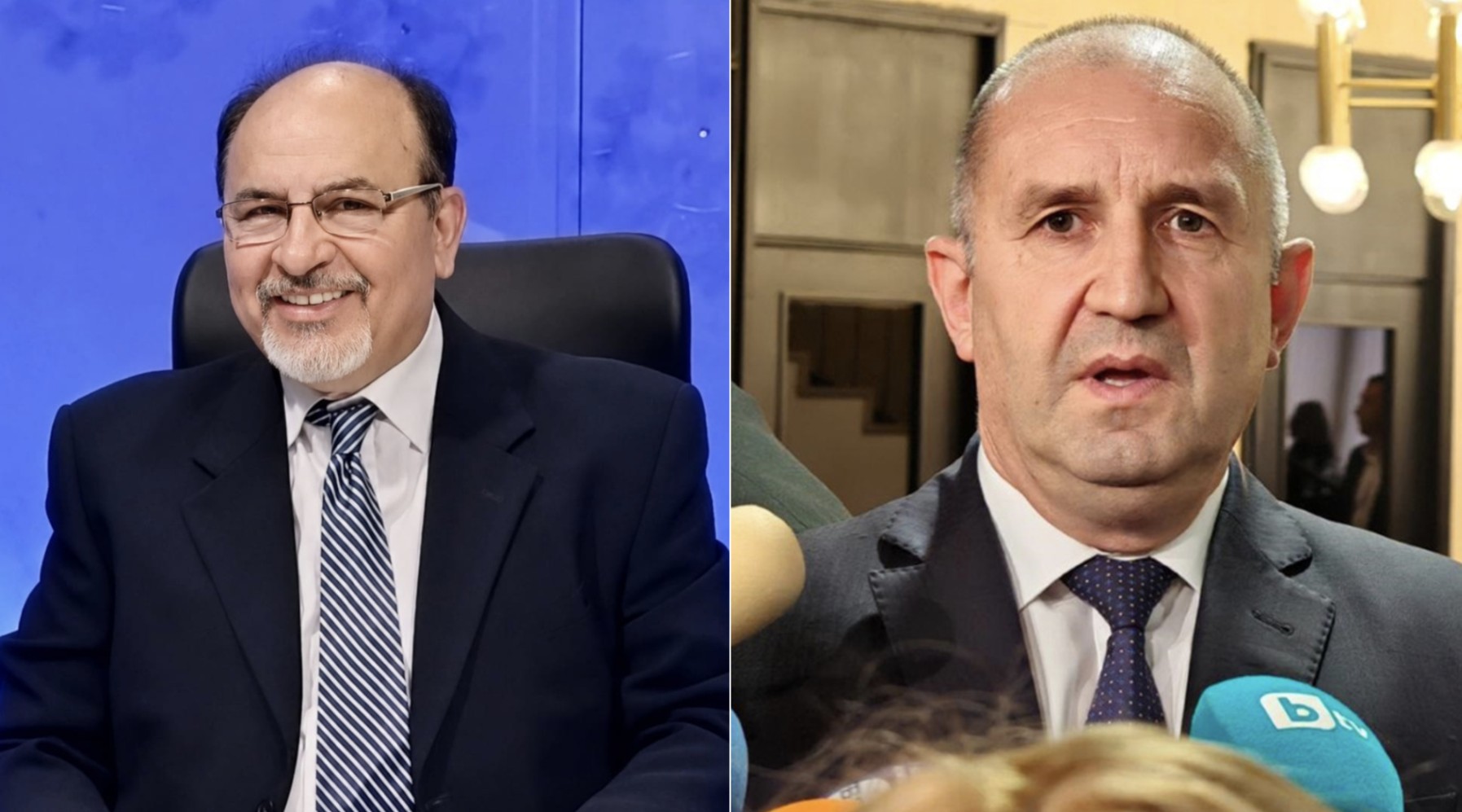
“Europe ceases to be Europe the moment identity becomes a condition.”
Mr. President Rumen Radev,
I am writing publicly, directly, and without diplomatic detours.
Not because I believe that one letter will change policy.
But because silence in the face of historical injustice always ends as its quiet validation.
Macedonia today is once again placed in a position where its European path is tied to questions that are not part of European standards, but of bilateral interpretations, political readings, and historical disputes.
And here begins the essential problem.
Macedonia is not being blocked because of reforms.
Macedonia is not being conditioned because of European criteria.
Macedonia is being pushed into a position where it must negotiate its identity.
THE DANGEROUS PRECEDENT: WHEN IDENTITY BECOMES A NEGOTIATING CATEGORY
The history of Europe does not know a single case of a state that became a member of the European Union while being required to redefine its own national existence.
Not one.
Not its language.
Not its history.
Not its identity-based self-awareness.
Therefore, the question is not only Macedonian.
The question is European.
Because if today it is allowed for one people to be placed in a position where it must prove its own existence, then tomorrow the same principle can be applied to any other people in Europe.
That is not integration.
That is a precedent with long-term consequences for the entire continent.
THE EUROPEAN PATH MUST NOT BECOME A BILATERAL FILTER
Your message that Macedonia has a problem with the European Union, not with Bulgaria, sounds formally European, but in essence ignores reality.
Because reality is simple:
the European process must not become an instrument of bilateral historical conditioning.
The European Union is built on the principle of overcoming historical conflicts, not institutionalizing them.
When history becomes a political condition, then Europe ceases to be a community of equal nations and begins to function as a system of conditionalities.
QUESTIONS THAT MUST NOT BE AVOIDED
If the problem is truly not bilateral, then essential questions must be answered:
Why is the Macedonian language being questioned in a political context?
Why is the European path conditioned by constitutional changes that are not part of the Copenhagen criteria?
Why are historical interpretations being turned into political conditions for integration?
These questions are not rhetorical.
They are essential for the future of the European process.
DOUBLE STANDARDS CANNOT BE A EUROPEAN PRINCIPLE
If one state has the right to defend its national interests, then that right must be universal.
If for some it is sovereignty, then for others it cannot be nationalism.
If for some it is legitimate policy, then for others it cannot be a problem.
Europe cannot survive on asymmetrical standards.
MACEDONIA IS NOT NEGOTIATING ITS EXISTENCE
Macedonia wants membership in the European Union.
But it cannot accept a process in which membership implies conditional renunciation of its own identity.
It cannot accept a process in which the European future is built upon historical self-negation.
It cannot accept that progress means relativization of its own existence.
HISTORY IS NOT CHANGED BY POLITICAL DECISIONS
History is not created by resolutions.
Identity is not abolished by veto.
Language is not negotiated.
A people is not redefined.
These categories stand outside political agreements, outside daily politics, and outside diplomatic conditionalities.
FINAL MESSAGE: MACEDONIA REMAINS MACEDONIA
Political cycles change.
Governments come and go.
International relations transform.
But peoples remain.
And therefore one truth cannot be changed by any political decision:
Macedonia is not negotiable.
Macedonia is not conditional.
Macedonia is not to be erased.
Macedonia exists.
And it will exist.
Slobodan Tomić
Journalist, Analyst
Skopje, Macedonia
19 June 2026
