

“People should not fear their rulers. Rulers should fear the judgment of the people and of history.” (Demosthenes)
By Slobodan Tomic

There are moments when politics ceases to be a battle of arguments and becomes an insult to common sense.
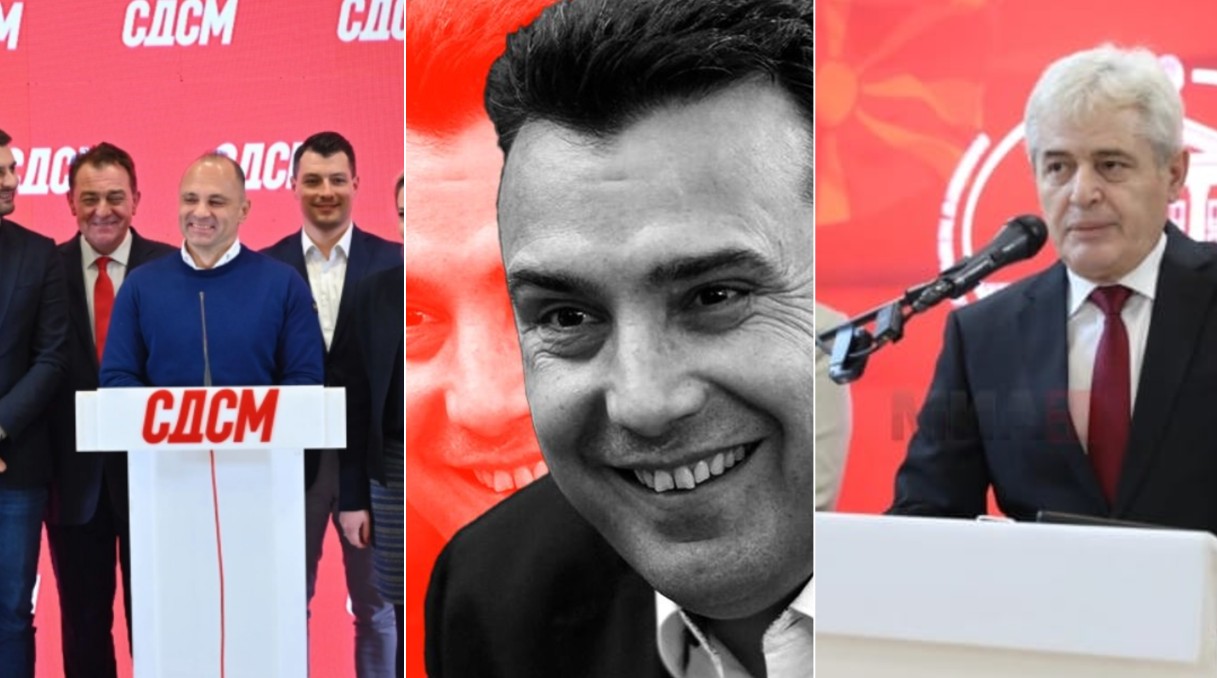
Such was the latest parliamentary confrontation between Venko Filipche and Prime Minister Hristijan Mickoski.
While Macedonia struggles with the consequences of decades of poor governance, while young people still see the airport as the only gateway to a better future, while families calculate whether they can pay their bills or fill their refrigerators, the parliamentary podium once again became a stage for lectures delivered by those who were part of the very system that created this reality.
Venko Filipche gave the Government a zero.
A big zero.
Zero for reforms.
Zero for the European path.
Zero for wages.
Zero for the youth.
But before handing out grades, Macedonia has every right to ask one very simple question:
Where was SDSM when the state was sinking into distrust?
Where was SDSM when the people were losing patience?
Where was SDSM when institutions were becoming symbols of political obedience rather than justice?
Where was SDSM when thousands of citizens were packing their lives into two suitcases and leaving forever?
YOU CANNOT BE BOTH JUDGE AND DEFENDANT AT THE SAME TIME
The greatest problem facing today’s opposition is not that it criticizes the Government.
An opposition must criticize.
That is its duty.
The problem is that the very people who now appear as prosecutors were for years part of the structure that governed Macedonia.
They were not observers.
They were not passersby.
They were not victims of the system.
They were the system.
They were the government.
They were ministers.
They were directors.
They were decision-makers.
And that is why every word they speak today inevitably collides with their own political past.
When they speak about poverty, the people remember.
When they speak about justice, the people remember.
When they speak about a European future, the people remember once again.
History cannot be erased with a press conference.
Nor with a parliamentary reply.
THE SHADOW OF ZAEV STILL HANGS OVER SDSM
No matter how hard SDSM tries to create the impression of a new chapter, one question remains unanswered.
Has it truly distanced itself from the policies that led the country into its deepest crisis of trust?
Or has it merely changed faces while preserving the same political formula?
The Macedonian people do not forget.
They do not forget promises.
They do not forget humiliations.
They do not forget disappointments.
They do not forget being promised life and receiving division.
They do not forget being promised justice and witnessing selectivity.
They do not forget being promised dignity and receiving political bargaining.
That is why every attack on the Government automatically raises questions about SDSM’s own legacy.
DUI AND AHMETI CANNOT PRESENT THEMSELVES AS INNOCENT OBSERVERS
There is another political factor in this story that must not be forgotten.
DUI.
Nearly two decades in power.
Nearly two decades of influence over institutions.
Nearly two decades of opportunity to demonstrate what a European state should look like.
What did Macedonia receive?
Did it receive institutions enjoying the highest public trust?
Did it receive a judiciary respected by the people?
Did it receive a public administration free from party influence?
Did it receive a state free of corruption scandals and suspicions?
Or did it receive the feeling that political elites created a closed circle of power in which the citizen became the last concern?
That is why it is offensive when those who spent years at the center of power now present themselves as saviors.
No.
They were not saviors.
They were part of the mechanism.
They were part of the decisions.
They were part of the system that the people rejected at the ballot box.
MACEDONIA DID NOT START BLEEDING YESTERDAY
Macedonia did not begin bleeding yesterday.
It did not begin bleeding with this Government.
It did not begin bleeding with this parliamentary session.
It has been bleeding for years.
Bleeding from emigration.
Bleeding from corruption.
Bleeding from distrust.
Bleeding from political elites who too often treated the state as an instrument of party interests.
Bleeding from the fact that entire generations began to believe that success depends not on merit, but on connections.
And when a nation begins to believe that, the problem becomes much deeper than any single government.
WHY DOES THE REFORM AGENDA TROUBLE THEM?
At the very moment this fierce debate was taking place, Macedonia stood before an important assessment by the European Commission.
Hundreds of millions of euros are at stake.
A reform agenda is at stake.
An opportunity for the country to secure additional resources and remain among the region’s strongest performers in meeting its obligations is at stake.
For that reason, warnings that there may be circles interested in seeing Macedonia weakened, economically pressured, and forced into political concessions are particularly concerning.
If such attempts truly exist, then this is not a question of VMRO-DPMNE or SDSM.
It is a question of Macedonia.
A national question.
A state question.
A question that requires unity rather than petty political points.
FILIPCHE HANDS OUT ZEROS, THE PEOPLE PAY THE BILLS
While politicians hand out grades, the people pay bills.
While politicians wage personal battles, the people count every denar.
While politicians argue about who is more guilty, young people buy one-way tickets.
That is the harsh reality.
And that is why this debate was not merely a clash between Filipche and Mickoski.
It was a collision between two visions of the past and the future.
One seeks to convince the people that they have forgotten.
The other seeks to demonstrate that the era of impunity is coming to an end.
History will decide who was right.
But one thing is certain.
The people are no longer prepared to forget so easily.
MACEDONIA DEMANDS ACCOUNTABILITY, NOT EXCUSES
In the end, the essence is not whether Filipche gave a zero.
Nor whether Mickoski responded with talk of prison.
The essence is whether an era will finally begin in which politicians are held accountable for their actions.
Whether there will be standards that apply equally to everyone.
Whether there will be justice without party membership cards.
Whether there will be a state that serves its people, rather than people serving the state and party elite.
Because Macedonia is tired.
Tired of lies.
Tired of excuses.
Tired of betrayed hopes.
Tired of politicians who always have explanations but never responsibility.
And that is why the most important question after this parliamentary debate is not who won the duel.
It is who will have the courage to look the people in the eye and answer:
What did you do with Macedonia when it was in your hands?
Because while Macedonia was bleeding, too many remained silent.
And some even mocked.
The people remember.
History remembers even more.
