

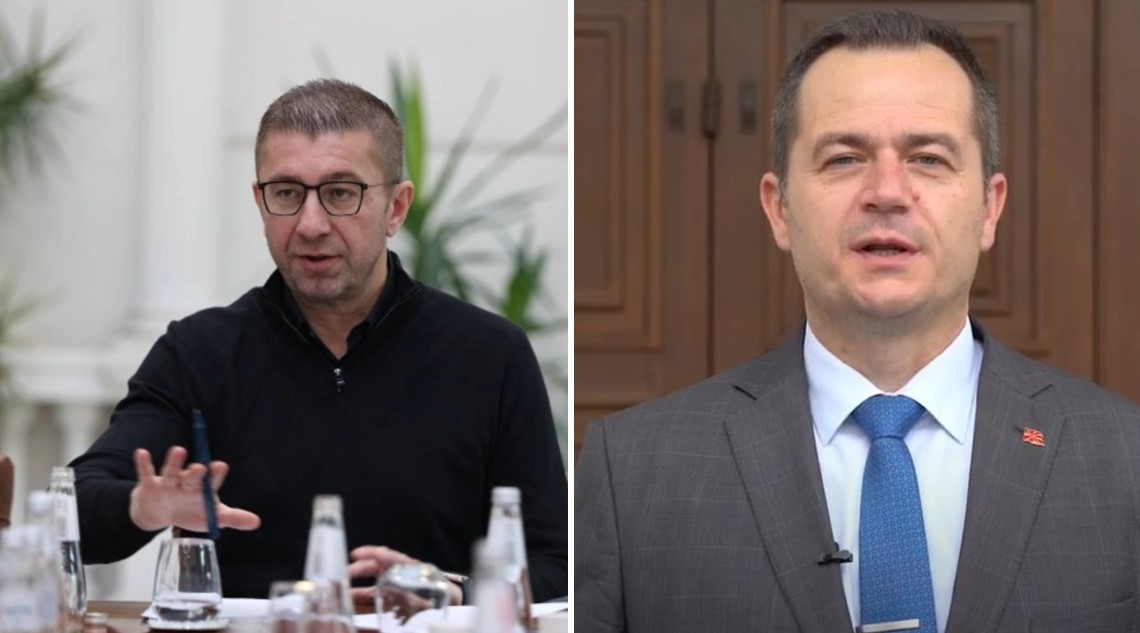
By: Slobodan TOMIĆ

How Hristijan Mickoski’s final mandate is transforming VMRO-DPMNE from a party of influence into a party of governance
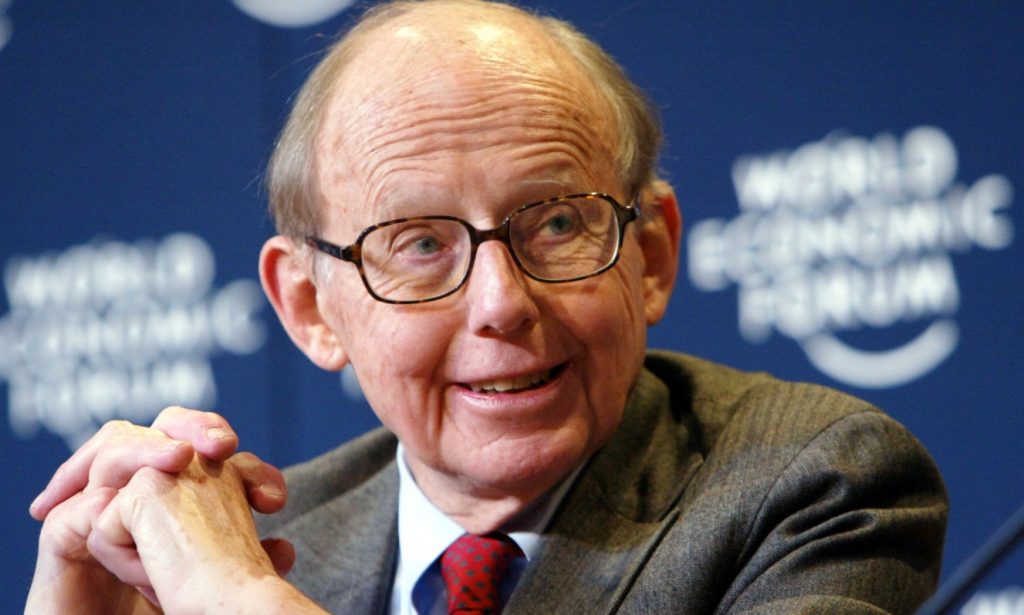
“In politics, power that is not structured disintegrates.
Power that is structured survives.”Samuel Huntington
PROLOGUE: The moment when leaders stop being liked — and start governing
In global politics, there is a clear dividing line between leaders who govern through popularity and leaders who govern through structure.
The former depend on polls.
The latter build systems that function even when the polls fall silent.
The кадровска and organizational reconstruction of VMRO-DPMNE, announced and explained by Secretary General Dragan Kovacki, belongs firmly to the second category. A 20–25 percent change in the Executive Committee, a merger of individuals with experience in both executive and legislative power, and the selective inclusion of younger cadres — this is not cosmetic reform.
It is a redesign of the decision-making core.
This change should not be read as party news, but as a strategic move by a governing force entering its final phase.
THE ABOLITION OF VICE-PRESIDENTS:
Why this is a signal of maturity, not fear
In most political systems, the position of “vice-president” does not serve efficiency, but ambition.
It produces parallel hierarchies, silent campaigns, and internal competition that consumes governing capacity.
The decision to abolish vice-presidential functions within VMRO-DPMNE sends a clear message: the end of factional architecture.
Crucially, former vice-presidents are not eliminated, but integrated into the Executive Committee. Power is not erased — it is de-personalized and tied to collective responsibility.
In an international context, this is a classic move by a leader who:
does not want internal conflict during a final mandate,
does not leave open lines for premature “natural successors,”
closes the party to chaos in order to open the state to results.
THE EXECUTIVE COMMITTEE AS A STRATEGIC CORE
What Kovacki communicated clearly and without diplomatic language is that the new Executive Committee will not be a debating forum, but an operational headquarters.
Its agenda is precise:
reorganization of municipal committees,
кадровско renewal with strict filters,
preparation for parliamentary elections, and
most importantly,
positioning the party for the next decade, not the next month.
In political systems with weak institutional capacity, governing parties must be more disciplined than the state itself.
This reconstruction demonstrates exactly that.
SYNCHRONIZATION WITH THE GOVERNMENT:
Vertical control instead of improvisation
The fact that party reconstruction is unfolding in parallel with governmental restructuring is no coincidence, it is a signal.
In a final mandate, there is no room for unsynchronized centers of power.
The party and the government are being aligned as a single governing mechanism:
with a shorter decision-making chain,
with clearly assumed responsibility,
and with minimal internal noise.
This is a model seen in governments that seek control over processes, not merely control over narrative.
SDSM’S CRITICISM:
A mirror of its own collapse
Accusations of “concentration of power” come from a party that has functioned for years without a clear center, without кадровска discipline, and without operational capacity.
When you have no structure, every structure looks dangerous.
When you have no order, every order appears authoritarian.
SDSM does not attack this reform because it understands it — but because it recognizes its own inability to produce anything comparable.
OPENING TO NEW CADRES:
Controlled renewal
The announced autumn update of membership and the opening toward new cadres in key sectors — healthcare, education, economy, technology — shows that this is not a closing of the party, but a controlled expansion.
Global experience is clear:
parties that do not renew themselves die,
parties that renew without control disintegrate.
This is an attempt at a third path: renewal through system.
FINAL CONCLUSION:
What this reconstruction truly means
This is not a struggle for power.
It is the rationalization of power.
Hristijan Mickoski is not preparing VMRO-DPMNE for another electoral victory at any cost.
He is preparing it for long-term governance in an unstable region and a turbulent Europe.
In politics, the most dangerous leader is the one who wants to be liked.
The most serious leader is the one who wants the system to function without him.
This reconstruction shows clearly which category he belongs to.
