

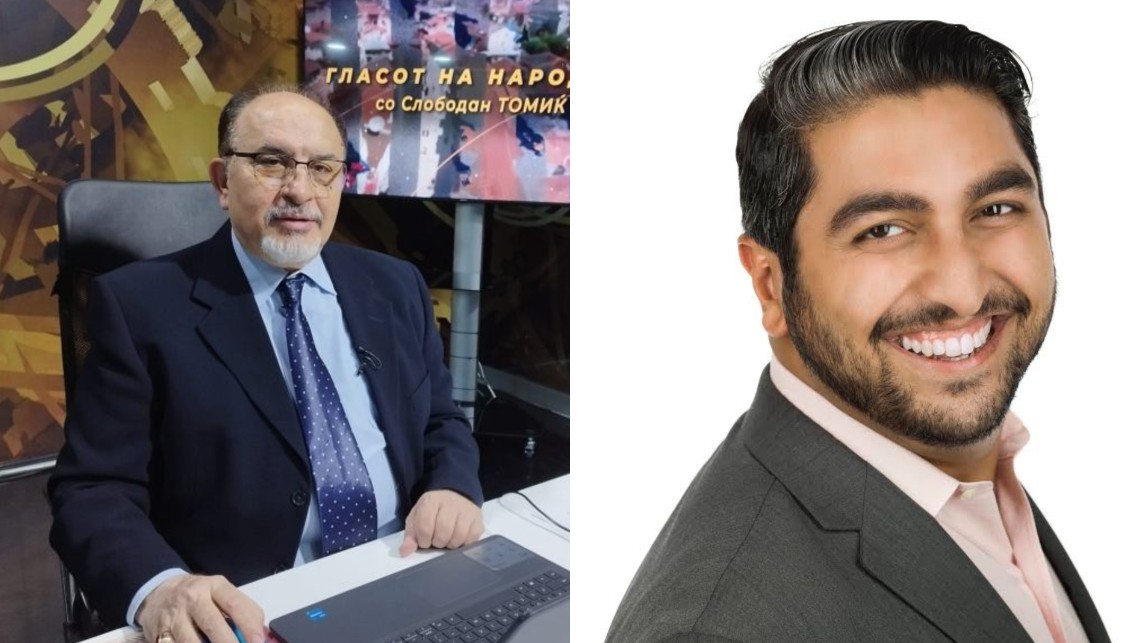
By: Slobodan TOMIĆ
“Iran on the Brink of Change: Bryan Talebi Reveals What Is Really Happening in Tehran”
Intro: Bryan Talebi is a prominent Iranian-American analyst, internationally recognized for his expertise on the Middle East and regional security dynamics. His family was forced to leave Iran after the establishment of the regime by Ayatollah Ruhollah Khomeini and relocate to the United States, giving him a unique personal and professional perspective on the situation in the country and the broader region.
QUESTION: In recent days, dramatic information and reactions from Iran have surfaced, with visible expressions of relief and joy among parts of the population. How do you assess the real situation on the ground?
Bryan Talebi: The majority of the Iranian population feels relief and even joy due to the weakening of the Islamic Republic’s leadership. For decades, the regime has not respected the cultural, linguistic, religious, and ethnic particularities of its people. Iranians have struggled for freedom for over forty years, yet have been subjected to brutal repression, arrests, torture, and mass executions. The reactions of joy are genuine and widespread; they reflect a long-standing thirst for dignity and freedom.
QUESTION: How do you interpret the fact that many Iranians openly express satisfaction at the weakening of repressive figures, including the influence of Ali Khamenei? Is this accumulated resentment or the beginning of a deeper political change?
Bryan Talebi: This is a combination of deeply accumulated resentment and a long-term aspiration for freedom. Iran as a civilization has a rich history and cultural identity that does not align with the theocratic model imposed after 1979. Before the Islamic Revolution, the country was undergoing modernization, industrialization, and opening to the world. Memories of that period live on among older generations and, for the youth, serve as a vision for the future. This indicates a potential for deeper political transformation.
QUESTION: As an Iranian-American analyst, how do you assess Donald Trump’s policy towards Iran? Did his administration pose a serious challenge to the Iranian regime?
Bryan Talebi: The administration of Donald Trump made a radical shift compared to previous policies. Instead of leniency and indirect financial facilitation of the regime, it adopted a strategy of maximum pressure and direct confrontation. This was the most serious geopolitical challenge for Tehran in decades. If this momentum continues, it could open space for a transitional government and a national referendum for a new constitutional and institutional framework.
QUESTION: There are claims that the Iranian leadership considered or even planned the physical elimination of President Trump. How credible are these reports?
Bryan Talebi: There are serious indications and intelligence assessments that such scenarios were considered. The Iranian regime has historically demonstrated readiness for asymmetric and indirect actions. However, U.S. security structures acted promptly and prevented any potential attempts.
QUESTION: Iran is linked to direct and indirect attacks against Saudi Arabia, Qatar, and other regional states. Does Iran export its internal crisis abroad, and how dangerous is this strategy?
Bryan Talebi: Since 1979, Iranian leadership has exported its ideological agenda through Hamas, Hezbollah, Houthis, and other groups, while also financing protests and disinformation campaigns in the U.S. and Europe. In recent years, it has employed missiles and drones for attacks. This has created long-term instability in the Middle East, but the weakening of central authority in Tehran is gradually limiting these activities.
QUESTION: With rising tensions in the Eastern Mediterranean and the sensitivity of the region, is there a risk that the conflict could spread to Europe?
Bryan Talebi: European security services must remain vigilant. In conditions of geopolitical turbulence, any power vacuum can be exploited by radical structures. Alertness and coordination among allies are crucial to prevent potential threats.
QUESTION: The Balkans host strategic NATO and U.S. infrastructure. Could instability from the Middle East realistically affect the region?
Bryan Talebi: A direct military threat is unlikely. However, security depends on internal stability, institutional strength, and resilience against extremist influences. If these factors are maintained, the region will remain stable.
Bryan TalebiIranian-American Middle East and International Security Analyst
