

By Slobodan Tomic

“When injustice becomes law, resistance becomes duty.”
— Thomas Jefferson
Not Just Hungary: A Stress Test for Europe
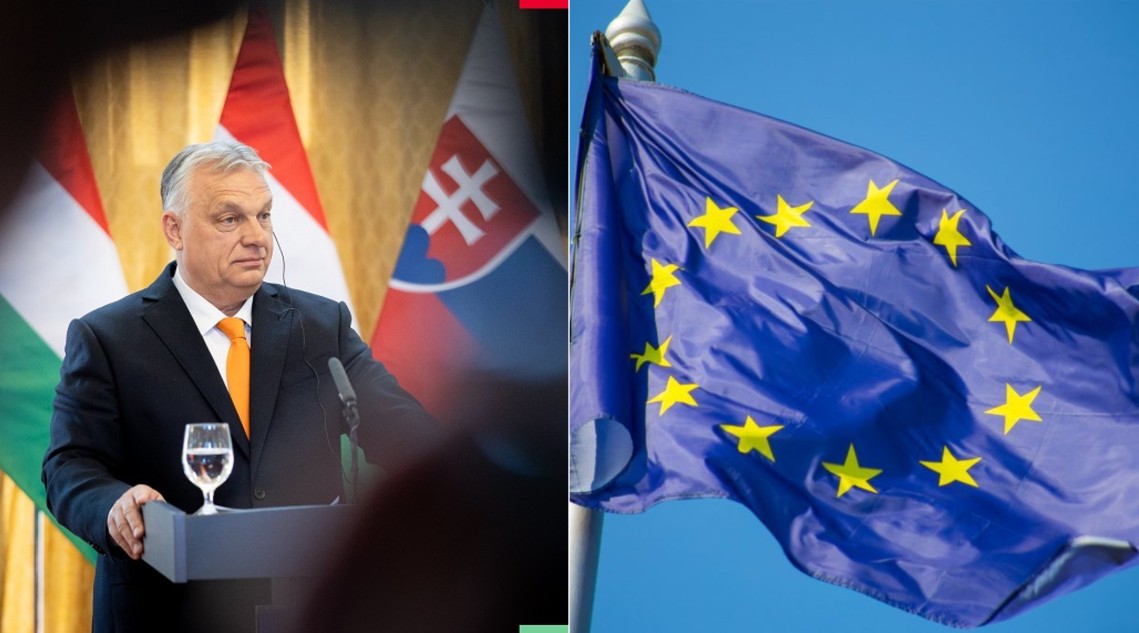
If Viktor Orbán were to lose power after more than a decade at the helm, the implications would extend far beyond Budapest. This would not simply mark a change of government — it would signal a structural shift in Europe’s internal balance.
Orbán has long represented a model of governance that resists centralization, challenges the prevailing liberal consensus in Brussels, and asserts national sovereignty as a political cornerstone. His potential defeat by Péter Magyar would be interpreted, in many quarters, as the end of an era — and the beginning of a more consolidated European political order.
But such a conclusion may be premature.
A Battle of Visions: Sovereignty vs. Integration
At its core, the political struggle in Hungary reflects a broader European dilemma:
Should the European Union evolve into a more centralized political entity, or remain a union of sovereign states with distinct political identities?
Orbán’s Hungary has consistently argued for the latter. His departure could accelerate the former.
A strong parliamentary majority for the opposition would not only enable policy change — it could allow for constitutional restructuring, institutional realignment, and a rapid reorientation toward Brussels.
The Trump Factor: A Transatlantic Undercurrent
The alignment between Donald Trump and Orbán has been more than symbolic. It reflects a shared ideological framework that prioritizes national sovereignty, controlled migration, and skepticism toward supranational governance.
Should Orbán’s influence diminish, this transatlantic conservative axis would face a setback. Yet, with Trump remaining a significant force in global politics, the broader ideological contest is far from settled.
What emerges in Hungary may therefore be less a conclusion than a temporary recalibration.
Serbia: Losing a Strategic Ally
For Aleksandar Vučić, Orbán has been more than a regional partner. He has served as a crucial interlocutor within the European Union — a leader willing to articulate Serbian concerns in a forum where such voices are often muted.
Without that channel, Serbia may encounter intensified pressure to align more closely with EU foreign policy positions. The issue of Kosovo, already central, could become even more prominent as a condition for progress.
The space for strategic balancing — between East and West — is narrowing.
Macedonia: Between Acceleration and Pressure
For Macedonia, the implications are equally significant.
A post-Orbán European dynamic could bring renewed momentum to enlargement. But acceleration rarely comes without conditions. In fact, it often brings sharper demands and reduced tolerance for political hesitation.
This could translate into:
- increased pressure for constitutional changes
- diminished flexibility on identity-related issues
- a more rigid negotiation framework
The question for Macedonia is no longer whether integration will proceed — but under what terms, and at what cost.
Leadership Under Pressure
In this evolving environment, political leadership becomes decisive. Figures such as Hristijan Mickoski are likely to face a complex challenge: navigating between external expectations and internal political legitimacy.
Striking that balance will require more than tactical maneuvering. It will demand clarity of position, strategic patience, and the ability to define non-negotiable national interests.
No More Strategic Ambiguity
The broader Western Balkans is entering a phase where ambiguity is becoming increasingly untenable.
The era of balancing multiple geopolitical vectors — maintaining parallel relationships without clear alignment — is giving way to a more polarized environment. Choices will have to be made, and they will carry long-term consequences.
Conclusion: A Turning Point, Not an Endpoint
The potential political shift in Hungary is not an isolated development. It is part of a larger transformation within Europe — one that will shape the continent’s political architecture for years to come.
For Macedonia, this is a moment of definition.
Not a question of whether change is coming — but how it will be met.
Whether as a passive participant in driven processes,
or as a state capable of articulating and defending its own position within a changing Europe.
The answer will not be determined in Brussels alone.
It will be determined at home.
