

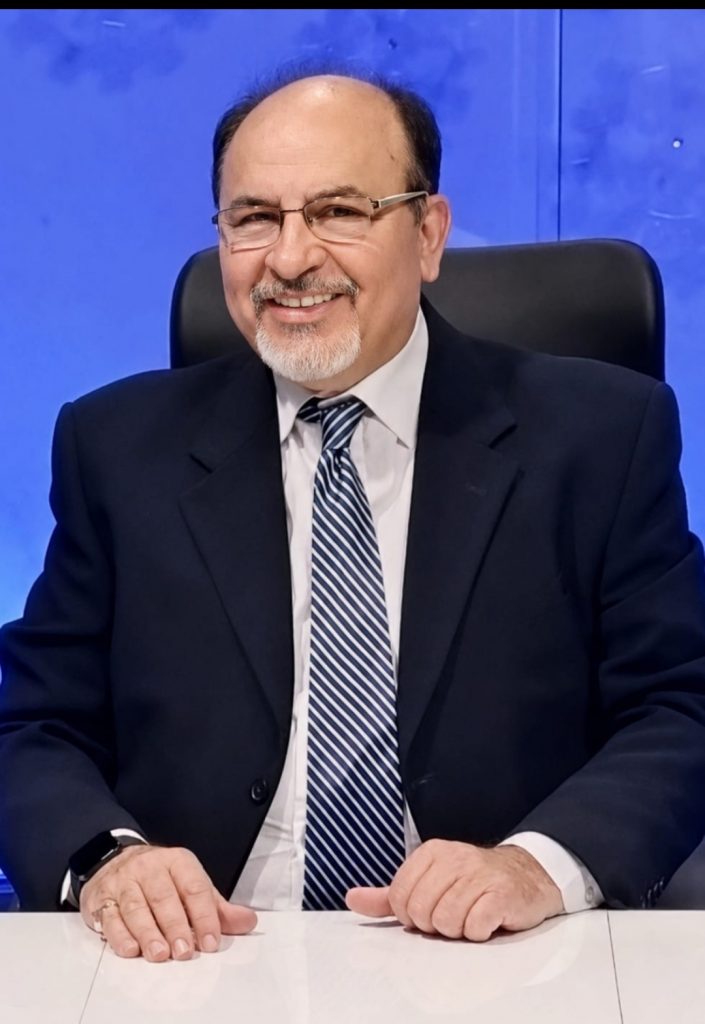
By: Slobodan TOMIC
“Nations do not collapse when they become poor. They collapse when they lose awareness of their own dignity.”
Milan Kundera
For twenty-six years, “The Voice of the People with Slobodan Tomić” has survived as proof that in Macedonia there are still people who remember, who feel, and who refuse to become a faceless political mass without identity. At a time when many media outlets remained silent, when political parties traded away national interests, and when foreign agendas increasingly shaped domestic politics, this program endured as a place where ordinary citizens could say that Macedonia is not an artificial project created in someone’s office, but the product of a centuries-long struggle for survival.
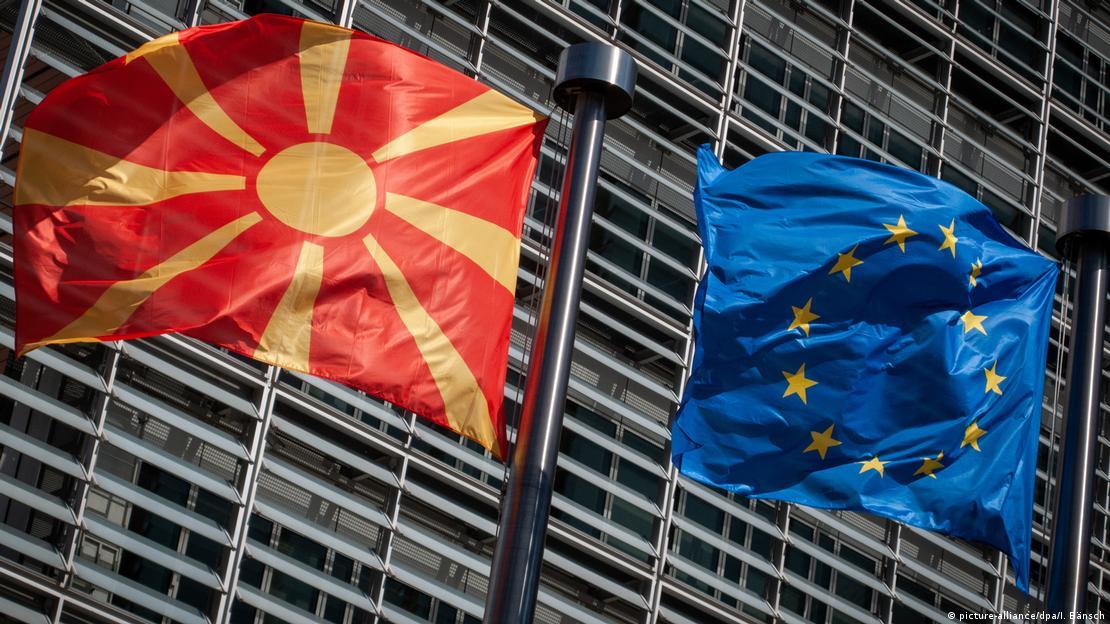
That is why today, as the European Union once again offers Macedonia a new form of humiliation disguised as “gradual integration,” “associate membership,” and “privileged observer status,” it has become painfully clear that the real issue is no longer whether Macedonia fulfills European criteria, but whether Brussels genuinely wants an equal Macedonia at all.
Because if fairness truly existed within European policy, Macedonia would have entered the European Union long ago.
Instead, Macedonia was never treated as a normal candidate state.
It was treated as an experiment.
As a nation upon which the limits of political humiliation could be tested.
First came the demand for the country’s name.
Then its history.
Then its language.
Then its Constitution.
And now, its dignity.
What makes this even more tragic is that every major concession was facilitated by domestic political structures willing to present surrender as “vision” and humiliation as “progress.” For years, Macedonian citizens were told that each concession represented the “final obstacle” on the road toward Europe.
Yet every concession only produced a new demand.
Today the same political logic continues through voices insisting that constitutional amendments must proceed at any cost, even though Macedonia has received no guarantee whatsoever that Bulgaria will stop denying the existence of the Macedonian nation, language, and historical identity.
The absurdity is impossible to ignore.
Macedonia is being asked to amend its Constitution, while almost nobody inside the European Union seriously pressures Sofia to implement the rulings of the European Court of Human Rights concerning the rights of Macedonians in Bulgaria.
This is not European justice.
It is political asymmetry disguised as diplomacy.
And precisely at the moment when Macedonia is being pushed into endless concessions, Germany has introduced a new geopolitical formula through Chancellor Friedrich Merz: “associate membership” for Ukraine and “privileged observer status” for the Western Balkans.
In practice, this means countries without voting rights.
Countries close enough to carry obligations, yet distant enough never to possess real influence.
A Europe of inner circles and outer circles.
A Europe where large states decide and smaller states merely adapt.
That is not integration.
It is the institutionalization of inequality.
But at the same time, another vision of Europe is beginning to emerge, one coming from Central Europe and the Visegrád idea.
This development may become strategically important for Macedonia.
The new Hungarian Prime Minister Péter Magyar and Polish Prime Minister Donald Tusk recently sent a message that resonated far beyond Central Europe: the Visegrád framework should expand toward the Western Balkans.
This was not simply another diplomatic statement.
It was a geopolitical signal.
A signal that parts of Central Europe no longer wish to remain peripheral actors under the political gravity of Berlin and Brussels, but instead seek to build a Europe rooted in sovereignty, national dignity, and equal treatment among nations.
When Péter Magyar speaks about opening the Visegrád framework toward the Western Balkans, he is effectively saying that identity should not be treated as an obstacle to European belonging.
When Donald Tusk declares that Central Europe is no longer Europe’s periphery but one of the places where the continent’s future will be decided, he directly challenges the old political arrogance that has dominated parts of Brussels for years.
For Macedonia, this matters deeply.
Because for the first time in a long time, influential European voices are not saying:
“Change something else if you want to join.”
Instead, they are implying:
“Come as equals.”
The resistance against the new Brussels model is also becoming visible through Slovak Prime Minister Robert Fico, who openly rejected Friedrich Merz’s proposal for “associate membership” for Ukraine.
Fico articulated a principle that many European leaders increasingly avoid discussing openly:
“Either you accept countries as equal members, or you do not.”
That sentence captures the essence of today’s European crisis.
Because the crisis inside the European Union is no longer merely institutional.
It is moral.
Europe is increasingly uncertain whether it still wants a union of equal nations or a hierarchy of politically obedient states.
And Macedonia, unfortunately, has spent years trapped precisely within that hierarchy.
The deepest frustration among Macedonians today does not come only from Brussels.
It comes from the realization that Macedonia sacrificed more than almost any other candidate country and still remains stuck in a permanent waiting room.
The country changed its constitutional name.
Endured humiliation.
Accepted compromise after compromise.
Believed promises that every concession would be the last.
Yet each concession only generated another condition.
This created a profound sense of betrayal.
Not merely by Europe, but also by domestic elites that transformed Macedonia into a state without red lines.
History shows that nations react most strongly when they feel their dignity has been systematically stripped away.
That is why Macedonia now stands before a historic choice.
It can continue along the path of endless concessions and perpetual waiting rooms.
Or it can begin building a policy rooted in dignity, national consensus, and strategic partnerships with countries that understand the historical sensitivity of small nations.
The Visegrád idea — supported today by figures such as Tusk, Magyar, and Fico — demonstrates that Europe is not identical to Brussels alone.
Europe is also the struggle for sovereignty.
Europe is also resistance against double standards.
Europe is also the right of nations not to be humiliated.
And Macedonia must finally find the courage to say one simple truth:
There can be no European future if the price is the erosion of Macedonian identity itself.
Because a nation that abandons itself merely to be accepted will ultimately end up neither respected nor truly accepted.
It will become only an empty territory without a soul.
And despite everything, despite all the pressure, disappointments, and political betrayals, Macedonia still has a soul.
That is why it still endures.
