

“A nation that does not respect its history has no future.
( Nikolai Berdyaev)
By: Slobodan TOMIC

In every country, there are moments when the words of public figures carry a weight greater than an ordinary statement.
Especially when it comes to issues connected with history, identity, language, and the right of a people to recognize itself.
When people holding high social positions, in politics, diplomacy, or the Church, express views on the Macedonian historical question, they do not speak only as individuals.
Their words become part of public memory and influence the way citizens understand their own history.
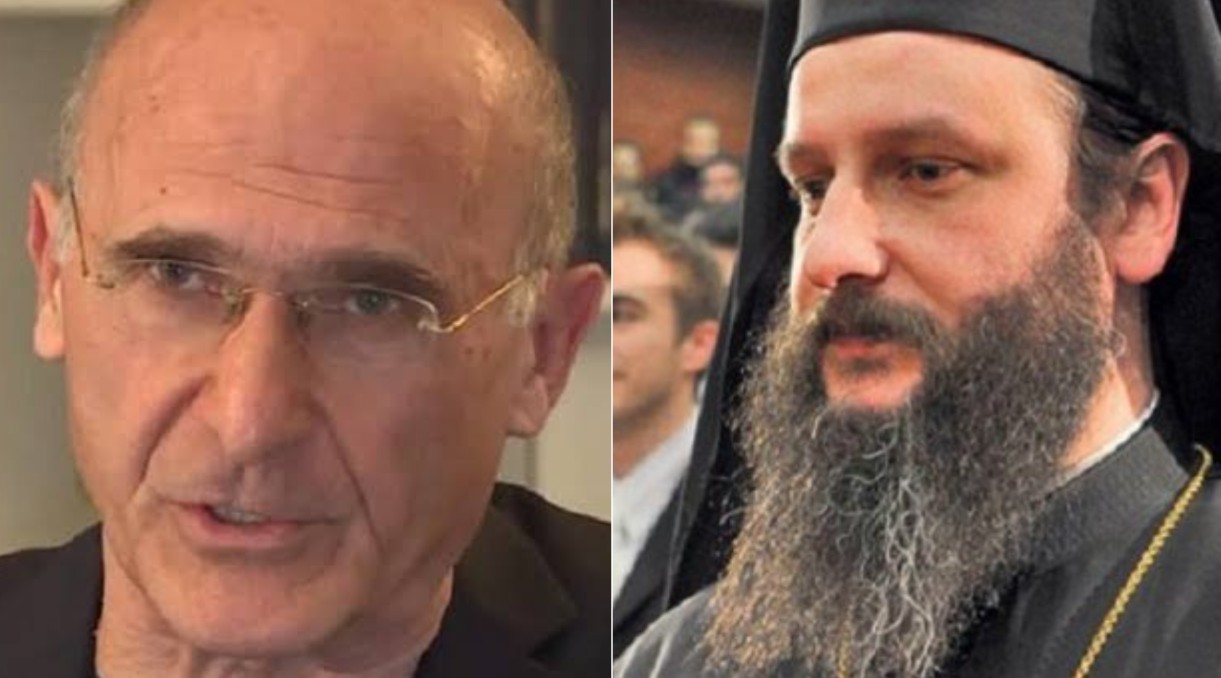
The views attributed to former Minister of Foreign Affairs Denko Maleski and Bishop Jovan Vranishkovski have caused strong reactions in the public.
In the case of Denko Maleski, the controversy concerns his statements related to historical figures such as Krste Misirkov and Goce Delchev, as well as his view that historical truth must be observed through the broader context of the time in which these figures lived.
For a part of the Macedonian public, such an approach is perceived as an unacceptable reduction of the importance of Macedonian national distinctiveness.
The issue becomes especially sensitive when historical figures, who hold a central place in Macedonian culture and collective memory, are interpreted exclusively through one national framework.
On the other hand, historical science shows that the period of the 19th and the beginning of the 20th century was complex, with different forms of self-identification, political movements, and influences.
However, scientific complexity must not be transformed into political denial of the right of a modern nation to build its own identity.
The same question arises regarding the statements attributed to Bishop Jovan Vranishkovski concerning Macedonia and Macedonians.
For believers and citizens, the Church is not only an institution, but also a guardian of spiritual and historical memory. Therefore, any statement by a church dignitary that is interpreted as questioning Macedonian distinctiveness causes strong reactions.
The Macedonian question for more than a century has not only been a question of borders and politics.
It is a question of language, culture, historical memory, and a sense of belonging.
No serious historian can deny that the name Macedonia has centuries-old historical and geographical usage. At the same time, modern nations are formed through long historical processes, through language, culture, shared memory, and political consciousness.
Therefore, the danger is not in scientific debate. Science must allow different opinions.
The danger appears when historical interpretations are used as a means of weakening the sense of belonging of a people.
The greatest responsibility of public figures is to be aware that their words leave a lasting mark.
A politician, diplomat, or church dignitary has the right to an opinion, but also has a responsibility toward the society in which they live.
Macedonia cannot build its future only through disputes about the past. But it also cannot build its future by abandoning its own historical memory.
A mature society is not afraid of debate, but demands that debate be based on facts, respect, and responsibility.
History should not be a weapon for division, but a foundation for understanding.
However, every nation has the right to defend its culture, its language, and its right to self-determination.
Therefore, the question is not whether we should discuss history. We must.
The question is: will we discuss history in order to understand each other, or will we use it to take away from one another the right to exist?
