

“Patriotism is when love of your own people comes first; nationalism, when hate for people other than your own comes first.”
Charles de Gaulle
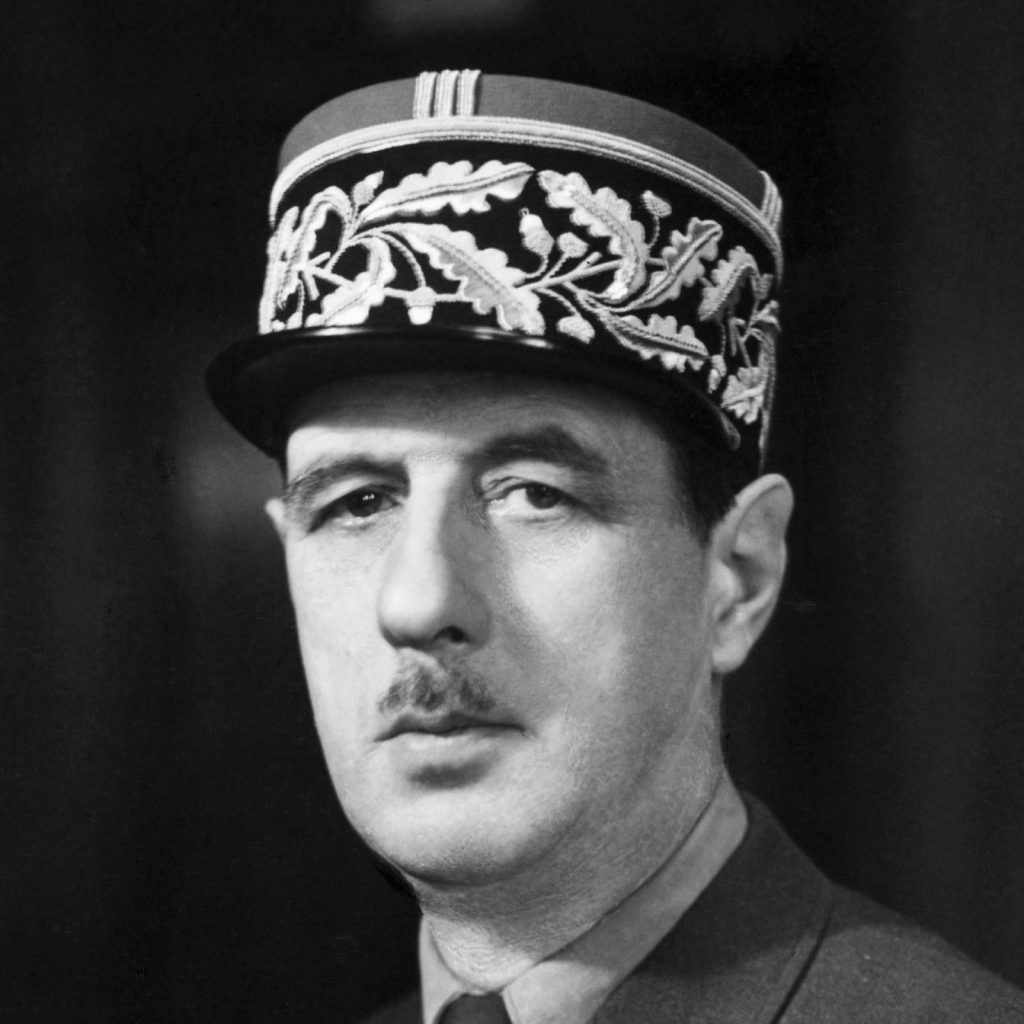
Charles de Gaulle
By: Slobodan TOMIC

Macedonia has paid the price of endless political conflicts for far too long.
While political camps compete over who will score more political points, citizens expect something much simpler, a better life, a secure economy, functional healthcare, quality education, and justice that applies equally to everyone.
No government should be exempt from criticism.
However, no government should be condemned in advance simply because its policies do not align with the political convictions of its critics.
Today, the Government of Hristijan Mickoski faces a historic opportunity, but also a historic responsibility. If it succeeds in fulfilling its promises for stronger institutions, a more decisive fight against crime and corruption, economic development, and the protection of state interests, it will leave a mark remembered for generations. If it fails, the citizens will deliver their verdict at the ballot box.
Such is the essence of democracy.
Therefore, it is paramount that political debate does not degenerate into a contest of who can louder discredit the other side, but rather who can offer better ideas and superior results.
History is not changed by the loudest critics, nor by the loudest supporters.
History is changed by people with the vision, courage, and responsibility to make tough decisions in the interest of the state.
Macedonia deserves precisely such politics, a politics of dignity, a politics of results, and a politics in which the state interest stands above any party interest.
WHO TRULY DEFENDS MACEDONIA’S EUROPEAN FUTURE?
For decades, Macedonia’s European integration was used as a political shield for incompetence, systemic corruption, and national concessions.
Every deficit in reforms was covered up with euphoric rhetoric, and every national compromise was sold as a “visionary step.” This destructive narrative created a false dichotomy: either accept everything unquestioningly, or be labeled an opponent of the community of European nations.
The Government led by Hristijan Mickoski directly challenges this dogma. Protecting national dignity and insisting on reciprocity and principles is not an anti-European act , on the contrary, it represents the highest form of European behavior.
A genuine pro-European course does not mean servility; it means building a state that enters the European Union with its head held high, with a functional judiciary and a stable economy, rather than as an exception forced to constantly accept external dictates.
Macedonia’s European future is not defended through declarative statements in Brussels corridors, but through a fierce fight against corruption at home and firm, uncompromising diplomacy abroad. The era of subservience is over.
The new approach demands an awareness that a nation is valued only as much as it respects itself.
ANATOMY OF THE COLLAPSE OF IMPOSED PSEUDO-CIVIC CRITICISM
The attacks facing the current administration do not stem from a place of principled concern for citizens, but from the panic of a political-business establishment that is losing its privileges. Critics who remained silent for years during the looting of state resources and the total degradation of institutions have suddenly become vocal defenders of standards.
This hypocrisy must be exposed to the core. When sharp economic measures are implemented, when loopholes through which millions of euros drained from the budget are closed, and when order is finally restored to public administration, resistance is expected. Those who profited from chaos will not yield ground without a fight.
Hence, support for Mickoski’s policies does not represent blind party loyalty, but a pragmatic necessity for establishing state order. The government must remain immune to media noise and engineered destructive criticism, while maintaining surgical precision in executing its promised reforms.
TIME – THE ONLY IMPARTIAL JUDGE OF EVERY GOVERNMENT
No political mandate can be judged based on daily political bickering or party press releases. Time is the only unbribable and impartial judge. It will show whether the established foundations can withstand the challenges of history.
The Government of Hristijan Mickoski faces a clear choice: either continue along the set path of resolve, reforms, and national dignity, or succumb to the pressure of status-quo forces.
Judging by the firmness displayed so far and the readiness to confront accumulated problems directly, this administration has shown the capacity to pass that test.
Results will be the sole measure that remains. When the noise of political opponents fades and the wave of orchestrated attacks passes, citizens will judge based on what has been built, how well the state has been protected, and what kind of system is left for future generations.
Macedonia no longer has room for errors, nor time to waste.
The era of political improvisations is over, the era of accountability and tangible results has arrived.
ECONOMIC PATRIOTISM AS A NEW STRATEGY FOR SURVIVAL
State sovereignty in the 21st century is defended not only at the borders, but above all within the economy. For years, Macedonia was turned into an import-dependent economy without a clear strategy to protect domestic production, support local investors, and attract capital that builds lasting value.
The reshaping of economic policies under the leadership of the Government is not merely a matter of percentages and budgetary balances, but a question of national survival.
Creating conditions for stable economic growth, fiscal discipline, and systemic support for business represents genuine economic patriotism.
Citizens are not asking for empty promises, but real purchasing power, secure jobs, and an economic environment where young people see a future worth staying for.
THE FIGHT AGAINST SYSTEMIC CORRUPTION: A TEST OF WILL AND INSTITUTIONS
Corruption in Macedonia metastasized over decades to the point of becoming a parallel system of governance. The greatest challenge facing Hristijan Mickoski is not merely dismantling political opponents, but completely shattering this established mechanism of impunity.
True change requires the uncompromising establishment of the rule of law, where no one stands above the law , regardless of party, ethnic, or business affiliation. This is a battle that demands political courage, as resistance from corrupt structures will be fierce.
Every step forward toward building independent and functional institutions is a step closer to restoring citizens’ trust in their own state.
STATESMANSHIP OVER PARTISANSHIP: A VISION FOR A STABLE AND SOVEREIGN MACEDONIA
Great leaders are not measured by how many elections they have won, but by the state they leave behind. In an era of global geopolitical shifts and regional pressures, Macedonia needs a strategy grounded in national consensus and a firm statesmanlike stance.
The policy led by Mickoski prioritizes state interests above all else. This entails making tough but necessary decisions that may not yield immediate political points, but will secure long-term stability, security, and economic prosperity. It is the only path through which Macedonia can cease being an object of foreign interests and become a sovereign actor dictating its own destiny.
SUMMARY: A TIME FOR DEEDS AND HISTORIC RESPONSIBILITY
Macedonia stands at a crucial crossroads where historical mistakes can no longer be compensated for with rhetoric.
Redefining Foreign Policy: Protecting national dignity and insisting on reciprocity does not distance the country from the European Union; it places it on an equal and respected footing.
Economic Stability and
Order: Reforming the economic system and enforcing fiscal discipline form the foundation of new economic patriotism.
Uncompromising Justice: Establishing a real fight against corruption and strengthening institutions are the only guarantees for restoring citizen trust.
A Statesmanlike Course: Hristijan Mickoski holds the historic opportunity to set new standards in politics, where results, responsibility, and state interests are placed ahead of all party calculations.
The time for words is over; the era of real deeds and historical responsibility before future generations has begun.
