

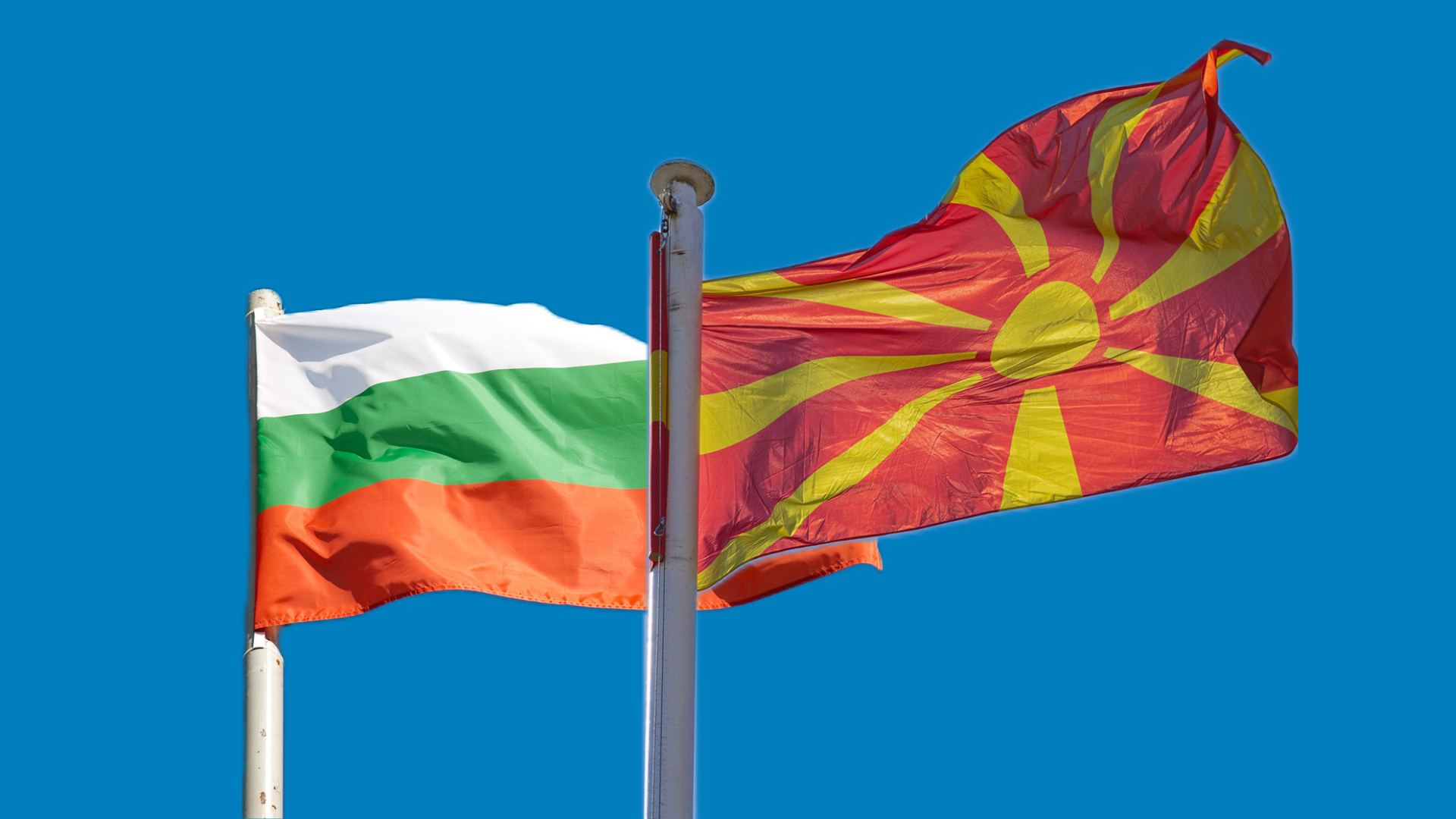
From Bujar Osmani’s signatures to Timcho Mucunski’s questions: Who bears political responsibility for the burden weighing on Macedonia’s European path?
By Slobodan Tomic

“Truth is the daughter of time.”
— Aulus Gellius
There are moments in the history of every nation when political disagreements cease to be ordinary partisan disputes and become matters of historical responsibility. Macedonia finds itself at precisely such a moment.
Foreign Minister Timcho Mucunski’s recent criticism of his predecessor, Bujar Osmani, has revived one of the country’s most sensitive debates: who bears responsibility for the diplomatic decisions that continue to shape Macedonia’s path toward European Union membership?
Mucunski argued that Osmani “knows very well what he negotiated, what he accepted, and the position in which he left the country.”
His remarks were not simply another exchange between government and opposition.
They reopened fundamental questions about the negotiations with Bulgaria, the Second Bilateral Protocol signed in July 2022, and the political consequences that continue to influence the country’s European integration.
The real issue is not which politician delivers the stronger public performance.
The issue is who made the decisions when Macedonia’s long-term national interests were at stake.
Political memory cannot be selective. It must remember agreements, official documents, public commitments, and,above all,their consequences.
Osmani served as foreign minister during the most delicate phase of negotiations with Bulgaria.
During his tenure, Macedonia accepted the EU Negotiating Framework while signing the Second Bilateral Protocol, after which constitutional amendments became a prerequisite for moving forward in the accession process.
Today, Osmani argues that the bilateral protocols are not legally part of the Negotiating Framework.
Yet the debate remains unresolved because Bulgaria continues to refer to those documents while presenting its positions within the EU process. That reality alone keeps the controversy alive.
Another statement frequently cited by critics dates back to January 2022, when Osmani told Bulgaria’s bTV television that he saw no obstacle to including Bulgarians among the communities listed in Macedonia’s Constitution. Supporters viewed the statement as an effort to overcome a diplomatic deadlock. Critics saw it as the beginning of a process that later evolved into one of the central political conditions attached to the country’s European path.
Regardless of political interpretation, one fact remains clear: constitutional amendments have become one of the defining issues in Macedonia’s EU accession debate.
In diplomacy, every signature carries long-term consequences. Political narratives may evolve, governments may change, but official documents remain part of the institutional record. History rarely remembers political explanations as much as it remembers the decisions themselves.
Mucunski has repeatedly stated that his government will reject any future bilateral conditions that could affect Macedonia’s identity, language, or historical continuity.
He has also argued that those who negotiated previous agreements have a responsibility to explain their decisions openly rather than reinterpret them years later.
This is ultimately a debate about political accountability.
Every democratic society expects those entrusted with the highest offices not only to negotiate on behalf of the state but also to explain and defend their decisions before the citizens.
Accountability does not disappear when a minister leaves office.
Several important questions therefore continue to dominate the public discussion. Why does Bulgaria still rely on the bilateral protocols when defining its position within the European process? Why do the same issues repeatedly reappear whenever Macedonia’s EU progress is assessed? And why must Macedonian diplomacy continue to insist that bilateral disputes should never become European accession criteria?
These are not merely party-political questions.
They concern the country’s long-term strategic interests.
The broader chronology also matters. In 2017, the Treaty of Friendship, Good-Neighbourliness and Cooperation with Bulgaria was presented as a turning point that would strengthen bilateral relations and accelerate European integration.
Instead, the years that followed brought new conditions, renewed disagreements, and growing political polarization over the direction of the accession process.
Diplomacy inevitably requires compromise. No negotiation succeeds without concessions.
Yet every compromise has limits, particularly when questions of national identity, language, and historical heritage are involved. Those issues carry exceptional political sensitivity in Macedonia and inevitably attract lasting public attention.
History also demonstrates that public trust is built through consistency rather than political messaging. Citizens expect transparency, clear explanations, and an honest assessment of decisions that continue to shape the country’s future.
Ultimately, the current exchange between Timcho Mucunski and Bujar Osmani extends far beyond a dispute between a serving and a former foreign minister.
It reflects two different interpretations of how national interests should be protected during one of the most challenging periods in Macedonia’s modern diplomacy.
Political offices are temporary. State decisions are not.
When today’s political arguments eventually fade, history will ask a far simpler question: did the choices made over the past decade leave Macedonia stronger, more secure, and closer to achieving its national interests?
That question cannot be answered through political rhetoric alone.
Only time,and history,will deliver the final verdict.
