

By Slobodan Tomic

Editor’s Note: At a moment when global tensions are rising from the Middle East to Eastern Europe, a single phone call between two of the world’s most powerful leaders may signal a deeper geopolitical shift. This analysis explores the strategic implications of renewed direct communication between Washington and Moscow, the risks surrounding Iran and the Strait of Hormuz, and the growing role of energy politics in shaping the next global order.
“Great powers do not talk because they agree, but because they know that without dialogue the world moves toward catastrophe.”
Henry Kissinger
THE PHONE CALL THAT REVEALED REAL GEOPOLITICS
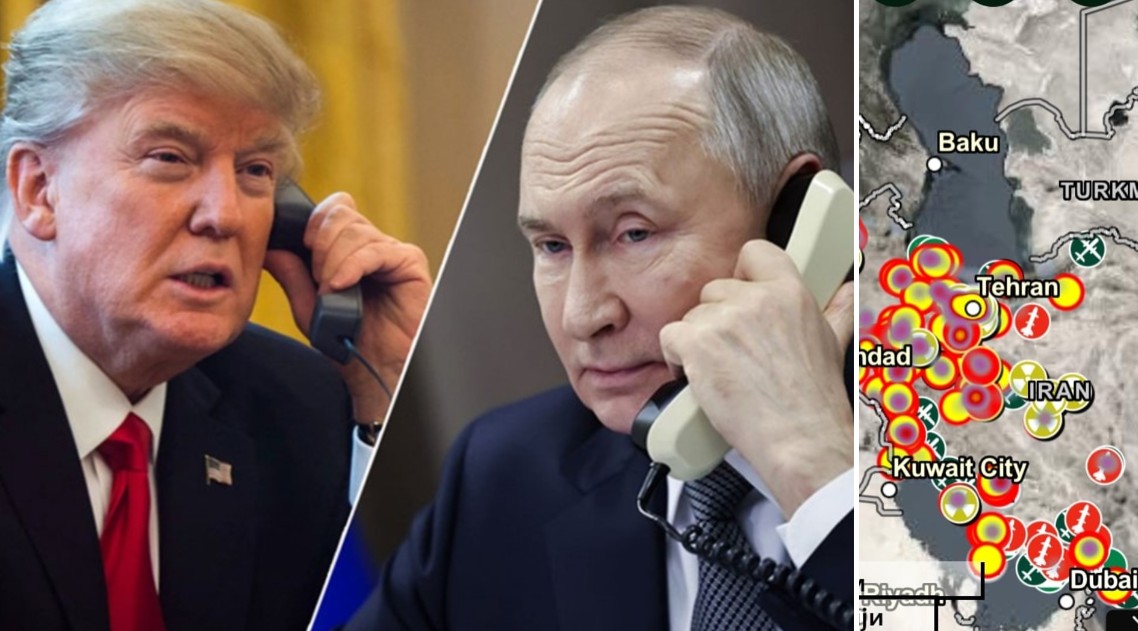
The one-hour phone conversation between Donald Trump and Vladimir Putin was not an ordinary diplomatic contact.It was a signal that, in the shadow of wars and global crises, a direct geopolitical channel is opening between the two most powerful nuclear powers in the world.The conversation took place at a moment when the planet finds itself in the most dangerous geopolitical configuration since the end of the Cold War:a U.S.–Israeli military operation against Iranstagnation in the war in Ukrainean explosion in global oil pricesthe threat of closing the Strait of Hormuzgrowing panic in global energy marketsAccording to the Kremlin, the conversation was “businesslike, open and constructive.”But behind diplomatic language lies a deeper clash of strategies and a struggle for a new geopolitical balance.
IRAN — THE CENTRAL POINT OF GLOBAL CONFRONTATION
At the center of the conversation was the crisis surrounding Iran, which escalated after U.S.–Israeli strikes against Tehran created a new explosive situation in the Middle East.Russia, which maintains a strategic partnership with Iran, reportedly proposed a rapid diplomatic plan aimed at de-escalation.Putin presented Trump with several elements of this potential approach:contacts with leaders from the Persian Gulfdirect dialogue with the Iranian leadershipa political solution designed to prevent a wider regional warThis is no coincidence.Moscow understands that a full-scale war with Iran could ignite the entire Middle East and push the global economy toward instability and chaos.At the same time, Russia is positioning itself as a key diplomatic mediator, strengthening its role in global politics.
THE STRAIT OF HORMUZ, THE THROAT OF GLOBAL ENERGY
One of the most dangerous issues discussed was the possible blockade of the Strait of Hormuz. Roughly 20 percent of the world’s oil supply passes through this narrow maritime corridor.If Iran were to close this route:oil prices could rise above $150 per barrelglobal inflation could surge dramaticallythe European economy could enter a new severe crisisThis explains why the conversation between Moscow and Washington, D.C. carries not only political significance, but also a powerful energy dimension.
UKRAINE, A WAR THAT CANNOT END WITHOUT NEGOTIATIONS
The second major topic was the war in Ukraine.Donald Trump reportedly reiterated his interest in a rapid ceasefire and a political settlement, part of his broader strategy for stabilizing the conflict.From the Russian side, Vladimir Putin claimed that Russian forces are advancing on the battlefield.However, independent sources indicate a more complex reality:the front lines remain largely stagnantRussia has suffered territorial losses in certain areasthe war is increasingly becoming a long-term war of attritionFor this reason, Moscow appears to be seeking greater political pressure on Kyiv in order to open negotiations.
OIL, THE HIDDEN DRIVER OF GREAT-POWER DIPLOMACY
The conversation between Donald Trump and Vladimir Putin cannot be fully understood without examining the global energy map.
Oil prices have already surpassed $100 per barrel, and in the context of a Middle Eastern conflict they could reach $120 or even higher.In this situation:the United States is seeking new sources of supplyRussia aims to regain its position on the European energy marketthe European Union faces renewed energy anxietyPutin therefore delivered a clear message.Russia is prepared to resume oil and gas deliveries to Europe, but only if cooperation becomes long-term and free from political pressure.
This suggests that the energy war between Russia and Europe is far from over.
VENEZUELA, THE THIRD ENERGY FACTOR
Another important issue raised during the conversation was Venezuela.Washington, D.C. is attempting to bring Venezuelan oil back to global markets in order to reduce pressure on prices.
However, this move opens a new geopolitical front:Russia maintains strong influence in Caracas China has invested billions in the country the United States seeks control over key energy reservesThe global energy chessboard therefore stretches from the Persian Gulf to Latin America.
A NEW GEOPOLITICAL REALISM
The fact that the conversation was initiated by Washington, D.C. demonstrates that even the most powerful states must communicate when the world approaches a dangerous tipping point.
Despite sanctions, conflicts, and geopolitical rivalry, Moscow and Washington, D.C. are once again establishing direct communication.This is classical geopolitics.
When crises become global, great powers return to the negotiating table.
THE WORLD IS ENTERING A NEW ERA OF POWER
The phone conversation between Donald Trump and Vladimir Putin is not merely a diplomatic formality.It is a signal that:the Middle East stands on the edge of a major war Ukraine remains a frozen front the global energy map is shifting new geopolitical arrangements are being forged behind closed doorsThe world is once again returning to an era in which the fate of the planet may be shaped by conversations between a small number of powerful leaders.
And that is precisely why this phone call could mark the beginning of a new geopolitical process that will shape the next decade.
Author Slobodan Tomic is a political analyst and commentator on international affairs. He hosts the public affairs program Voice of the People and writes on geopolitics, energy security, and global strategic dynamics in Europe and the Balkans.
