

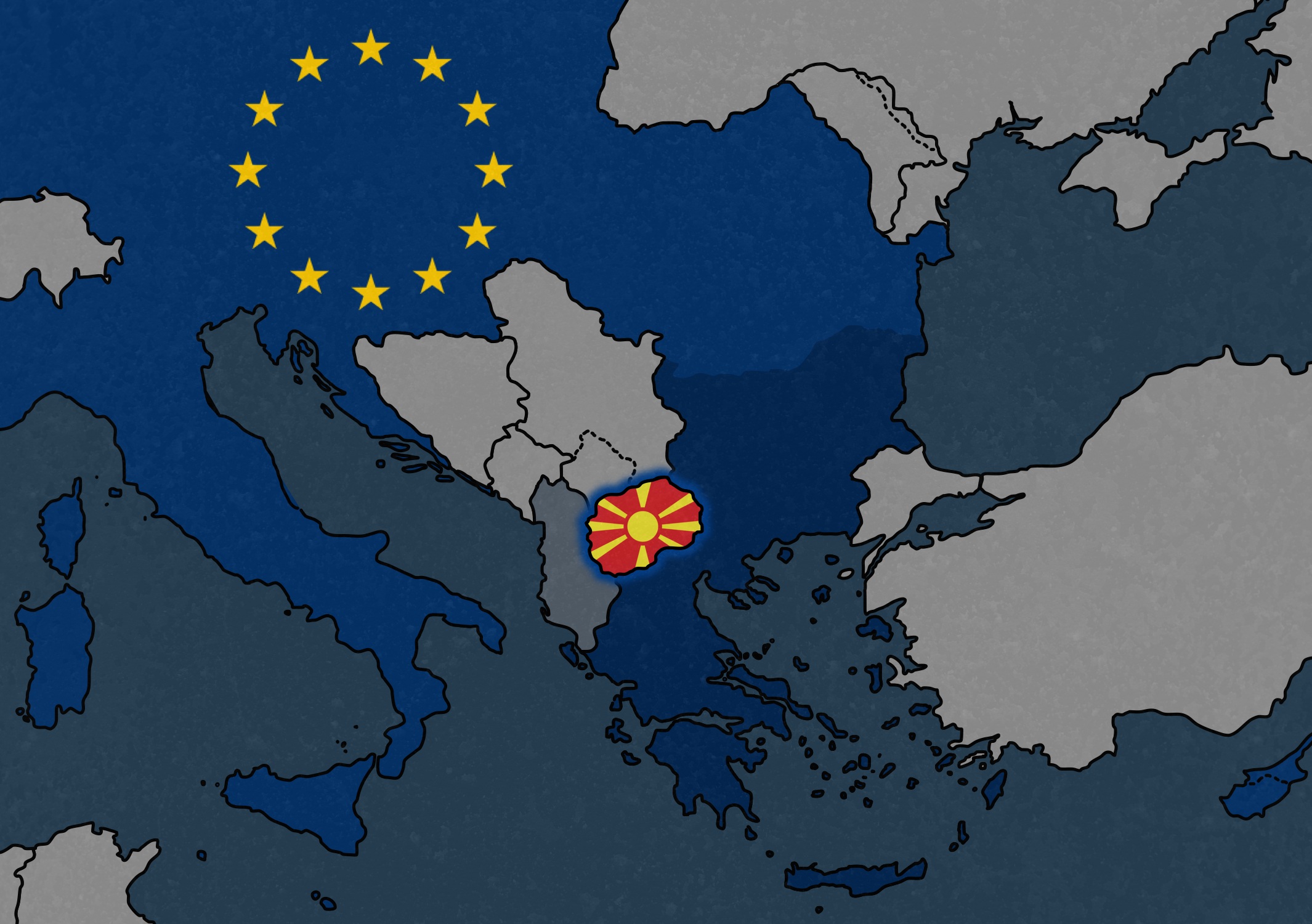
By Slobodan Tomić

It is rare in diplomacy for a senior European official to state so explicitly that the European Union’s future depends on its ability to complete the enlargement process. That is precisely why the messages coming from Rome deserve close attention.
Italian Deputy Prime Minister and Foreign Minister Antonio Tajani argued that Europe’s political, economic and security strength in the decades ahead will depend on the successful integration of the Western Balkans. Without completing the European project, he warned, the European Union will struggle to remain an influential global actor in an era of profound geopolitical change.
This was more than another diplomatic statement. It was an implicit acknowledgement that the long-standing policy of delaying enlargement is reaching its limits. Russia’s war against Ukraine, energy insecurity, migration pressures and intensifying global competition have forced Europe to reassess its strategic priorities.
In this new environment, the Western Balkans is no longer viewed as a peripheral region waiting indefinitely at the Union’s doorstep. It is increasingly seen as an integral part of Europe’s future security, economic and political architecture.
For Macedonia, this shift carries particular significance.
For more than two decades, the country has pursued its European path. Governments have changed, European Commission and European Parliament mandates have come and gone, and global priorities have evolved. Yet one reality remained constant: Macedonia’s accession process has repeatedly been overshadowed by political and bilateral disputes that lie outside the EU acquis and beyond the Copenhagen criteria.
That is why today’s messages from Rome matter.
If Europe now openly recognises that the Western Balkans is a strategic necessity, an obvious question follows: why has enlargement for so long been held hostage by political blockages?
This is not an argument against the European Union.
On the contrary.
The EU remains one of the most successful peace and political projects in modern history. Precisely because of that success, however, its credibility must rest on consistency, equal treatment and respect for commitments already made.
Trust is not built through declarations. It is built through decisions.
Macedonia is not asking for special treatment.
It is asking for fairness, a process in which reforms matter more than political vetoes, and European criteria take precedence over bilateral disputes.
Europe Is Changing Its Language , Will It Also Change Its Policy?
Tajani’s remarks are part of a broader shift in tone emerging across European capitals.
European Parliament President Roberta Metsola has warned that keeping candidate countries in perpetual waiting risks undermining confidence in the European project itself. Her message is straightforward: the Union’s credibility depends not only on the promises it makes, but also on whether those promises become policy.
Croatian Foreign Minister Gordan Grlić Radman has similarly described enlargement as a strategic investment in Europe’s security and stability. Such language reflects a growing recognition that the Western Balkans is not a burden, but an essential element of Europe’s future geopolitical architecture.
The same logic underpins Italy’s initiative to establish the informal group Friends of the Western Balkans, designed to return enlargement to the centre of the European agenda after years of stagnation.
The strategic calculation is becoming increasingly clear.
Prolonged delays create more risks than benefits. Vacuums rarely remain empty. Where Europe hesitates, other global actors inevitably expand their influence.
Enlargement is therefore no longer simply a question of solidarity. It has become a matter of European security, economic resilience and geopolitical strategy.
Within that framework, Macedonia occupies an important position.
Located at the crossroads of key transport, energy and infrastructure corridors linking Southern Europe with Central Europe and connecting the Adriatic to the Black Sea region, the country has strategic relevance that extends well beyond its size.
The central question now is whether Europe will translate its evolving rhetoric into concrete political action.
The answer will shape not only Macedonia’s future, but also the credibility of the European Union itself.
From Lisbon to Bucharest: Two Turning Points That Changed Macedonia’s European Journey
Understanding today’s debate requires looking back.
During my decades as a journalist, I had the opportunity to follow many of the defining diplomatic moments that shaped Macedonia’s European and Euro-Atlantic aspirations.
I remember Lisbon in 2007, when many European policymakers viewed Macedonia as one of the region’s frontrunners for both NATO and EU integration. Optimism prevailed, and membership appeared within reach.
Only months later came the NATO Summit in Bucharest in April 2008.
Instead of the expected invitation, Macedonia faced a Greek veto over the name dispute.
That moment represented far more than a diplomatic setback. It fundamentally altered the trajectory of Macedonia’s Euro-Atlantic integration and weakened confidence that meeting established criteria would necessarily be rewarded with progress.
Nearly two decades later, Europe once again argues that the Western Balkans is indispensable to its future.
That is an encouraging development.
History, however, teaches a simple lesson: political declarations acquire meaning only when they are followed by political decisions.
Today’s moment therefore represents more than another diplomatic chapter.
It offers the European Union an opportunity to demonstrate that enlargement will once again be guided by merit, predictability and equal standards.
Macedonia has never been a source of instability.
On the contrary, it has consistently demonstrated that it is a reliable partner committed to regional cooperation, collective security and European values, including through reforms and its contribution as a NATO ally.
Macedonia Is Not Europe’s Periphery , It Is Part of Europe’s Strategic Solution
Europe today faces a geopolitical environment profoundly different from that of two decades ago.
War, energy transformation, migration pressures, cyber threats and intensifying great-power competition have compelled the European Union to rethink its long-term strategic vision.
In this context, the Western Balkans can no longer be treated as a region permanently waiting outside the Union.
It is becoming an indispensable part of Europe’s future security, energy and economic architecture.
Macedonia has a strategic role within that reality.
The development of Corridor VIII, new energy interconnectors, railway modernisation and digital connectivity are no longer merely national priorities. They form part of Europe’s broader strategy for resilience, diversification and competitiveness.
Macedonia should therefore not be viewed as Europe’s periphery.
It is part of Europe’s strategic solution.
Yet geography alone is not enough.
The credibility of enlargement will ultimately depend on whether the European Union applies the principles it advocates equally to every candidate country.
Macedonia is not asking for shortcuts.
It is not seeking privileges.
It is asking for a process in which reforms carry greater weight than bilateral disputes, and European rules prevail over political obstruction.
As a journalist and political analyst, I have long believed that Macedonia’s future lies within the European family.
At the same time, European integration should never require abandoning national dignity, identity, language or historical heritage.
Europe is strongest when it embraces diversity rather than questions it.
That demands political maturity on both sides.
Macedonia must continue advancing reforms, strengthening institutions, reinforcing the rule of law, fighting corruption and modernising its economy.
The European Union, meanwhile, must demonstrate that its principles are not subject to day-to-day political bargaining but remain the foundation of its credibility.
Macedonia’s Future Is Also a Test of Europe’s Future
There are moments in history when the examination is not taken only by candidate countries, but by the European Union itself.
This is one of those moments.
After decades of reforms, difficult political decisions and sustained commitment to European integration, Macedonia expects a process that is predictable, credible and governed by equal rules.
Europe has consistently maintained that enlargement is based on merit, the rule of law, democratic institutions and European standards.
Those principles remain essential.
But they must also be applied consistently.
Recent messages from Rome, Brussels and other European capitals indicate growing recognition that lasting European stability, security and competitiveness cannot be achieved without integrating the Western Balkans.
That shift is encouraging.
Yet politics is measured not by speeches, but by decisions.
The statements made by Antonio Tajani, Roberta Metsola and other European leaders must now be translated into concrete policy.
Only then can the European Union reinforce its credibility through consistency rather than continued postponement.
Macedonia is not asking for anything unavailable to other European nations.
It asks for respect.
It asks for equal rules.
It asks for a process in which reforms remain the principal benchmark for progress.
At the same time, Macedonia must remain fully committed to strengthening the rule of law, advancing economic development and fighting corruption—not only because Brussels expects it, but because its own citizens deserve it.
The future does not lie in new divisions.
It lies in rebuilding trust between the European Union and the candidate countries.
Europe has always been strongest when it demonstrated vision, political courage and the ability to unite nations around common values.
The question today is therefore not simply when Macedonia will join the European Union.
The real question is whether the European Union is prepared to complete its own vision of a united Europe.
Because Europe cannot be complete without the Western Balkans.
And the Western Balkans cannot be complete without Macedonia.
History remembers those who have the courage to make visionary decisions.
That decision now rests with Europe’s leaders.
For Macedonia’s future is not only a Macedonian question.
It is part of Europe’s future.
