

By Slobodan TOMIĆ

Is there a greater paradox than the justice system becoming a service desk for those suspected of defrauding the state budget?
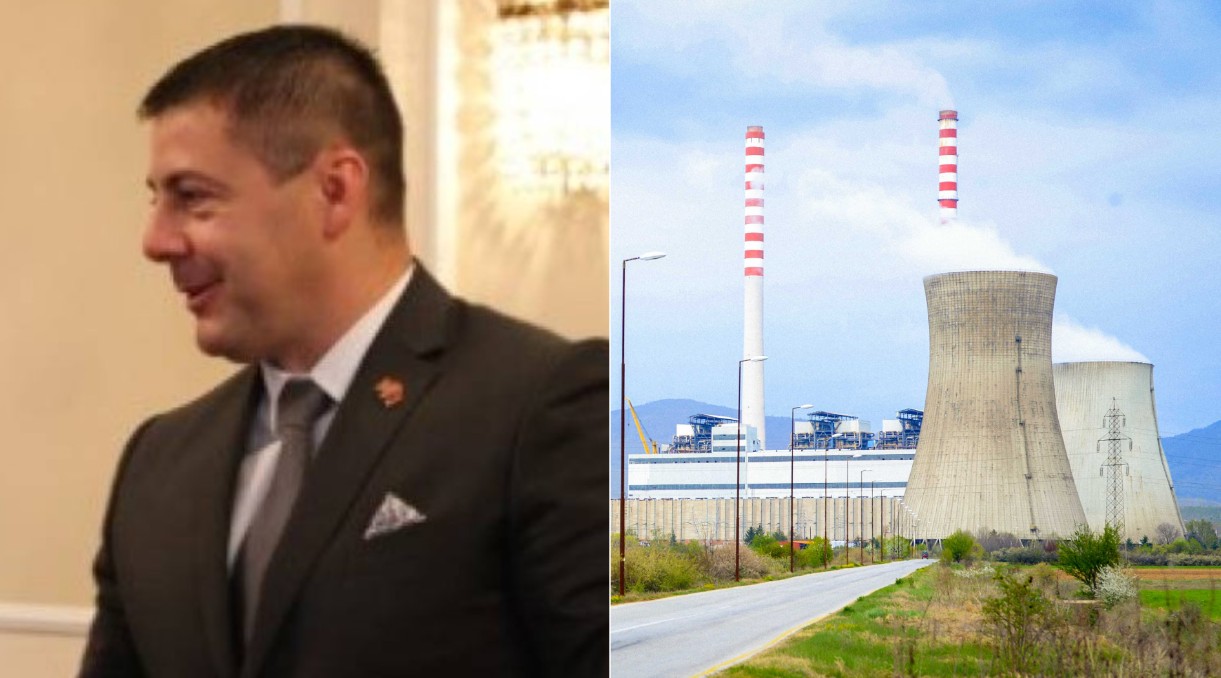
The case surrounding the return of the passport of businessman and Honorary Consul of Belarus, Borče Markovski,indicted for abuse of public procurement at the REK Bitola energy complex worth €1.7 million—has reopened a deep wound that has burned Macedonian society for decades.
The question weighing on every ordinary citizen is simple, yet cuts to the bone: Does protection from criminal prosecution and flight in Macedonia have a fixed price tag in euros?
LEGAL COMPROMISE OR INSTITUTIONAL CAPITULATION?
According to official information, Markovski’s defense managed to convince judicial authorities that his business operations in Serbia (through the companies Haza Izgradnja and RSJ-M Izgradnja) faced the risk of “irreparable harm” unless he personally traveled to sign documents.
What raises eyebrows in this entire process is the institutional ping-pong match and the swift reversal that followed:
- The Basic Public Prosecutor’s Office in Struga issued a negative opinion on June 15 regarding the return of his passport.
- Following a repeated request, the Higher Public Prosecutor’s Office in Bitola, headed by Peco Veziroski, instructed the lower prosecutor to change their stance and submit a favorable opinion.
- The Basic Court in Struga, led by Judge Vulnet Vinca (Vejseli), ruled that property collateral exceeding €5 million (a house, apartments, 25 bulldozers, and trucks) served as sufficient replacement for the passport.
- The judicial logic: “You cannot have both property collateral and a confiscated passport—it is either one or the other.”
Yet, can property,which tomorrow could become the subject of lengthy and complex execution procedures,truly replace the physical presence of the accused before the bar of justice?
THE “LEMONADE AND BAKLAVA ON THE BOSPORUS” SEQUEL MOVES TO SERBIA
This is not an isolated precedent; it is an established playbook. Macedonian judicial history is filled with examples of defendants accused of multi-million-euro embezzlements or harmful procurement schemes (such as the infamous case involving the import of toxic fuel oil) who posted multi-million-euro bails, retrieved their passports, and departed on “urgent business trips” or “medical checkups”—never to return for years.
The divide between the ordinary citizen and the elite is stark and humiliating:
- For the ordinary person: A forgotten utility bill, a missed loan installment, or the smallest minor infraction immediately triggers frozen accounts, bailiffs, pre-trial detention, and the unyielding severity of the law.
- For the elite with millions in capital: An indictment over multi-million-euro tenders at the energy giant REK Bitola is met with flexible legal interpretations, pledged machinery and real estate, and an exit visa at the Tabanovce border crossing under the pretext of “saving the business.”
SYSTEMIC IRONY: WHEN THE JUDICIARY BECOMES A PARKING LOT FOR CASES
No less striking is the way this case has been shuffled from court to court.
Initially launched in the Basic Court in Bitola, the case was suddenly transferred to the Basic Court in Struga following an Appeals Court decision. There, the first hearing scheduled for June 24 was adjourned because one of the defendants decided to switch defense counsel at the last minute, requiring the new attorney “additional time to review the files.”
This is a well-known, perfected strategy for buying time. While the case gathers dust in judicial drawers:
- Judges retire: The president of the court in Struga, who rendered the ruling on the passport, entered mandatory retirement on the very day the decision became legally binding.
- Foreign companies register millions in profits: While the Macedonian Markovski Company records falling revenues and canceled contracts with ESM, Belgrade-based Haza Izgradnja and the newly established RSJ-M Izgradnja generate millions in profits in Serbian dinars.
- Public attention fades: Time passes, media attention shifts to a fresh scandal, and the case quietly makes its way toward the statute of limitations or a lenient, conditional outcome.
“PEOPLE, IS THIS EVEN POSSIBLE?”
In the style of the legendary sports commentator Mladen Delić, the public is left watching their screens in utter disbelief.
Yet the answer is terrifyingly clear: Yes, in Macedonia, this is entirely possible.
The concept of the “rule of law” and “equality before the law” ceases to be a reality here, becoming a purely abstract concept. When financial interests align with institutional loopholes, state bodies always find a way to justify every concession for the privileged.
FINALE: WHAT REMAINS FOR THE ORDINARY PERSON?
The defendant’s attorney maintains that Markovski is merely attending business meetings and will return to Macedonia within days for the trial scheduled for September 2, 2026.
Whether he will actually appear in the courtroom in Struga, or whether Macedonia will once again witness another farcical trial in absentia (while the pledged property gets bogged down in the labyrinths of appeal proceedings) remains to be seen.
However, the moral collapse is already a done deal. This case has sent yet another brutal message: when you have millions to pledge, laws become mere suggestions and border crossings a mere formality; for everyone else who lacks even enough for a basic meal, the full severity of justice applies without a single ounce of leeway.
SUMMARY: WHAT IS THE VALUE OF AN ORDINARY HUMAN LIFE?
The case of Borče Markovski is not merely a story about one defendant and one passport. It once again raises the fundamental question of whether two systems of justice exist in Macedonia—one for the rich and powerful, and another for everyone else.
The Macedonian public recalls other cases where defendants or suspects in grave criminal offenses were given the opportunity to leave the country, with some never returning. It also recalls cases involving individuals wanted on international arrest warrants, as well as controversies surrounding the issuance of Macedonian travel documents, which sparked years of public debate and official investigations.
While some receive the opportunity to travel on multi-million-euro guarantees, thousands of ordinary citizens wait years for justice.
And I am one of them.
Today, July 31, 2026, marks 18 months since the passing of my son, Gjorgji.
Eighteen months in which my family has not ceased seeking answers. Eighteen months in which we have been left with the pain and the unwavering conviction that the institutions must thoroughly and impartially determine whether there was medical negligence in his treatment and whether someone must be held accountable.
I am not asking for privileges. I am not asking for anyone’s condemnation without evidence.
I am asking only for what every citizen deserves—that the truth does not depend on money, influence, or position.
For if millions become the strongest passport to freedom, while the ordinary person remains trapped in the labyrinth of silence, then it is not merely justice that is endangered. What is at stake is faith itself—faith that this country protects the life, dignity, and rights of all its citizens equally.
