

“Truth is like the sun. You can shut it out for a time, but it will not disappear.”
( Seneca )
By Slobodan Tomić, M.Sc.

August 4, 2026
An Isolated Incident and a Desperate Attempt at Political Fabrication
Ilinden has always been the landmark day when the Macedonian nation reaffirms its state-building heritage—a moment to pay homage to historical sacrifices and chart the course toward the future. However, this year’s national celebrations once again highlighted the deep chasm between the genuine public sentiment and the disorientation within the opposition’s headquarters.
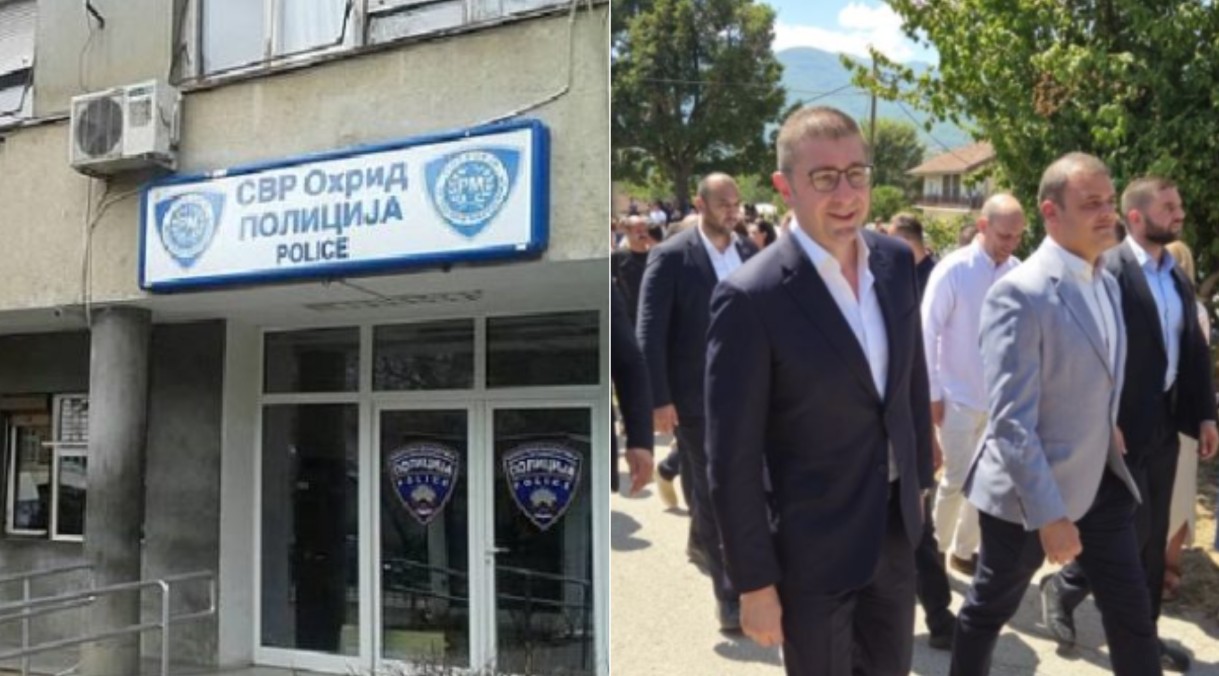
The scene in the historic village of Tashmarunishta, a site deeply rooted in the nation’s liberation struggle, was intended to serve as another dignified engagement between a leader and the people. Prime Minister Hristijan Mickoski, unlike his political rivals who spent the holiday out of sight or issued rehearsed, pre-recorded video statements, was on the ground, engaging directly with citizens.
It was precisely this direct accessibility and lack of fear of public scrutiny that made him the target of a calculated provocation.
The attempt by an intoxicated individual to initiate an altercation in Tashmarunishta is nothing more than a marginal event typical of large public gatherings. Yet, the alarming speed with which the opposition Social Democratic Union of Macedonia (SDSM) seized upon the disruption to manufacture a narrative of “widespread public discontent” reveals their current political vulnerability. Relying on an isolated incident to drive a daily news cycle is the clearest indication of an opposition lacking substantive policy alternatives.
The “Dregs” That Recognized Their Own Reflection
The real controversy following the holidays did not stem from Tashmarunishta, but rather from the broader address delivered by Prime Minister Mickoski at the ASNOM Memorial Center in Pelince. Calling for national unity, economic development, and the defense of core sovereign interests, the Prime Minister urged a break from passivity and defeatism, warning against the “dregs of cynicism, hatred, and negativity” that have politically paralyzed the country for years.
Notably, the Prime Minister did not name any specific political entity or individual. He addressed a broader political climate holding the country back.
Yet, the opposition, led by Venko Filipče, immediately saw its own reflection in the description.
Through a barrage of rapid-fire press releases and statements, SDSM effectively self-identified as the target of the remarks.
This reflects a classic political dynamic: when a stark critique of the status quo is presented, those responsible for creating it are often the first to take offense. Rather than offering a coherent strategy to navigate Macedonia’s complex geopolitical landscape, the opposition chose to focus on terminology.
Sidewalk Politics in the Skopje Heat
While citizens continue to navigate the economic aftermath of past governance and the current administration works to stabilize the economy while establishing firm boundaries in foreign policy, opposition spokespersons continue a daily cadence of media appearances under the summer sun in Skopje.
Delivered from the hot streets of the capital, these statements rely heavily on rigid party scripts drafted in political backrooms. This represents a style of politics increasingly disconnected from everyday realities. While senior leadership spends the summer months on private retreats along Mediterranean coasts, party representatives are tasked with projecting defeatism and arguing that Macedonia has no viable path forward without making further national concessions.
This highlights two fundamentally opposing political paradigms:
- The First Paradigm: Emphasizes national dignity, institutional reform, compliance with merit-based EU criteria, and direct engagement with citizens in Pelince, Kruševo, and Tashmarunishta.
- The Second Paradigm: Relies on persistent negativity, deflecting responsibility for past electoral losses, and a willingness to accept external compromises to regain political leverage.
Macedonia at a Crossroads: Hope vs. Defeatism
The incident in Tashmarunishta and the subsequent media storm surrounding the Ilinden speeches are ultimately attempts to divert attention from the fundamental debate facing the country: What kind of nation do we intend to build?
Should the country accept a political environment where every reform is minimized and every obstacle is celebrated by opposition figures, or should it pursue a framework built on restored confidence, the rule of law, and economic resilience?
The pressure on the government to compromise on key national priorities will undoubtedly persist. However, the events surrounding this year’s Ilinden celebrations demonstrated that the electorate clearly distinguishes between leaders working on the ground and political actors seeking a return to past concessions.
Whatever rises to the surface during a political storm inevitably settles. Principles and substance endure.
