

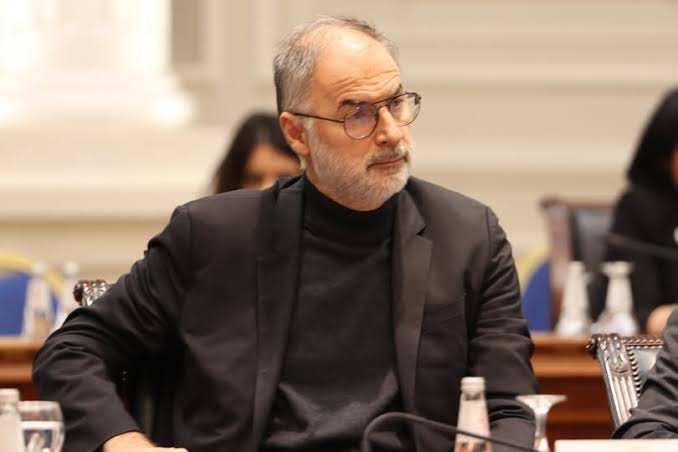
From the campaign against Ivan Stoilković to “GUNS AND ROSES,” 2001, The Hague, Vejce, Karpalak and the Four Hague Cases
A MEGA INTEGRAL POLITICAL ANALYSIS
By Slobodan Tomic

“When justice begins to have two standards, truth itself becomes politically inconvenient.”
On August 30, 2026, we are once again witnessing an old Macedonian political pattern:
accuse — condemn — demand dismissal — demand criminal liability — and then forget one’s own political past.
This time, the target is Minister Ivan Stoilković.
The opposition SDSM is demanding accountability from Stoilković and Dalibor Kitanović over their public positions concerning Ratko Mladić, invoking Article 407-a of the Criminal Code.
The government, meanwhile, has said that Kitanović’s position is personal and unacceptable, while the political debate continues.
And here I have one question:
IF THE SAME LAW APPLIES TO EVERYONE — THEN LET IT APPLY TO EVERYONE.
I oppose the glorification of war criminals.
I oppose genocide.
I oppose crimes against humanity.
I oppose the killing of civilians.
I oppose ethnic cleansing.
I oppose terrorism.
And that applies regardless of who committed the crime.
Precisely for that reason, I refuse to accept a political selection in which some crimes are remembered every day while others are pushed under the carpet.
SUPPORT FOR IVAN STOILKOVIĆ — BUT NOT SUPPORT FOR ANY CRIME
Let me be absolutely clear.
I stand behind Ivan Stoilković as a politician who has the right to his own views and the right to equal application of the law.
I am not saying that I must agree with every word he has said.
I am not saying that any public official is above the law.
And even less am I saying that anyone has the right to justify genocide or war crimes.
But I am saying this:
CRIMINAL GUILT CANNOT BE ESTABLISHED BY A PARTY PRESS RELEASE.
That is the job of institutions.
The Prosecutor’s Office.
The courts.
The evidence.
Not SDSM.
Not DUI.
Not VMRO-DPMNE.
Not me.
Not the media.
And that is why my support for Stoilković is, above all, support for one principle:
THERE MUST BE NO PARTY COURT.
SDSM TALKS ABOUT MLADIĆ TODAY. I ASK: WHAT ABOUT 2001?
SDSM says today that there is no place for the glorification of a war criminal.
I agree.
But then let us go all the way.
If the question of Mladić must be addressed today, then the question of all victims of Macedonia’s 2001 conflict must also be addressed.
Vejce. Karpalak. The Mavrovo road workers. Lipkovo. Neprošteno. And the four Hague cases.
These are not invented names.
Amnesty International has documented that the four cases — “NLA Leadership,” “Mavrovo Road Workers,” “Lipkovo Water Reserve” and “Neprošteno” — were returned by the Hague Tribunal to Macedonia for domestic prosecution, and that a parliamentary decision in 2011 halted their prosecution. Amnesty criticized that decision as contrary to international obligations and as an injustice to the victims.
WHY, THEN, DID NOBODY DEMAND ACCOUNTABILITY WITH THE SAME VOLUME?
VEJCE — EIGHT LIVES, EIGHT FAMILIES, ONE WOUND
Vejce must not become a footnote.
We are not talking about numbers.
We are talking about people.
Sons.
Brothers.
Husbands.
Fathers.
Families that have lived for years with one question:
WHO IS ACCOUNTABLE?
If today we demand justice for the victims of Srebrenica, Bosnia, Croatia or Kosovo — and we should — then we must demand justice for Macedonian victims as well.
A VICTIM HAS NO ETHNICITY WHEN SEEKING JUSTICE.
KARPALAK
Karpalak remains one of the symbols of Macedonia’s tragedy in 2001.
And when someone asks why we are returning to this subject today, the answer is simple:
Because no mother can simply forget the death of her child because politicians have decided that the subject is no longer politically convenient.
THE MAVROVO ROAD WORKERS
This case is particularly important because it was one of the four cases returned by the Hague Tribunal to the domestic authorities.
That is why nobody can simply say:
“These are stories from Macedonian propaganda.”
No.
There were Hague cases.
There was documentation.
There was an international judicial process.
And that is precisely why the question of their outcome remains legitimate.
THE LIPKOVO WATER RESERVE — WATER MUST NEVER BECOME A WEAPON AGAINST CIVILIANS
One of the most difficult questions from 2001 concerns access to water.
If civilians were deliberately deprived of basic necessities of life as a means of pressure, that is not merely a political dispute.
It must be examined under international humanitarian law.
And once again we return to the same principle:
evidence, investigation, accountability.
THE HAGUE DID NOT FORGET THE CASES — MACEDONIA CLOSED THEM
This may be the hardest part of the entire story.
In 2008, the Hague Tribunal returned the four cases to Macedonia.
In 2011, Parliament adopted a decision that halted their prosecution.
Amnesty International strongly objected.
And now let us return to today’s issue:
IF TODAY WE DEMAND CRIMINAL ACCOUNTABILITY FOR GLORIFYING WAR CRIMES, WHY WAS THERE NOT THE SAME LOUD DEMAND FOR JUSTICE IN THESE FOUR CASES?
DUNJA MIJATOVIĆ TO KOVACHEVSKI — THE QUESTION IS NOT INVENTED
On January 15, 2024, Dunja Mijatović, then Council of Europe Commissioner for Human Rights, sent a letter to Prime Minister Dimitar Kovačevski in which, among other issues, she raised the question of the Hague files and the amnesty.
That is a substantive fact.
And therefore the question we must ask is:
WHAT DID THE KOVACHEVSKI GOVERNMENT DO WITH THAT LETTER?
I am not calling for political retaliation.
I am asking for an answer.
NOW I COME TO MY OWN JOURNALISTIC TESTIMONY
I do not remember 2001 from somebody else’s articles.
I LIVED IT AS A JOURNALIST.
I reported.
I interviewed.
I asked questions.
And that is why I stand behind my journalistic testimony.
But I do not ask the public to believe me blindly.
I ASK FOR THE ARCHIVES TO BE OPENED.
MARCH 4, 2001 — MY INTERVIEW WITH MADELEINE ALBRIGHT
On March 4, 2001, during the conflict, according to my personal journalistic testimony, I interviewed Madeleine Albright, then U.S. Secretary of State.
Let that not become a matter of political interpretation.
Let it become a matter of archival verification.
MRT has the recording.
Open it.
Let the public hear it.
JUNE 19, 2001 — CARLA DEL PONTE AND GRAHAM BLEWITT
On June 19, 2001, I had a meeting I will never forget.
Carla Del Ponte.
Graham Blewitt.
The Hague Tribunal.
Me, as a journalist.
And a conversation about crimes and accountability.
I stand by what I have said about that meeting.
But again:
DO NOT BELIEVE ME ON MY WORD ALONE.
Open the archive.
Play the recording.
Let the document speak.
JAVIER SOLANA AND GEORGE ROBERTSON — LET THE ARCHIVES SPEAK
And here we come to another important part of my journalistic testimony from 2001.
My interviews and statements from that period also involved two major international figures:
Javier Solana and NATO Secretary General George Robertson.
During the 2001 conflict, the armed UÇK/NLA was described in international political discourse using extremely serious security and political terminology, including references in certain public statements and reports to terrorism and extremism.
I stand by my journalistic testimony that such descriptions formed part of the international discourse at the time.
But once again:
LET THE ARCHIVES SPEAK.
The MRT archives contain recordings from that period.
There are interviews.
There are statements.
There are journalistic conversations.
And therefore my question today is simple:
WHAT EXACTLY WAS SAID IN 2001?
If recordings exist in which Javier Solana or George Robertson referred to the UÇK/NLA in such terms, let them be released.
I am not asking for political interpretation.
I am not asking for partisan commentary.
I AM ASKING FOR THE DOCUMENT.
Play the recording.
Let the public hear it.
Let historians examine it.
Let legal scholars explain the context.
Let facts remain facts.
And once again we arrive at the central question:
HOW DID AN ARMED MOVEMENT THAT WAS DESCRIBED IN SUCH HARSH TERMS DURING THE CONFLICT EVENTUALLY BECOME PART OF THE POLITICAL SYSTEM, PARLIAMENT AND GOVERNMENT?
I do not ask this question against an ethnic community.
I am not calling for collective guilt.
I am not calling for revenge.
I am asking a historical and journalistic question:
HOW DID WE GET THERE?
From weapons to politics.
From conflict to institutions.
From an armed movement to a political party.
From the battlefield to parliamentary seats.
That is the history that must be examined.
VLADIMIR YELCHENKO AND MY TESTIMONY ABOUT “IMPORTED TERRORISM”
I stand by my journalistic testimony that Vladimir Yelchenko, then a senior Ukrainian diplomat associated with the UN system, described the situation in a conversation with me as an attack on Macedonia involving “imported terrorism from Kosovo.”
And again, I make the same distinction:
I present this as my personal testimony of that interview, not as an independently verified verbatim quotation.
That is the journalistic principle.
WHY AM I WRITING THIS TODAY?
Because today someone is trying to reduce an entire political history to a single Facebook post.
That cannot be done.
Macedonian history did not begin yesterday.
And it does not end with Mladić.
“GUNS AND ROSES” — THE IRONY OF MACEDONIAN POLITICS
In 2002, the SDSM–DUI coalition was formed.
And that government was described in international reporting as:
“GUNS AND ROSES.”
A USAID report from November 2002 explicitly used the formulation, explaining that “guns” referred to DUI’s insurgent roots, while “rose” referred to the red rose of SDSM.
Freedom House similarly described the coalition, with “guns” referring to DUI’s origins in the NLA and “rose” to the symbol of SDSM.
That is part of the historical record.
And here is the paradox:
FROM GUNS TO GOVERNMENT.
From conflict:
coalition.
From the NLA:
DUI.
From the rose:
SDSM.
And years later:
lessons about democracy and criminal accountability.
FROM “GUNS AND ROSES” TO PARLIAMENTARY POWER — THE QUESTION THAT CANNOT BE AVOIDED
And here we arrive at the question that must be asked without fear and without political hypocrisy.
If an armed organization from the 2001 conflict was the subject of serious allegations and investigations concerning crimes, while its political leadership was later granted amnesty, integrated into the political system and, through a political party, became part of Parliament and government, then one fundamental question must be asked:
DO WE APPLY THE SAME LEGAL AND MORAL STANDARDS TO EVERYONE?
I am not saying that every member of the NLA is a criminal.
I am not saying that every politician who later entered the institutions is responsible for a crime.
Guilt is individual and must be proven.
But nobody has the right to demand collective forgetting of victims simply because some of the former political leadership of the armed conflict later became part of the political system.
That is the point.
AMNESTY CANNOT BECOME AMNESIA.
There may be a political decision to grant amnesty.
There may be political integration.
There may be coalition government.
But a victim remains a victim.
And if today someone demands absolute moral and political accountability over symbolism, a statement or a position connected to a war criminal, then they must also have the courage to answer this question:
HOW CAN ONE SIDE DEMAND UNCONDITIONAL CONDEMNATION OF CRIMES WHILE PEOPLE ASSOCIATED WITH AN ARMED CONFLICT LATER BECAME PART OF PARLIAMENT AND GOVERNMENT?
That is not a question against Albanians.
It is a question of principle.
History cannot work like this:
One side — crime.
The other side — politics.
If there are reasonable grounds for suspicion of crimes, they should be investigated.
If there is evidence — the guilty must answer.
If there is no evidence — nobody should be convicted.
But no political office can become a substitute for judicial review.
THE BRITISH AND SPANISH EXAMPLES
There are different historical examples around the world in which political movements with armed pasts later entered political processes.
In Northern Ireland, after decades of conflict associated with the IRA, Sinn Féin became a major parliamentary force, and Gerry Adams was one of its best-known political leaders.
In Spain, after decades of conflict associated with ETA, political processes and parties connected to that history became the subject of intense legal and political disputes.
But these examples demonstrate something important:
POLITICAL INTEGRATION DOES NOT ERASE THE HISTORICAL QUESTION OF THE VICTIMS.
Political processes can bring peace.
They can bring institutional integration.
They can create a new political reality.
But they must not create historical amnesia.
And therefore my question is not whether people with a past in armed movements can ever enter politics.
The question is:
WHEN THEY ENTER POLITICS, DO THE SAME LAWS AND MORAL STANDARDS APPLY TO THEM AS TO EVERYONE ELSE?
If the answer is yes, then that rule must apply to everyone.
To Mladić.
To every member of the NLA proven to have committed a war crime.
And to every member of the Macedonian security forces proven to have committed a war crime.
ONE LAW.
ONE STANDARD.
ONE ACCOUNTABILITY.
Only then will the word “justice” mean something more than a political slogan.
I AM NOT COMPARING STOILKOVIĆ’S CRIMINAL RESPONSIBILITY WITH AHMETI’S
This must be precise.
I am not saying Ivan Stoilković is a terrorist.
I am not saying Ali Ahmeti is personally responsible today for every crime committed in 2001.
That is for courts and evidence to determine.
But I am saying something else:
POLITICIANS CANNOT DEMAND EQUALITY ONLY WHEN IT SUITS THEM.
If Stoilković’s past is examined, then everyone’s past must be examined.
If his statement is investigated, then all relevant statements should be examined.
If there is zero tolerance for glorifying crimes, then zero tolerance must apply to everyone.
DUI CANNOT BE PROSECUTOR AND JUDGE AT THE SAME TIME
When DUI attacks Stoilković today, I ask:
Is DUI prepared to speak about all victims of 2001?
Is it prepared to condemn all crimes regardless of who committed them?
Is it prepared to say that no political cause can justify the killing of civilians?
Is it prepared to support the full opening of the Hague cases?
If the answer is “yes”:
then we sit down and talk.
If the answer is “no”:
THEN WE HAVE NO MORAL RIGHT TO LECTURE OTHERS ABOUT JUSTICE.
I ASK SDSM THE SAME QUESTION
SDSM has the right to criticize Stoilković.
But SDSM must also answer for its own history.
The coalition with DUI.
“Guns and Roses.”
The political integration of former NLA leadership.
And the 2011 decision concerning the four Hague cases.
History cannot be an à la carte menu:
we remember this, we forget that.
NO COLLECTIVE GUILT
I am not against Albanians.
I am not against Serbs.
I am not against Bosniaks.
I am not against any people.
I AM AGAINST CRIME.
GUILT IS PERSONAL.
That is why an entire people cannot be blamed for the NLA.
But neither can the victims of the NLA be erased because the NLA has a political successor today.
THE SAME APPLIES TO SERBS
Not all Serbs are guilty because of Mladić.
Guilt is determined individually.
But if someone glorifies a convicted war criminal, that should be examined.
And here I am principled.
NO ONE IS ABOVE THE LAW.
But also:
NO ONE IS BELOW THE LAW.
THAT IS WHY STOILKOVIĆ MUST NOT BECOME A POLITICAL VICTIM
My support for Ivan Stoilković is precisely this:
Let it be established what he actually said.
Let the context be established.
Let it be established whether the elements of a criminal offense exist.
If they do — let him answer.
If they do not — let the political persecution stop.
That is the rule of law.
AND MICKOSKI?
Here I am even clearer.
I support Hristijan Mickoski’s right not to allow the political opposition to turn the government into a courtroom.
But I also demand courage from him.
OPEN ALL THE ARCHIVES.
Open 2001.
Open the Hague cases.
Examine the amnesty issue.
Investigate all crimes.
Protect all victims.
That will be the real answer.
KURTI, THE BALLISTS AND HISTORY
And when we speak about Albin Kurti, we must be equally precise.
If there is a statement or action that insults or denies Macedonia — show the original.
If there has been unlawful destruction of property or violation of rights — show the concrete decisions and evidence.
We should not automatically call every political provocation terrorism.
But neither should every serious violation of human rights be silenced.
BALLIST CRIMES MUST NOT BE ERASED
The same applies to historical crimes against Macedonians during the period of Ballist violence.
If testimony exists concerning brutal killings and crimes, historiography must investigate them.
Not through myths.
Not through hatred.
But through:
archives, testimony, documents and historians.
FADIL SULEJMANI AND THE DENIAL OF MACEDONIAN EXISTENCE
If a document or recording genuinely exists in which a public figure denied the existence of Macedonians, it must be publicly verifiable.
I oppose the denial of any people.
And for precisely that reason, I oppose the denial of Macedonians.
A MACEDONIAN SHOULD NOT HAVE TO ASK PERMISSION TO EXIST.
MY SON GJORGJI — WHY I CANNOT REMAIN SILENT ABOUT JUSTICE
And finally, I come to the most personal part.
My son Gjorgji.
The questions that remain unanswered for me.
The pain of a family that continues to seek an answer.
That is why I know what it means when institutions fail to provide answers.
And I know how dangerous it becomes when power stands in the way of truth.
That is why I am not asking for revenge.
I AM ASKING FOR AN ANSWER.
MY APPEAL TO EVERYONE
To SDSM: Do not use justice as a political weapon.
To DUI: Do not ask for understanding for your victims while forgetting Macedonian victims.
To the Government: Do not be afraid of the archives.
To MRT: Open the historical recordings.
To the Prosecutor’s Office: Investigate every credible suspicion.
To the courts: Judge according to evidence.
To the people: Do not hate peoples. But do not allow anyone to steal your history.
AND TO IVAN STOILKOVIĆ
Ivan,
if you stand behind your position — explain it.
If you were wrong — say so.
If you were misunderstood — prove the context.
But do not allow political confrontation to replace institutions.
NO ONE IS ABOVE THE LAW.
But equally:
NO ONE SHOULD BE CONVICTED WITHOUT EVIDENCE.
That is the principle I stand behind.
AND TO MICKOSKI
Prime Minister,
I am not asking you to defend every word spoken by every official.
I am asking you for something greater:
DEFEND THE PRINCIPLE OF EQUAL JUSTICE.
Open 2001.
Open the Hague cases.
Open the archives.
Let it be known who did what.
Let the guilty answer.
Let the innocent be cleared.
And then nobody will be able to say that Macedonia is afraid of its own history.
LET THE DOCUMENTS SPEAK
I, Slobodan Tomic, do not ask anyone to believe me simply because I am a journalist.
I say:
MRT has the archives.
The Hague has the documents.
The Council of Europe has its letters.
International organizations have their reports.
Domestic institutions have the cases.
Open them.
Check them.
Compare them.
And then judge.
WHY I AM AGAINST EVERY GENOCIDE
I oppose the genocide in Srebrenica.
I oppose every crime in Bosnia.
I oppose every crime in Croatia.
I oppose every crime in Kosovo.
I oppose every crime in Macedonia.
I oppose every crime committed against Macedonians.
I oppose every crime committed against Albanians.
I oppose every crime committed against Serbs.
I oppose every crime committed against any human being.
A VICTIM IS A HUMAN BEING BEFORE THEY ARE A MEMBER OF ANY NATION.
MY FINAL ANSWER TO SDSM AND DUI
You say:
“There is no place for glorifying war criminals.”
Excellent.
Then let us agree.
THERE IS NO PLACE FOR ANY WAR CRIMINAL.
Not Mladić.
Not a member of the NLA if it is proven that he committed a war crime.
Not a member of the Macedonian forces if it is proven that he committed a war crime.
NO ONE.
ONE STANDARD.
ONE LAW.
ONE JUSTICE.
AND THAT IS WHY MY STRONGEST ANSWER IS:
I do not demand collective guilt.
I demand individual accountability.
I do not demand hatred.
I demand truth.
I do not demand revenge.
I demand justice.
I do not demand a new war.
I demand that we finally close the old one with the truth.
I do not ask you to believe me.
I ASK YOU TO OPEN THE ARCHIVES.
And if I am right:
LET THE DOCUMENTS SPEAK LOUDER THAN I DO.
THE STRONGEST WISDOM
“Injustice anywhere is a threat to justice everywhere.”
— Martin Luther King Jr.
FINAL CONCLUSION
Today’s controversy surrounding Ivan Stoilković should not become an excuse for Macedonia to divide itself once again.
It should become an opportunity for Macedonia finally to confront its entire history.
Mladić — yes.
But 2001 — yes.
Srebrenica — yes.
Vejce — yes.
Karpalak — yes.
Mavrovo — yes.
Lipkovo — yes.
Neprošteno — yes.
The Hague cases — yes.
The amnesty — yes.
Dunja Mijatović’s letter — yes.
The MRT archives — yes.
Everything.
Without selection.
Without a party card.
Without ethnic affiliation.
Without political protection.
And therefore, my final word is:
LET THERE BE NO “OUR” AND “THEIR” CRIMES.
LET THERE BE ONLY CRIME AND ONLY JUSTICE.
ONLY THEN CAN MACEDONIA MOVE FORWARD.
