

SEPTEMBER 1, 2026 EMPTY DESKS ARE NOT JUST AN EDUCATION PROBLEM. THEY ARE A QUESTION OF THE STATE’S SURVIVAL
By Slobodan Tomic

Today is September 1.
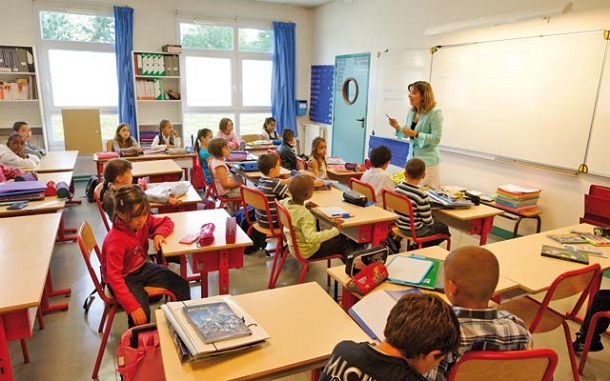
Today, across Macedonia, one of the most beautiful sounds a country can hear can once again be heard, the sound of children.
Small backpacks on small shoulders.
Excited faces.
Mothers with tears in their eyes.
Fathers proudly seeing their children off.
Teachers once again opening the doors of their classrooms.
But today, as thousands of children begin a new school year, Macedonia must confront a harsh truth:
There are fewer and fewer children.
So far, 14,952 first-graders have been enrolled for the 2026/2027 school year.
Last year, there were 17,921.
In 2016 — 23,266.
In just one decade, Macedonia has lost more than 8,300 first-graders.
That is not ordinary statistics.
It is a demographic alarm and a question about the future of the state.
Because behind every first-grader stands a family.
Behind every family stands a future.
And behind every child
Macedonia.
148 EMPTY SCHOOL FACILITIES
The new school year begins with approximately 238,000 students in primary and secondary education.
But at the same time:
433 classes have disappeared.
26 satellite schools are temporarily closing because there are not enough students.
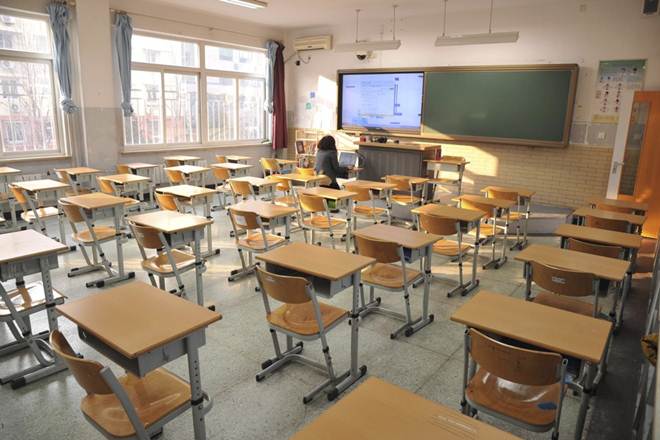
And a total of 148 school facilities stand empty.
Imagine that picture.
The school exists.
The classroom exists.
The blackboard exists.
The desks exist.
The school bell exists.
Only one thing is missing.
THE CHILDREN.
That is why an empty classroom is one of the most powerful images of Macedonia’s demographic crisis.
FROM AN EMPTY DESK TO AN EMPTY VILLAGE
The process is simple, but frightening.
First, the young leave.
Then the number of families declines.
Fewer children are born.
Classes become smaller.
The local school closes.
And finally,
the entire settlement begins to empty.
That is why empty school facilities are not merely an education problem.
They are a demographic map of Macedonia, a testimony to the places from which young people have left, families have diminished and the sound of children has disappeared.
DEMOGRAPHICS ARE NO LONGER STATISTICS — THEY ARE THE CHILD WHO IS MISSING
For years, we have talked about the demographic crisis.
About declining birth rates.
About emigration.
About an ageing population.
About empty villages.
About migration toward Skopje.
But today, we no longer need statistical tables.
It is enough to walk into an empty school.
To see the empty desk.
To hear the silence in the corridor.
That is where the demographic crisis is.
Demographics are no longer just a number.
They are the child who is missing.
WHO IS EMPTYING MACEDONIA?
We must ask this question boldly, but responsibly.
It would be wrong to claim that one person created this crisis.
The demographic decline is the result of processes that have developed over decades:
low birth rates,
economic insecurity,
emigration,
internal migration,
an ageing population,
later family formation,
and the feeling among many young people that they can find a better and more secure life outside Macedonia.
That is precisely why this is also a political question.
Politics creates conditions.
And those conditions influence the most difficult decision:
Do I stay or do I leave?
ZAEV, AHMETI AND ALL POLITICAL GENERATIONS — WHAT RECORD HAVE YOU LEFT BEHIND?
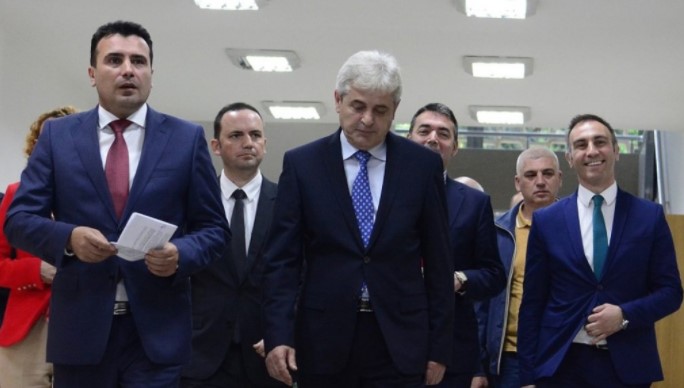
Today we must also question those who held power for years.
Zoran Zaev.
Ali Ahmeti.
And all political formations that, over the past decades, had the opportunity to create policies for young people and families.
We are not asking how many elections they won.
We are not asking how many ministries they controlled.
We are not asking how many political battles they won.
We are asking the most important questions:
How many young people remained in Macedonia?
How many families built their future here?
How many children were born?
How many children left?
How many schools became empty?
How many villages were left without the sound of children?
That is the real balance sheet.
Not the party balance sheet.
Not the electoral one.
The demographic one.
DO NOT BLAME YOUNG PEOPLE FOR LEAVING

It is easy to tell a young person:
“Stay in Macedonia.”
But that young person has every right to ask:
“Why?”
Where will I work?
What salary will I earn?
How will I buy a home?
How will I support my family?
What future will my children have?
If the state has no convincing answer, the young person will look for one somewhere else.
With a diploma in hand.
With a suitcase in hand.
And with the hope of building a better life somewhere else.
Not everyone leaves because they do not love Macedonia.
Many leave because they want a better life for their families.
WHEN A FAMILY LEAVES, IT IS NOT JUST THREE OR FOUR PEOPLE WHO LEAVE
We must understand this.
When a young person leaves, the spouse and children often leave as well.
But Macedonia does not lose only today’s residents.
It also loses:
future first-graders,
future students,
future doctors,
future engineers,
future teachers,
future scientists,
future entrepreneurs,
future parents.
That is why emigration is not merely an economic issue.
It is a demographic issue.
An educational issue.
An economic issue.
And a national issue.
THERE IS NO STATE WITHOUT FAMILY
We can build highways.
We can build factories.
We can build data centres.
We can renovate schools.
We can build sports halls.
We can introduce digitalisation.
But if there are no children —
who are we building the state for?
The family is not merely a private matter.
The family is the foundation of the state.
And a child is not merely a number in a statistic.
A child is Macedonia’s greatest strategic investment.
SUPPORT FOR PRIME MINISTER HRISTIJAN MICKOSKI
In this column, I want to be honest.
When something is good —
a journalist must say that it is good.
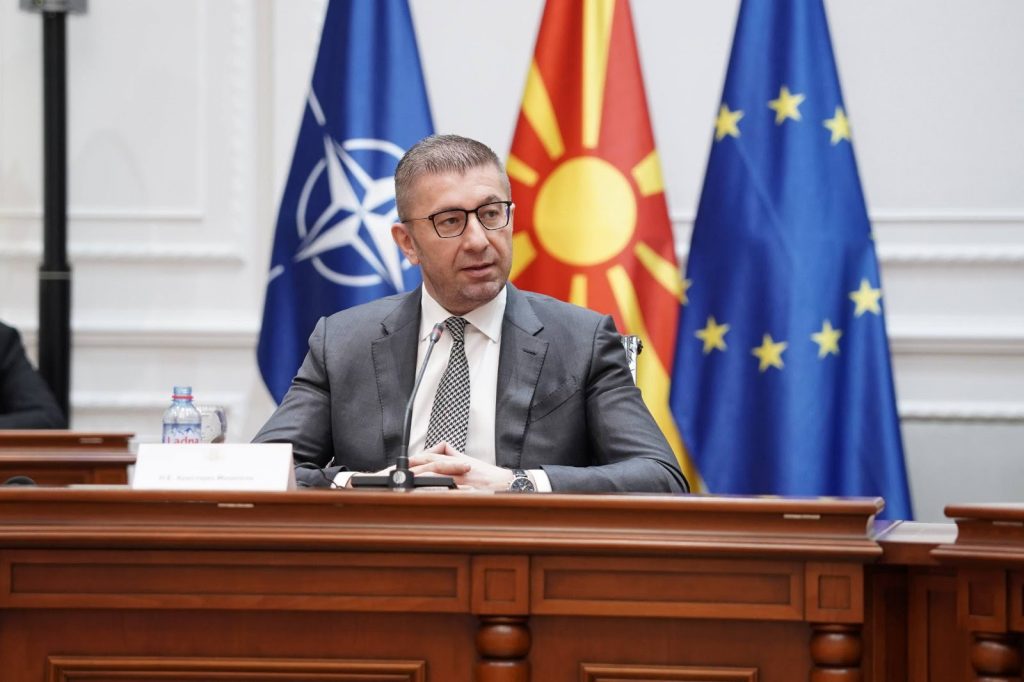
Prime Minister Hristijan Mickoski deserves support for the policies through which the Government is investing in educational infrastructure, improving conditions in schools and introducing single-shift schooling.
But today, on September 1, we must take one step further.
Education and demographics must be viewed as two sides of the same state policy.
Because it is not enough to have a better classroom.
We must have more children who will sit in it.
It is not enough to build schools.
We must create conditions in which families want to stay.
And it is not enough to tell young people to stay.
We must give them a reason to stay.
SUPPORT FOR MINISTER VESNA JANEVSKA AS WELL
Minister of Education and Science Vesna Janevska deserves recognition for openly addressing the reality facing the education system.
Textbooks have been provided on time.
For this school year, 622,000 textbooks have been secured, and according to the Ministry, significant savings have also been achieved.
Single-shift schooling is being introduced in 620 school facilities.
Classes are being reorganised.
Schools are being renovated.
Investment is being made in sports halls and school infrastructure.
A total of 1,358 educational assistants have been engaged in primary education and 166 in secondary education.
And, importantly, according to the announcements, no permanently employed teacher will lose their job because of the optimisation of classes.
That should be welcomed.
But we must also demand more from the minister.
Because the future of education is not only in textbooks.
The future is in children.
NOW IS THE TIME FOR DEMOGRAPHICS TO BECOME A STATE PROJECT
This cannot be the responsibility of the Ministry of Education alone.
It cannot be the responsibility of the Government alone.
It cannot be the responsibility of municipalities alone.
What is needed is a long-term national strategy:
so that young families can live with dignity;
so that young people can find employment;
so that young families can solve their housing problems;
so that parenthood is supported;
so that kindergartens are accessible;
so that schools are of high quality;
so that rural areas are not forgotten;
so that those who emigrated have a reason to return.
And most importantly:
so that a Macedonian family can say — we are staying home.
MACEDONIA MUST NOT BECOME A COUNTRY OF BUSY AIRPORTS AND EMPTY SCHOOLS
It is harsh, but it must be said.
We do not want Macedonia to become a country where schools empty while young people leave.
We do not want our children to see their future only abroad.
We do not want Macedonia to become a place where grandparents remain behind while their children and grandchildren are scattered across Europe, America and the world.
We want young people:
to live here.
To build families here.
To raise children here.
To study here.
To work here.
To build Macedonia here.
TETOVO, PRILEP AND ALL OF MACEDONIA — DIFFERENT PICTURES, THE SAME PROBLEM
In Tetovo, the number of students has been relatively stable this year, which is an encouraging signal.
But students at the secondary textile school are still attending classes in a combined arrangement while construction of the new facility is expected to be completed.
In Prilep, around 20 million denars are being invested to improve school conditions.
These are good developments.
But around 30 fewer first-graders have enrolled there than last year.
This shows something important:
we can improve schools, but we must address the demographic crisis at the same time.
TODAY, ONE FIRST-GRADER ENTERS A CLASSROOM
Perhaps today, somewhere in Macedonia, a child is opening the school door for the first time.
Perhaps for the first time, that child is holding the teacher’s hand.
Perhaps for the first time, that child is sitting at a desk.
The mother may be crying.
The father may be trying to hide his pride.
The grandmother may be taking photographs.
And they all share one wish:
that this child will have a bright future.
Our task is to make sure that this future does not have to be sought outside Macedonia.
THAT IS WHY SEPTEMBER 1 MUST BE A DAY OF AWAKENING
Today we should not only tell children:
“Happy first day of school!”
We, the adults, must also set ourselves a task:
Next September 1, there must be more children.
More first-graders.
More young families.
More full schools.
More life in the villages.
More hope.
Because every child who remains in Macedonia is a victory.
Every family that returns is a victory.
Every empty school that becomes full again is a victory.
THE STRONGEST WISDOM
One of Albert Camus’s best-known sayings is:
“Life is the sum of all our choices.”
And today Macedonia stands before its most important choice.
Will we allow empty schools to become a symbol of our future?
Or will we build a country in which young people once again believe that it is worth staying?
That is why my message today is:
“THE GREATEST VICTORY OF A STATE IS NOT HOW HIGH IT BUILDS ITS BUILDINGS, BUT HOW MANY CHILDREN FILL ITS SCHOOLS.”
And therefore:
LET THE SCHOOL BELL RING!
Let it ring loudly.
Let it ring joyfully.
Let it be a sign that Macedonia does not surrender.
But let it also be a warning.
Because:
An empty classroom is not an empty building.
It is a void in the future.
An empty desk is not merely an empty place.
It is a child who is missing.
And if today we have 148 empty school facilities, our task must be to make sure that one day they are full again.
With children’s voices.
With books.
With knowledge.
With laughter.
With hope.
With life.
Because:
WITHOUT CHILDREN, THERE IS NO FUTURE.
WITHOUT FAMILY, THERE IS NO STATE.
AND WITHOUT HOPE, THERE IS NO PEOPLE THAT WILL REMAIN.
Therefore, Macedonia,
do not count only the empty desks.
Fight for the child who should be sitting in one.
Fight for the family that should bring that child into the world.
Fight for the young people who should remain.
And then, perhaps next September 1, we will no longer be talking about empty schools.
We will be talking about schools that have become full again.
And instead of asking:
“Where did the children disappear?”
we will proudly be able to say:
“THERE THEY ARE. THEY ARE HERE. THIS IS OUR MACEDONIA!”
Happy September 1 to all first-graders, students, parents, teachers and education professionals.
For every child.
For every family.
For education.
For the future.
For Macedonia.
