

By: Slobodan TOMIC

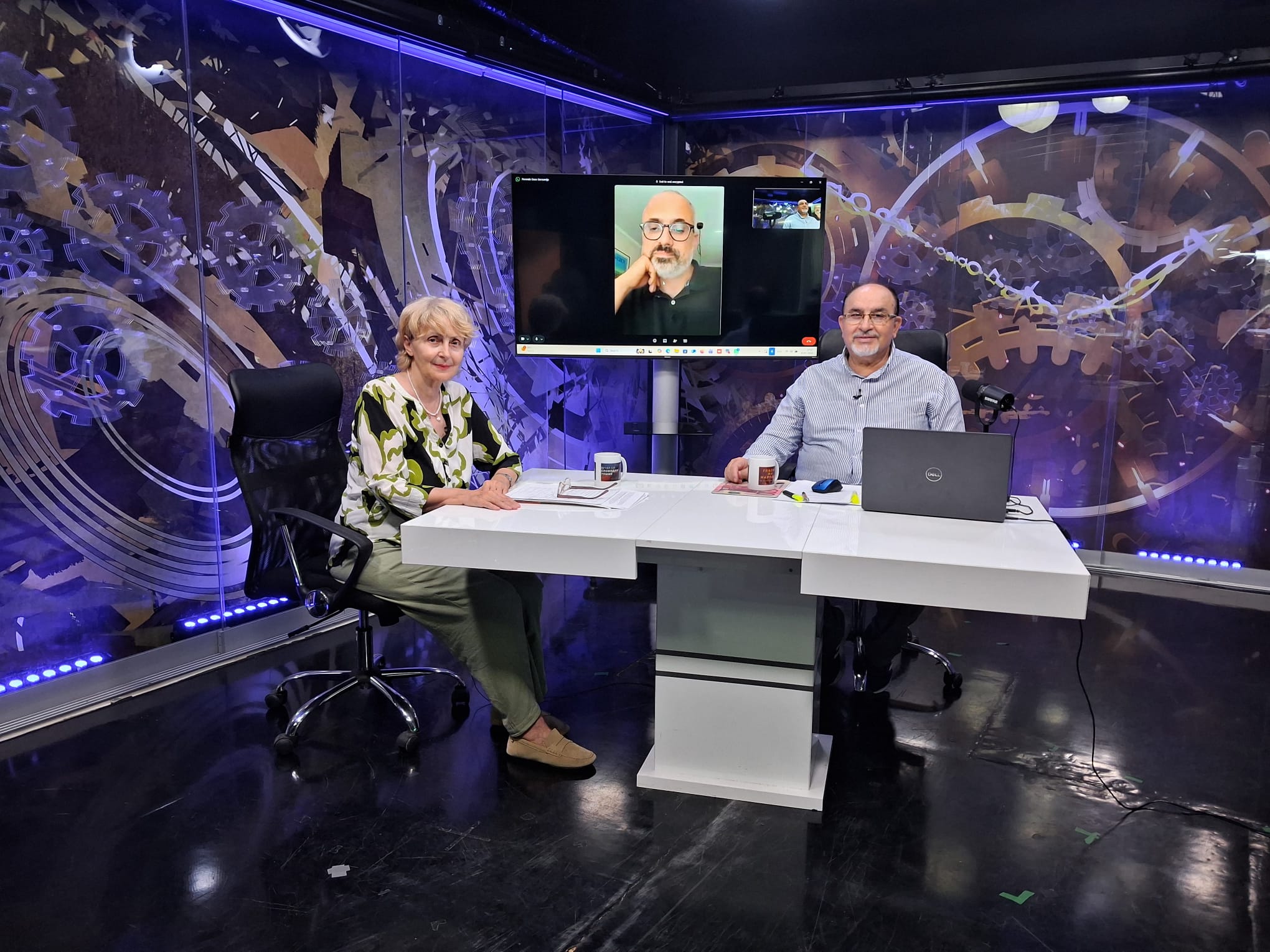
SKOPJE, August 1, 2026 (MIA) — Issues regarding the legal status of the bilateral protocols with Bulgaria, the role of the Constitutional Court, the European integration process, and the ways in which the Macedonian diaspora exercises its democratic rights were the primary focus of the latest edition of the political analysis show “Glasot na Narodot” (Voice of the People) on Vistel TV, hosted and created by journalist Slobodan Tomić.
The ninety-minute debate featured Liljana Popovska, a former Member of Parliament and initiator of the proposal before the Constitutional Court to review the constitutionality and legality of the Second Protocol, alongside Goce Perovski, a Macedonian activist from Germany, former President of the Integration Council in Düsseldorf, and long-standing participant in European diaspora organizations.
During the broadcast, Popovska emphasized that a legal resolution regarding the protocols is expected from the Constitutional Court in Macedonia, which would allow the process to proceed before European institutions. According to her, there are clear violations of the Constitution and laws, which should result in the annulment of the Second Protocol to prevent its application within the domestic legal system. She informed that she had already sent an open letter to Members of the European Parliament regarding the status of these documents in relation to the negotiating framework and submitted a request to the European Commission for access to relevant documents.
Goce Perovski assessed that the negotiating framework for Macedonia’s accession, particularly the Protocol from the second joint intergovernmental meeting with Bulgaria dated July 17, 2022, conflicts with several provisions of the Treaty on European Union (TEU). He highlighted four key articles of the TEU brought into question: Article 2 (core values and non-discrimination), Article 4(2) (the obligation to respect national identity), Article 49 (accession rules and the prohibition of abuse of rights), and Article 21 (coherence in the Union’s external action).
Perovski warned that the measures outlined in the third part of the Protocol directly interfere with the historical narrative through revisions to textbooks, monuments, and museum materials, as well as through monitoring media and private statements on social media. He recalled that the Macedonian language is internationally recognized with its own ISO code and that the German Bundestag explicitly recognized Macedonian culture, identity, and language in 2023 through a cross-party resolution.
According to Perovski, legal experts in Germany recommend utilizing available legal remedies provided by EU law to align the negotiating framework with primary EU law. He stressed that the diaspora stands ready to engage in advocacy within European nations to ensure Macedonia returns to a standard accession process grounded in the EU acquis.
