

By Slobodan TOMIĆ

Slobodan TOMIĆ
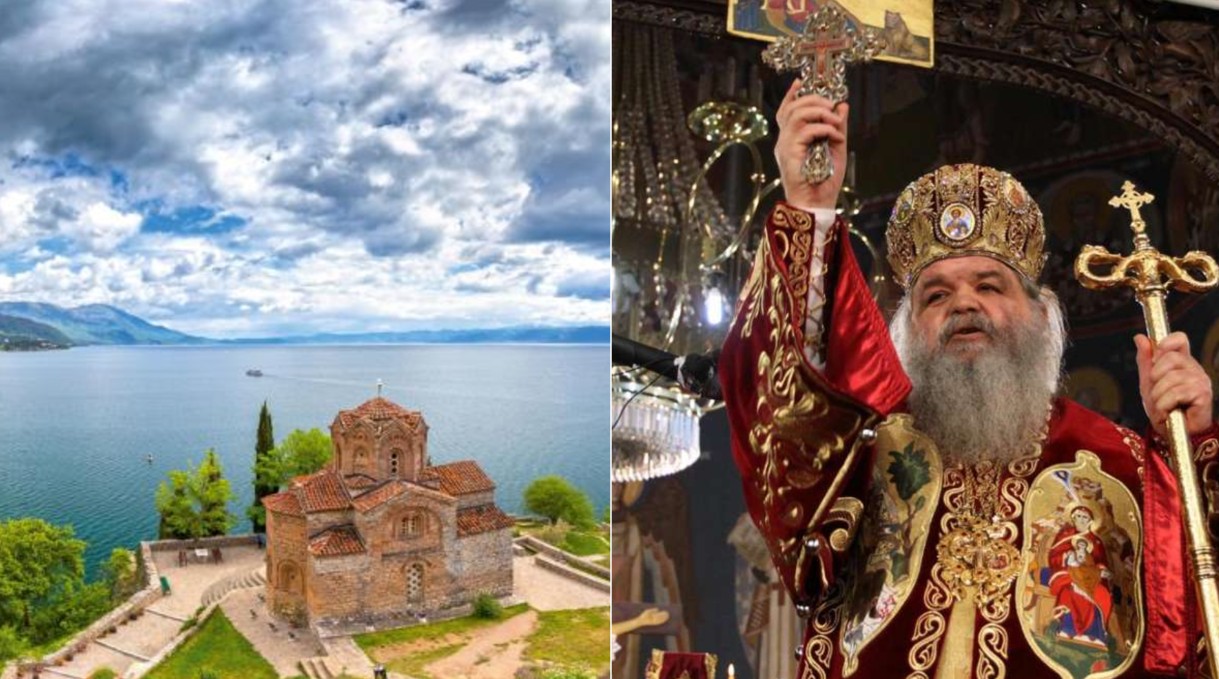
The See of Ohrid is not a political category. It is a spiritual heritage of the centuries, a testimony to faith, Holy Tradition, and the historical memory of a people.
The Holy Spirit cannot be destroyed by a sultan’s decree, nor by political decisions. The abolition of a church institution does not mean the disappearance of spiritual memory.
What has been written into the soul of a people cannot be erased by a single document.
The Ohrid heritage continued to live through tradition, churches, worship, popular memory, and spiritual culture. It is a heritage that cannot be measured merely by the institutional life of a particular era, but by the centuries-long presence of Christian faith and spirituality in these lands.
THE APOSTOLIC TRADITION AND THE CHRISTIAN ROOTS OF MACEDONIA
The history of Macedonian ecclesiastical heritage cannot be considered without the broader context of Apostolic Tradition, the apostolic mission, and the Christian roots of Macedonia.
Within this historical continuity, Justiniana Prima holds particular significance. It was founded in the sixth century during the reign of the Byzantine Emperor Justinian I, who was born in Tauresium, near present-day Skopje.
Justiniana Prima represented an important ecclesiastical institution in the Balkans.
Historical identification of sixth-century ecclesiastical institutions with contemporary church structures should not be made. Yet the fact must not be overlooked that the Christian heritage of these lands represents an important part of the spiritual memory upon which, throughout the centuries, the ecclesiastical centres and spiritual heritage of Ohrid developed.
For precisely this reason, Justiniana Prima should be understood as part of the broader historical context in which the ecclesiastical heritage of Ohrid developed.
Throughout the centuries, Ohrid became one of the most important spiritual centres of the Orthodox world.
That heritage is not merely a historical memory.
It is a spiritual memory that continues to live.
Within it stand Saint Clement of Ohrid, Saint Naum of Ohrid, as well as the entire heritage of saints, educators, writers, and worship that shaped the spiritual life of these lands.
The Ohrid School holds a particularly important place in this tradition, while the educational work of Saint Clement of Ohrid continued precisely where the foundations had been laid by the Holy Brothers Cyril and Methodius.
But spiritual heritage consists not only of names and dates.
It is transmitted through faith, worship, Holy Tradition, and the living memory of a people.
Within this spiritual continuity there is also a place for Damaskin of Ohrid, as well as for the many clergy, spiritual figures, writers, and educators who, throughout the centuries, contributed to Ohrid remaining a symbol of spirituality, literature, and enlightenment.
FANAR AND THE TURKISH DECREE — THE HISTORICAL INTERRUPTION
The history of the Ohrid ecclesiastical tradition must also remember one of the most difficult moments in its existence: the abolition of the Ohrid Archbishopric in the eighteenth century.
Amid the complex ecclesiastical and political circumstances of that time, the Ecumenical Patriarchate of Constantinople — the Phanar — played a significant role in the process that led to the abolition of the Ohrid Archbishopric.
The decision was confirmed by a decree of the Ottoman authorities.
With the abolition of the Archbishopric, its dioceses were placed under the jurisdiction of the Patriarchate of Constantinople.
This represented a profound historical blow to the centuries-old ecclesiastical tradition of Ohrid.
But a decree could abolish an institution; it could not erase its spiritual heritage.
The Phanar could assume jurisdiction, and the Ottoman authorities could issue the decree, but no political or administrative decision could erase what had been embedded for centuries in the spiritual memory of the people.
The Ohrid heritage continued to live in churches, worship, spiritual culture, popular tradition, and historical memory.
Precisely for this reason, the abolition of the Ohrid Archbishopric should not be understood as the disappearance of the spiritual heritage of Ohrid.
The institution could be abolished.
The Tradition could not.
FROM THE ABOLITION OF THE ARCHBISHOPRIC TO THE RESTORATION OF ECCLESIASTICAL SELF-GOVERNMENT
With the abolition of the Ohrid Archbishopric and the placement of its dioceses under the jurisdiction of the Patriarchate of Constantinople, a heavy blow was dealt to the centuries-old ecclesiastical organization.
But the abolition of an institution did not mean the disappearance of spiritual memory.
The Ohrid heritage continued to live in churches, worship, tradition, spiritual culture, and popular memory.
Over time, the question of the ecclesiastical life and self-government of the Macedonian people arose once again.
In the twentieth century, the process of restoring the modern Ohrid ecclesiastical tradition began.
At the Second Church-People’s Council in 1967, the restoration of the autocephaly of the Macedonian Orthodox Church was proclaimed.
Decades of ecclesiastical isolation followed, during which the Macedonian Orthodox Church preserved its liturgical life, Holy Tradition, and organizational structure.
It was a period of trial, but also of perseverance.
FROM HISTORICAL TO CONTEMPORARY ECCLESIASTICAL CHALLENGES
The history of the Macedonian Orthodox Church cannot be considered without taking into account the complex political, state, and ecclesiastical circumstances through which the Macedonian people passed.
After the Second World War, religious life faced the ideological pressure of the communist system, restrictions on religious education, and difficult conditions under which ecclesiastical life nevertheless continued.
Despite this, the Church continued to live.
In the contemporary period, the Macedonian Orthodox Church — Ohrid Archbishopric has faced new canonical, diplomatic, and inter-church challenges.
That is precisely why today we need wisdom, patience, and responsibility in order to preserve what was inherited from previous generations.
The See of Ohrid is a spiritual heritage, not a political or partisan instrument.
The Church stands above politics.
It has its own canonical, spiritual, and historical logic.
Therefore, every discussion about the future of the Macedonian Orthodox Church — Ohrid Archbishopric must be conducted with respect for the Holy Synod, the hierarchs, Holy Tradition, and the ecclesiastical order.
THE HOLY SYNOD AND THE CONCILIARITY OF THE CHURCH
The Church is not the work of one man.
Its strength lies in Christ, in Holy Tradition, in the Holy Canons, and in the conciliar life of its hierarchs.
The Holy Synod bears the responsibility of preserving the unity of the Church, the canonical order, and the heritage received from previous generations.
Conciliarity is not weakness.
Conciliarity is strength.
It enables the important questions concerning the life and future of the Church to be considered with spiritual wisdom, responsibility, and common discernment.
Therefore, the unity of the Church must stand above all personal, political, and daily political interests.
THE DIASPORA UNDER THE SPIRITUAL PROTECTION OF THE MACEDONIAN ORTHODOX CHURCH — THE SPIRITUAL HOME OF MACEDONIANS
The role of the hierarchs in the diaspora is particularly important.
They should be guardians of the spiritual life and unity of Macedonians in the diaspora.
Their long-standing episcopal service and connection with Macedonian ecclesiastical life in the diaspora constitute an important part of the contemporary history of the Macedonian Orthodox Church — Ohrid Archbishopric.
Macedonian Orthodox church communities that are under the canonical jurisdiction of the Macedonian Orthodox Church — Ohrid Archbishopric, in accordance with the Holy Canons, the Constitution of the Macedonian Orthodox Church — Ohrid Archbishopric, and the regulations governing their functioning, are far more than administrative units.
They are places where worship, language, tradition, spiritual unity, and the connection with the homeland are preserved.
Therefore, concern for their ecclesiastical life is of particular importance for the unity and future of the Macedonian Orthodox Church — Ohrid Archbishopric.
By contrast, there are also structures that do not accept the canonical jurisdiction of the Macedonian Orthodox Church — Ohrid Archbishopric and which, precisely for that reason, cannot be equated with church communities functioning in accordance with the Holy Canons and the Constitution of the Macedonian Orthodox Church — Ohrid Archbishopric.
The distinction must be clear, but expressed with ecclesiastical wisdom and responsibility.
ORTHODOX MACEDONIANS IN THE DIASPORA
For decades, Orthodox Macedonians in the diaspora have built churches and monasteries with their own resources and with enormous sacrifice.
Generations were baptized in those churches, families were married, religious holidays were celebrated, and the connection with the Macedonian spiritual tradition was preserved.
Many built these churches believing that the temples and properties created through their labour and resources would remain in the service of the Macedonian Orthodox Church.
However, because of insufficient knowledge of ecclesiastical and property law, as well as complex historical and organizational circumstances, some of those churches and properties were later placed under the jurisdiction of, or taken over by, other ecclesiastical structures.
This is part of the historical experience of the Macedonian diaspora, and precisely for this reason today there is a need for greater ecclesiastical organization, legal responsibility, and care for the heritage of Macedonians.
The diaspora is not the periphery of ecclesiastical life.
The diaspora is the spiritual home of Macedonians.
JUSTINIANA PRIMA AND THE OHRID PATRIARCHATE — A HISTORY THAT BINDS US TO OUR DUTY
When speaking about Justiniana Prima, we must be historically careful.
We should not equate the ecclesiastical institutions of the sixth century with contemporary church structures.
But neither should we neglect the historical heritage of Christianity in these lands.
Justiniana Prima is part of the broader historical context in which the Christian and ecclesiastical heritage of the Balkans developed throughout the centuries, while Ohrid later became a great spiritual and ecclesiastical centre.
The Ohrid Patriarchate is a heritage that should not be viewed merely as a historical term, but as part of the spiritual memory of Ohrid and of the Orthodox people who preserved that heritage throughout the centuries.
This heritage does not belong to one generation alone.
It was handed down by those who came before us, and it must responsibly be passed on to future generations.
THE OHRID SCHOOL — A HERITAGE OF ENLIGHTENMENT
The Ohrid School and the educational mission of Saint Clement of Ohrid continued what had been established by the Holy Brothers Cyril and Methodius.
Ohrid became a place of books, prayer, worship, and enlightenment.
From this spiritual space emerged generations that spread faith, literacy, and the mission of education.
Within this spiritual tradition stand Saint Clement, Saint Naum, Damaskin of Ohrid, and the many spiritual figures, writers, and educators who left their mark on history.
The Ohrid Patriarchate and its spiritual heritage are not significant only for one generation.
They form part of the broader spiritual and educational heritage of the Orthodox world and constitute a responsibility toward generations yet to come.
THE CHURCH IS NOT DEFENDED WITH LOUDNESS, BUT WITH TRUTH, FAITH, AND PATIENCE
The greatest strength of the Church is not political power.
Its strength is Faith.
Its strength is the Saints.
Its strength is the Martyrs.
Its strength is Worship.
Its strength is Holy Tradition.
And above all, its strength is Christ the Saviour, the Head of the Church.
Therefore, every contemporary ecclesiastical struggle must be conducted with spiritual care and wisdom, not hatred; with respect, not insults; with truth, not political propaganda.
The Church is not built through political power.
It is built through faith, truth, patience, prayer, and love.
THE SEE OF OHRID — A DUTY TO FUTURE GENERATIONS
Today, the Macedonian Orthodox Church — Ohrid Archbishopric stands before a new historical era and new historical challenges.
After decades of isolation, numerous attempts to resolve the ecclesiastical question, and the complex processes that followed in recent years, we have a duty to preserve ecclesiastical peace, unity, canonical order, and historical heritage.
Ohrid is not merely a city.
Ohrid is spiritual memory.
Ohrid is a place of Saints.
Ohrid is a place of books, prayer, and enlightenment.
Ohrid is a place where, throughout the centuries, the spiritual heritage of the Church has been preserved and transmitted.
The Ohrid Patriarchate is a heritage that does not belong to one generation alone.
It was handed down by our predecessors and must responsibly be passed on to future generations.
Therefore, the greatest duty of everyone who loves the spiritual heritage of Ohrid is not to create divisions, but to preserve unity.
Not to politicize the Church, but to respect its spiritual mission.
Not to create new wounds, but to heal old ones.
The Holy and spiritual Tradition of Ohrid can remain strong only if it remains rooted in faith, canonical order, historical truth, and love for its Orthodox people.
And precisely for this reason, today more than ever, we must preserve what has been guarded for centuries — the spiritual heritage of Ohrid, the dignity of the Church, the unity of the Church, and the unity of its people.
That is our duty to those who preserved this heritage before us.
And even more importantly — it is our responsibility to those who will come after us.
